Flanagan James M, Skrobanski Hanna, Shi Xin, Hirst Yasemin
Division of Cancer, Department of Surgery and Cancer, Imperial College London, London, United Kingdom.
Institute of Epidemiology and Public Health, Research Department of Behavioural Science and Health, University College London, London, United Kingdom.
JMIR Cancer. 2019 Jan 17;5(1):e10447. doi: 10.2196/10447.
Longer patient intervals can lead to more late-stage cancer diagnoses and higher mortality rates. Individuals may delay presenting to primary care with red flag symptoms and instead turn to the internet to seek information, purchase over-the-counter medication, and change their diet or exercise habits. With advancements in machine learning, there is the potential to explore this complex relationship between a patient's symptom appraisal and their first consultation at primary care through linkage of existing datasets (eg, health, commercial, and online).
Here, we aimed to explore feasibility and acceptability of symptom appraisal using commercial- and health-data linkages for cancer symptom surveillance.
A proof-of-concept study was developed to assess the general public's acceptability of commercial- and health-data linkages for cancer symptom surveillance using a qualitative focus group study. We also investigated self-care behaviors of ovarian cancer patients using high-street retailer data, pre- and postdiagnosis.
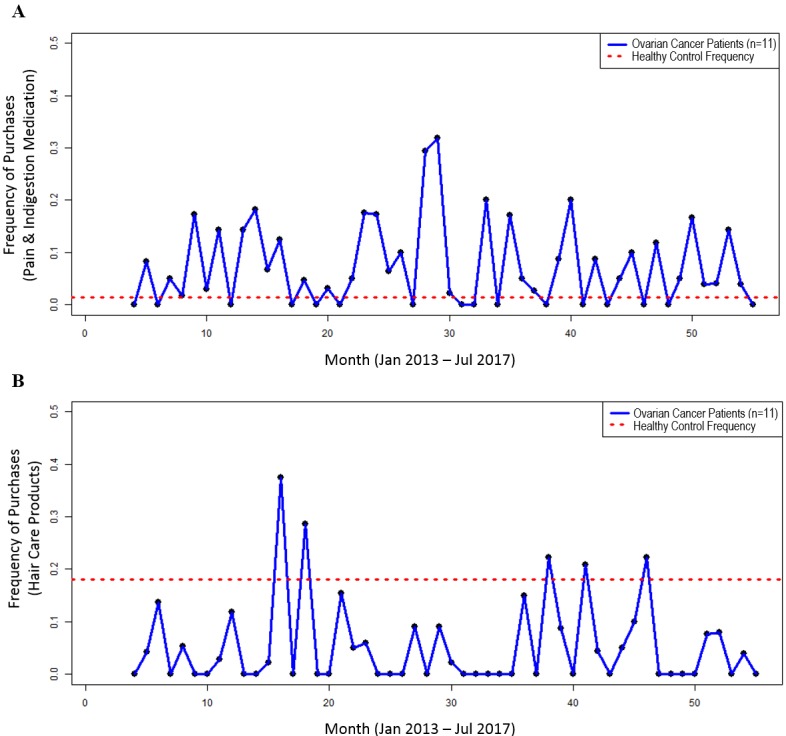
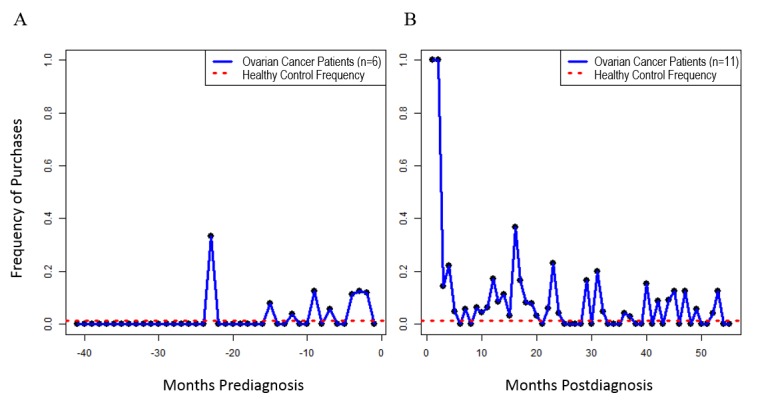
Using a high-street retailer's data, 1118 purchases-from April 2013 to July 2017-by 11 ovarian cancer patients and one healthy individual were analyzed. There was a unique presence of purchases for pain and indigestion medication prior to cancer diagnosis, which could signal disease in a larger sample. Qualitative findings suggest that the public are willing to consent to commercial- and health-data linkages as long as their data are safeguarded and users of this data are transparent about their purposes.
Cancer symptom surveillance using commercial data is feasible and was found to be acceptable. To test efficacy of cancer surveillance using commercial data, larger studies are needed with links to individual electronic health records.
患者就诊间隔时间延长可能导致更多晚期癌症诊断病例和更高的死亡率。患者可能会延迟带着警示症状前往初级保健机构就诊,而是转而在互联网上寻求信息、购买非处方药以及改变饮食或锻炼习惯。随着机器学习的发展,通过链接现有数据集(如健康、商业和在线数据集),有潜力探索患者症状评估与他们首次在初级保健机构就诊之间的这种复杂关系。
在此,我们旨在探讨使用商业数据与健康数据的链接进行癌症症状监测的可行性和可接受性。
开展了一项概念验证研究,通过定性焦点小组研究评估公众对使用商业数据与健康数据的链接进行癌症症状监测的可接受性。我们还利用商业街零售商数据调查了卵巢癌患者在诊断前后的自我护理行为。
分析了11名卵巢癌患者和1名健康个体在2013年4月至2017年7月期间通过一家商业街零售商进行的1118笔购买记录。在癌症诊断之前,存在购买止痛和消化不良药物的独特情况,这在更大样本中可能预示疾病。定性研究结果表明,只要他们的数据得到保护且数据使用者对其目的保持透明,公众愿意同意商业数据与健康数据的链接。
使用商业数据进行癌症症状监测是可行的,并且被发现是可接受的。为了测试使用商业数据进行癌症监测的有效性,需要开展更大规模的研究,并与个人电子健康记录建立联系。