Institute of Reproductive and Child Health, National Health Commission Key Laboratory of Reproductive Health, and Department of Epidemiology and Biostatistics, School of Public Health, Peking University Health Centre, Peking University, Beijing, 100191, China.
Division of Birth Cohort Study, and Department of Neonatal Surgery, Guangzhou Women and Children's Medical Centre, Guangzhou Medical University, Guangzhou, China.
Clin Epigenetics. 2019 Jan 21;11(1):13. doi: 10.1186/s13148-019-0611-7.
Neural tube defects (NTDs) are common and severe congenital malformations. Pax3 is an essential gene for neural tube closure in mice but it is unknown whether altered expression or methylation of PAX3 contributes to human NTDs. We examined the potential role of hypermethylation of Pax3 in the development of NTDs by analyzing human NTD cases and a mouse model in which NTDs were induced by benzo[a]pyrene (BaP), a widely studied polycyclic aromatic hydrocarbon (PAH).
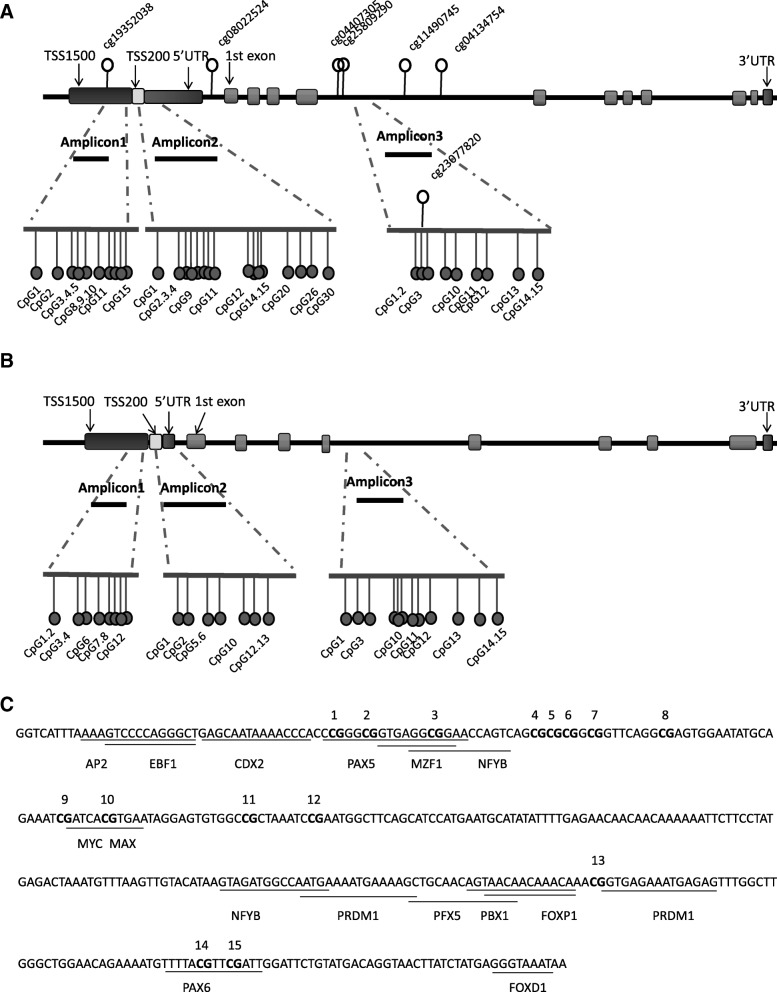
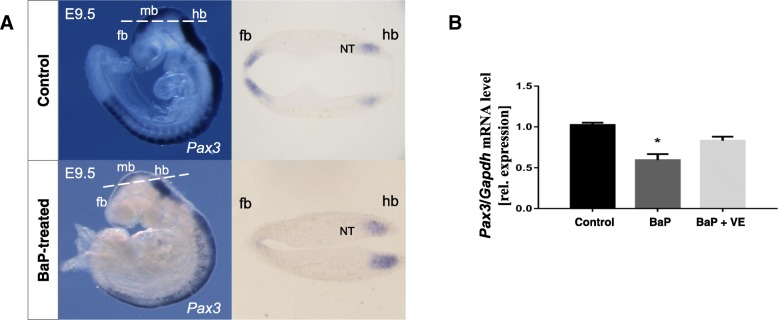
We extracted methylation information of PAX3 in neural tissues from array data of ten NTD cases and eight non-malformed controls. A validation study was then performed in a larger independent population comprising 73 NTD cases and 29 controls. Finally, we examined methylation patterns and expression of Pax3 in neural tissues from mouse embryos of dams exposed to BaP or BaP and vitamin E.
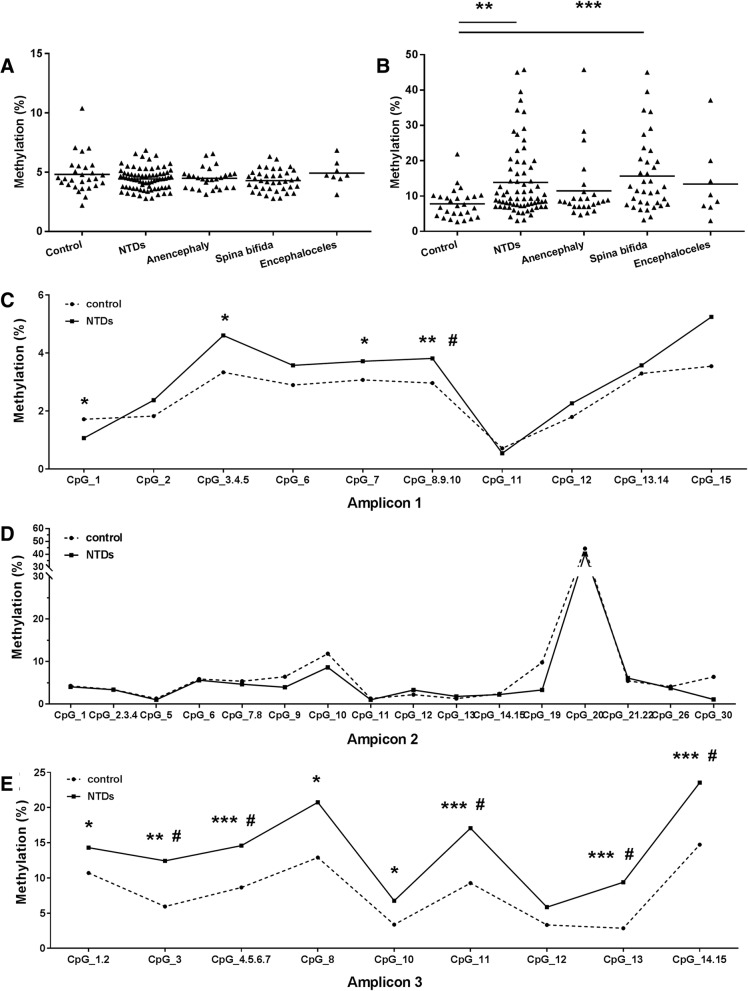
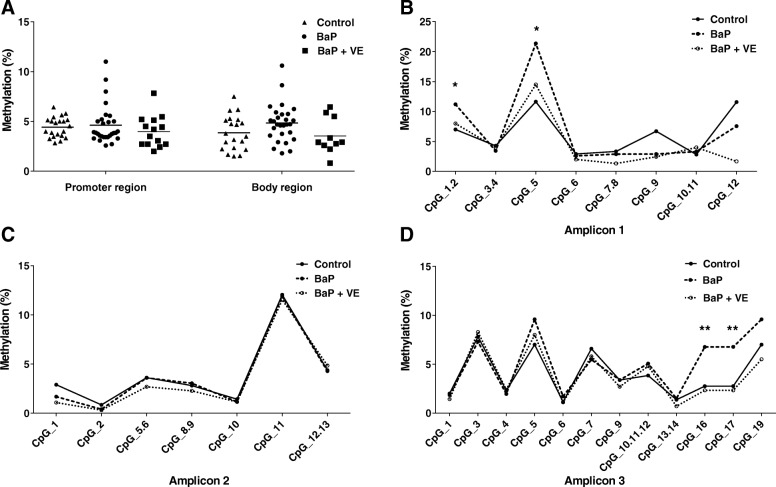
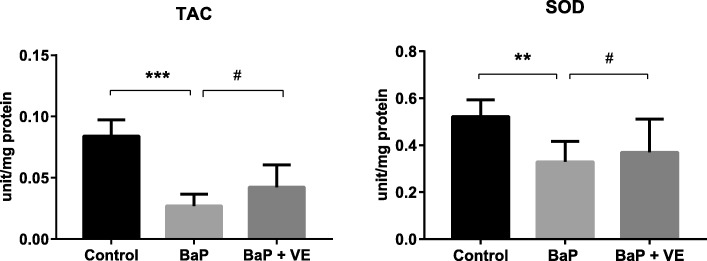
Seven CpG sites in PAX3 were hypermethylated in NTD fetuses as compared to controls in the array data. In the validation phase, significantly higher methylation levels in the body region of PAX3 were observed in NTD cases than in controls (P = 0.003). And mean methylation intensity in the body region of PAX3 in fetal neural tissues was positively correlated with median concentrations of PAH in maternal serum. In the mouse model, BaP-induced NTDs were associated with hypermethylation of specific CpG sites within both the promoter and body region of Pax3. Supplementation with vitamin E via chow decreased the rate of NTDs, partly recovered the repressed total antioxidant capacity in mouse embryos exposed to BaP, and this was accompanied by the normalization of Pax3 methylation level and gene expression.
Hypermethylation of Pax3 may play a role in the development of NTDs; DNA methylation aberration may be caused by exposure to BaP, with possible involvement of oxidative stress.
神经管缺陷(NTDs)是常见且严重的先天性畸形。Pax3 是小鼠神经管闭合所必需的基因,但尚不清楚 PAX3 的表达或甲基化改变是否导致人类 NTDs。我们通过分析人类 NTD 病例和苯并[a]芘(BaP)诱导的 NTD 小鼠模型,研究了 Pax3 超甲基化在 NTDs 发生发展中的潜在作用,BaP 是一种广泛研究的多环芳烃(PAH)。
我们从十个 NTD 病例和八个非畸形对照的数组数据中提取了神经组织中 PAX3 的甲基化信息。然后在一个由 73 个 NTD 病例和 29 个对照组成的更大的独立人群中进行了验证研究。最后,我们研究了暴露于 BaP 或 BaP 和维生素 E 的母鼠胚胎的神经组织中 Pax3 的甲基化模式和表达。
与对照相比,数组数据中 NTD 胎儿的 PAX3 中有 7 个 CpG 位点超甲基化。在验证阶段,与对照组相比,NTD 病例 PAX3 体区的甲基化水平显著升高(P = 0.003)。而且,胎儿神经组织 PAX3 体区的平均甲基化强度与母体血清中 PAH 的中位数浓度呈正相关。在小鼠模型中,BaP 诱导的 NTDs 与 Pax3 启动子和体区特定 CpG 位点的超甲基化有关。通过饲料补充维生素 E 可降低 NTD 的发生率,部分恢复 BaP 暴露的小鼠胚胎中受抑制的总抗氧化能力,同时 Pax3 甲基化水平和基因表达也恢复正常。
Pax3 的超甲基化可能在 NTDs 的发生发展中起作用;DNA 甲基化异常可能是由 BaP 暴露引起的,可能涉及氧化应激。