Shanghai Public Health Clinical Center and Department of General Surgery, Huashan Hospital, Cancer Metastasis Institute and Laboratory of RNA Epigenetics, Institute of Biomedical Sciences, Shanghai Medical College, Fudan University, Shanghai, 201508, China.
Department of Biochemistry and Molecular Biology, Shanghai Medical College, Key Laboratory of Ministry of Education, Department of Molecular Biology, Fudan University, Shanghai, 200032, China.
Genome Res. 2019 Feb;29(2):270-280. doi: 10.1101/gr.240606.118. Epub 2019 Jan 22.
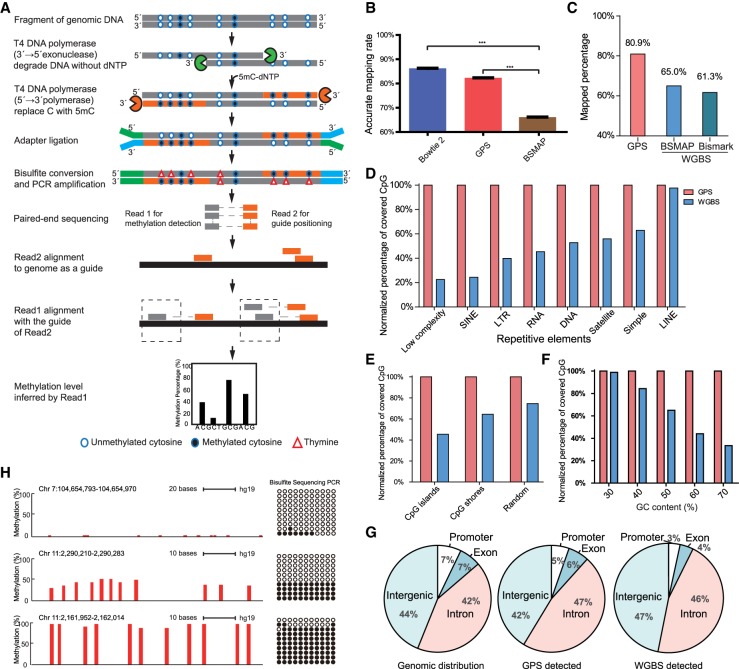
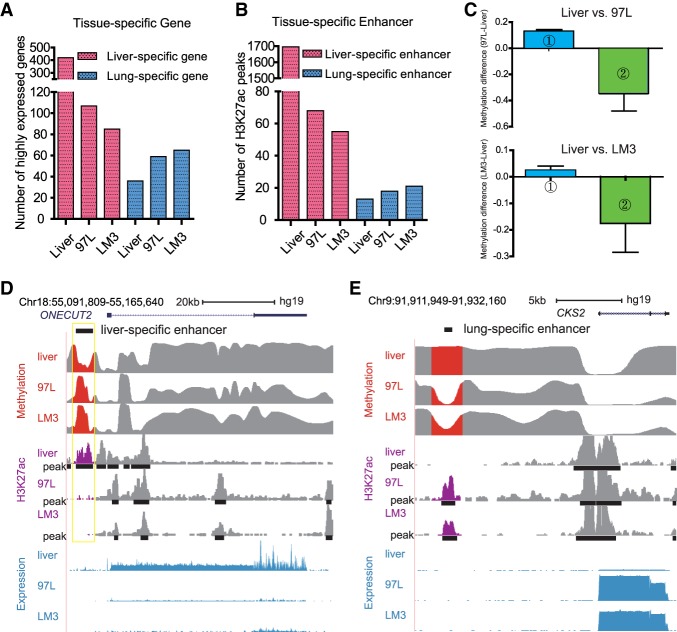
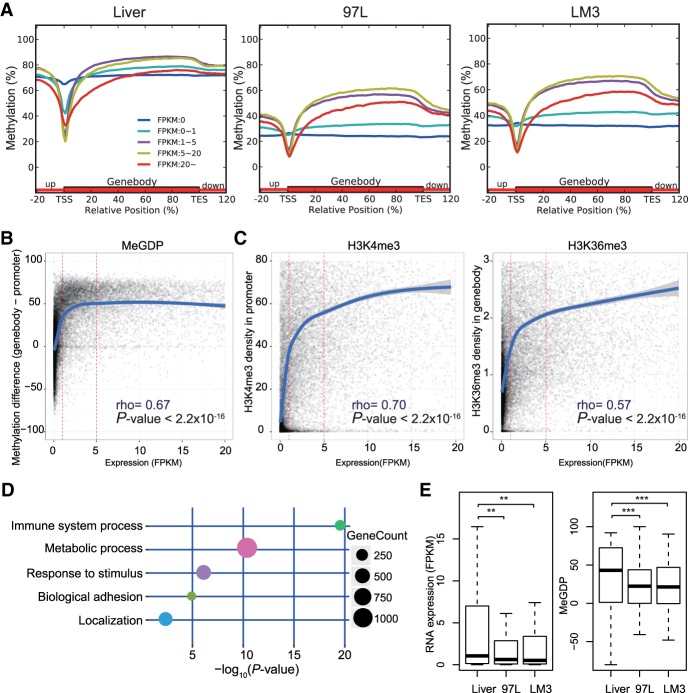
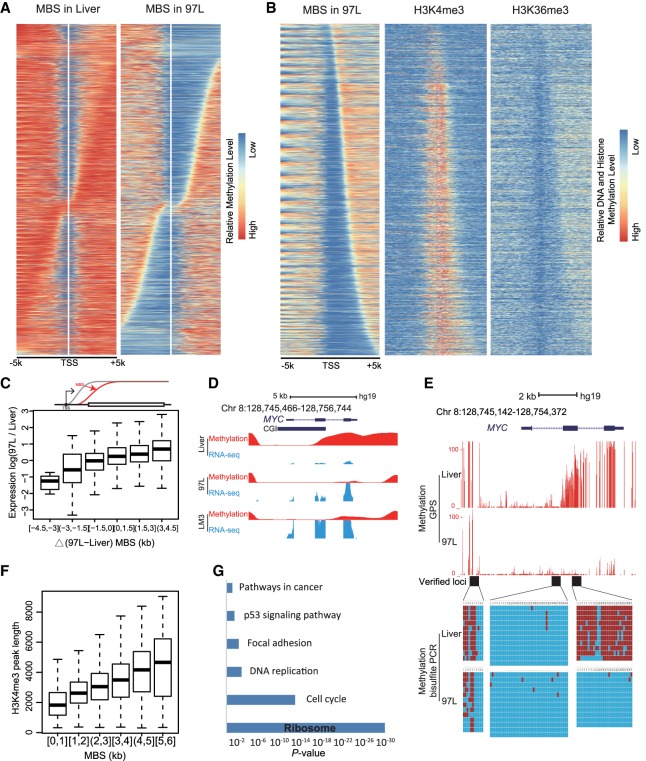
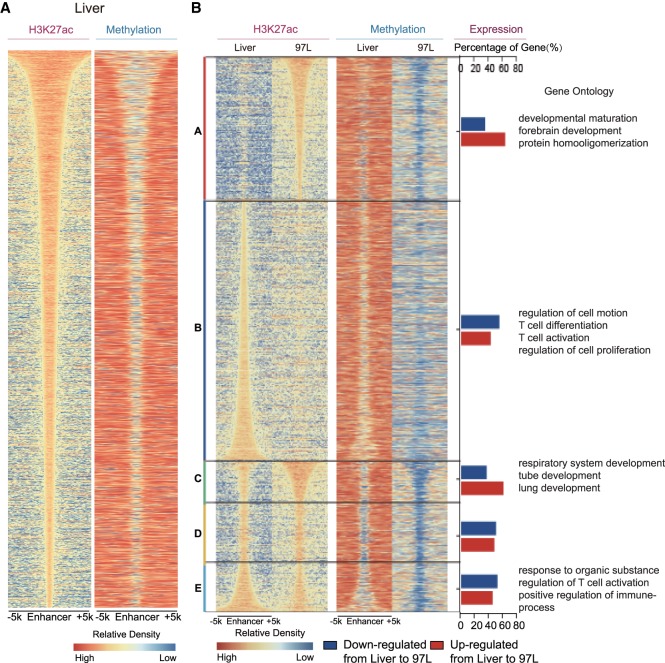
Aberrant DNA methylation is a distinguishing feature of cancer. Yet, how methylation affects immune surveillance and tumor metastasis remains ambiguous. We introduce a novel method, Guide Positioning Sequencing (GPS), for precisely detecting whole-genome DNA methylation with cytosine coverage as high as 96% and unbiased coverage of GC-rich and repetitive regions. Systematic comparisons of GPS with whole-genome bisulfite sequencing (WGBS) found that methylation difference between gene body and promoter is an effective predictor of gene expression with a correlation coefficient of 0.67 (GPS) versus 0.33 (WGBS). Moreover, Methylation Boundary Shift (MBS) in promoters or enhancers is capable of modulating expression of genes associated with immunity and tumor metabolism. Furthermore, aberrant DNA methylation results in tissue-specific enhancer switching, which is responsible for altering cell identity during liver cancer development. Altogether, we demonstrate that GPS is a powerful tool with improved accuracy and efficiency over WGBS in simultaneously detecting genome-wide DNA methylation and genomic variation. Using GPS, we show that aberrant DNA methylation is associated with altering cell identity and immune surveillance networks, which may contribute to tumorigenesis and metastasis.
异常的 DNA 甲基化是癌症的一个显著特征。然而,甲基化如何影响免疫监视和肿瘤转移仍然不清楚。我们引入了一种新的方法,即引导定位测序(GPS),用于精确检测全基因组 DNA 甲基化,胞嘧啶覆盖率高达 96%,并且能够无偏地覆盖 GC 丰富区和重复区。GPS 与全基因组亚硫酸氢盐测序(WGBS)的系统比较发现,基因体和启动子之间的甲基化差异是基因表达的有效预测因子,相关系数为 0.67(GPS)与 0.33(WGBS)。此外,启动子或增强子中的甲基化边界移动(MBS)能够调节与免疫和肿瘤代谢相关的基因表达。此外,异常的 DNA 甲基化导致组织特异性增强子转换,这是导致肝癌发展过程中细胞身份改变的原因。总之,我们证明 GPS 是一种强大的工具,与 WGBS 相比,在同时检测全基因组 DNA 甲基化和基因组变异方面具有更高的准确性和效率。使用 GPS,我们表明异常的 DNA 甲基化与改变细胞身份和免疫监视网络有关,这可能有助于肿瘤发生和转移。