Cancer Research UK Cambridge Institute, University of Cambridge, Cambridge CB2 0RE, UK; Institute of Pharmacy and Molecular Biotechnology, Heidelberg University, Im Neuenheimer Feld 364, 69120 Heidelberg, Germany.
Epigenetics Programme, Babraham Institute, Cambridge CB22 3AT, UK; Department of Medical and Molecular Genetics, King's College London, London SE1 9RT, UK.
Cell Rep. 2019 Jan 22;26(4):815-824.e4. doi: 10.1016/j.celrep.2018.12.099.
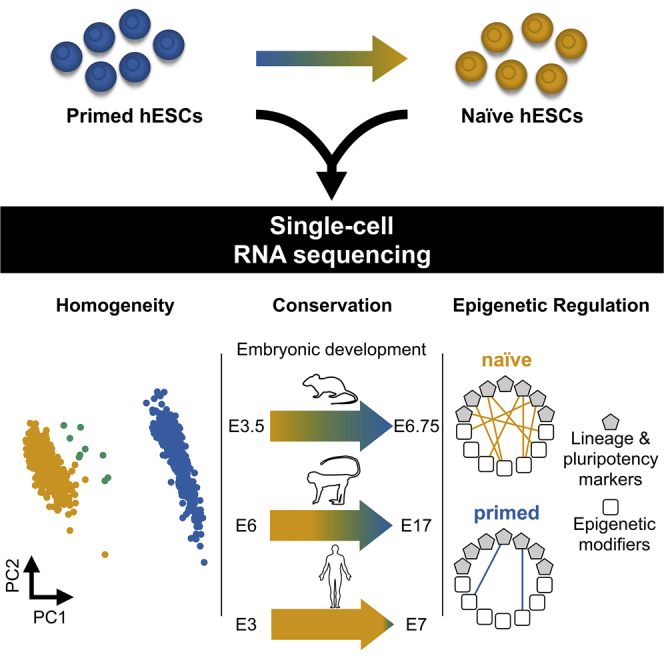
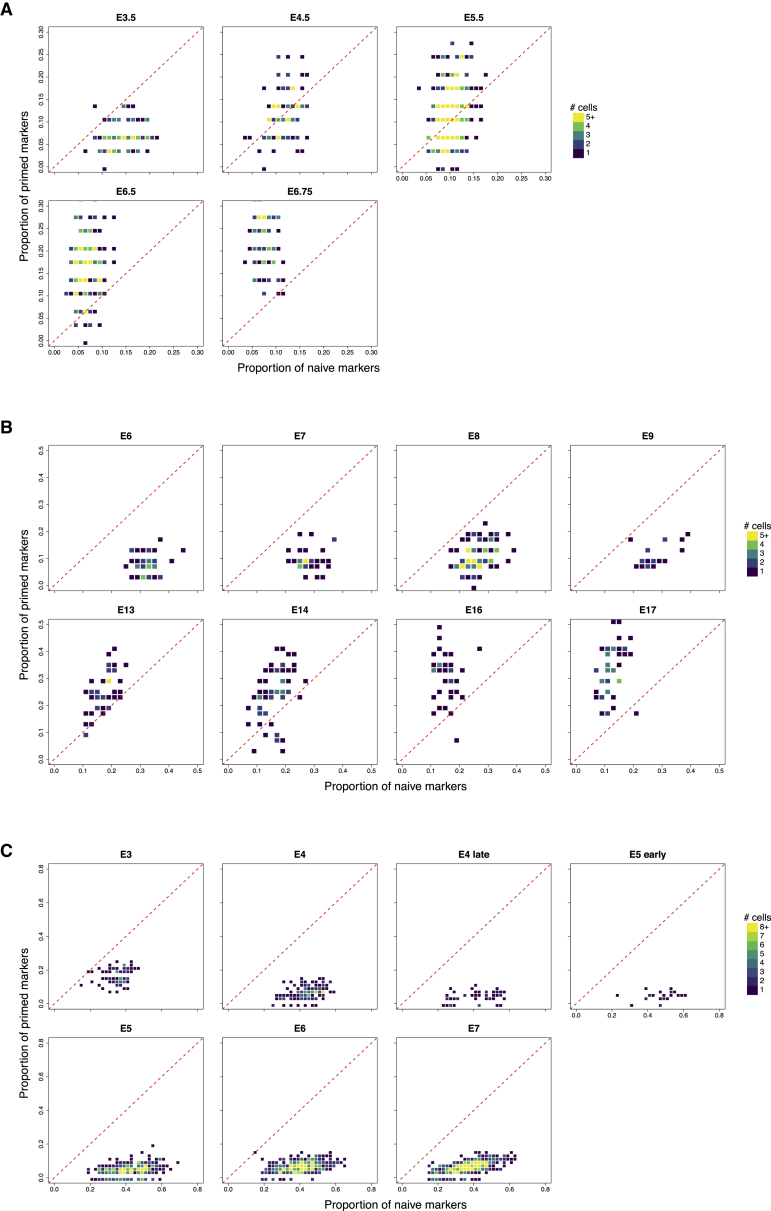
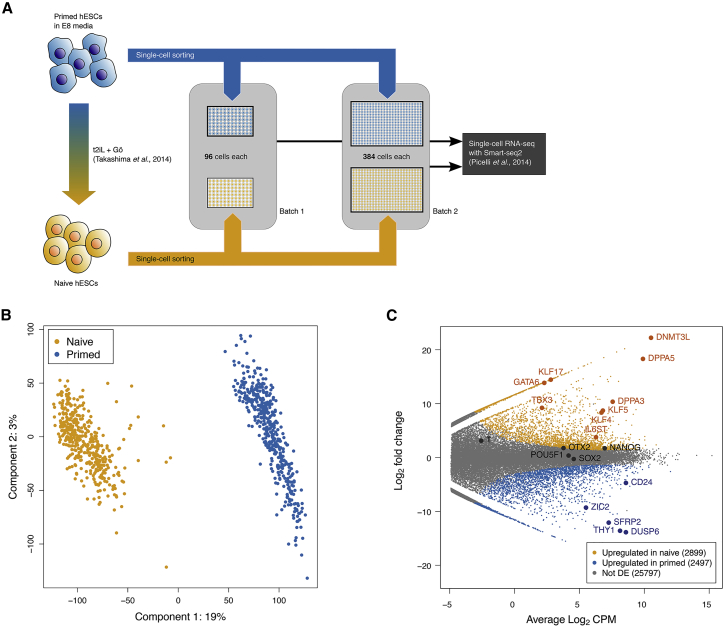
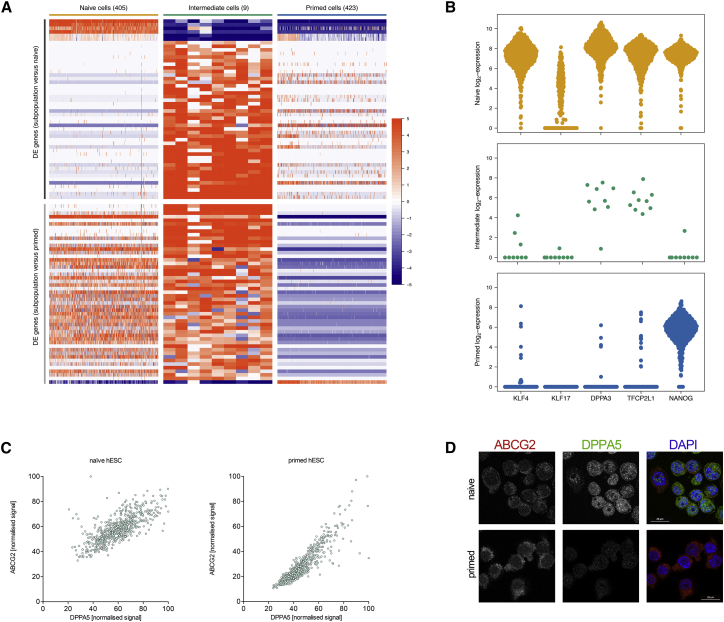
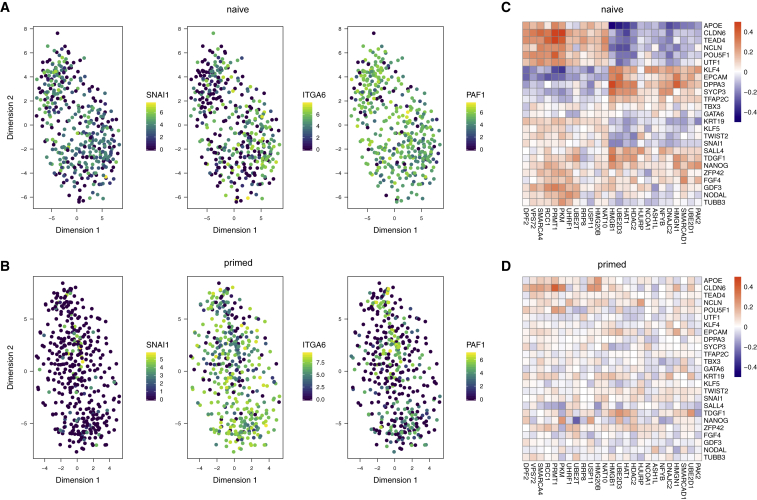
Conventional human embryonic stem cells are considered to be primed pluripotent but can be induced to enter a naive state. However, the transcriptional features associated with naive and primed pluripotency are still not fully understood. Here we used single-cell RNA sequencing to characterize the differences between these conditions. We observed that both naive and primed populations were mostly homogeneous with no clear lineage-related structure and identified an intermediate subpopulation of naive cells with primed-like expression. We found that the naive-primed pluripotency axis is preserved across species, although the timing of the transition to a primed state is species specific. We also identified markers for distinguishing human naive and primed pluripotency as well as strong co-regulatory relationships between lineage markers and epigenetic regulators that were exclusive to naive cells. Our data provide valuable insights into the transcriptional landscape of human pluripotency at a cellular and genome-wide resolution.
传统的人类胚胎干细胞被认为是初始多能性的,但可以被诱导进入原始状态。然而,与原始和初始多能性相关的转录特征仍不完全清楚。在这里,我们使用单细胞 RNA 测序来描述这些状态之间的差异。我们观察到,原始和初始群体主要是同质的,没有明显的谱系相关结构,并鉴定出具有初始样表达的原始细胞的中间亚群。我们发现,原始-初始多能性轴在物种间是保守的,尽管向初始状态的转变时间是特定于物种的。我们还确定了区分人类原始和初始多能性的标记,以及与原始细胞特有的谱系标记和表观遗传调节剂之间的强共调控关系。我们的数据为人类多能性在细胞和全基因组分辨率下的转录景观提供了有价值的见解。