Fraunhofer Institute for Molecular Biology and Applied Ecology IME, Branch for Translational Medicine and Pharmacology TMP, Theodor-Stern-Kai 7, 60596, Frankfurt am Main, Germany.
pharmazentrum frankfurt/ZAFES, Institute of Clinical Pharmacology, Goethe University Hospital Frankfurt, Theodor-Stern-Kai 7, 60590, Frankfurt/Main, Germany.
Sci Rep. 2019 Jan 24;9(1):747. doi: 10.1038/s41598-018-37342-8.
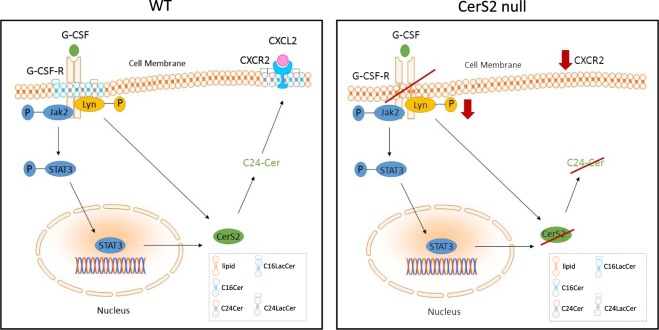
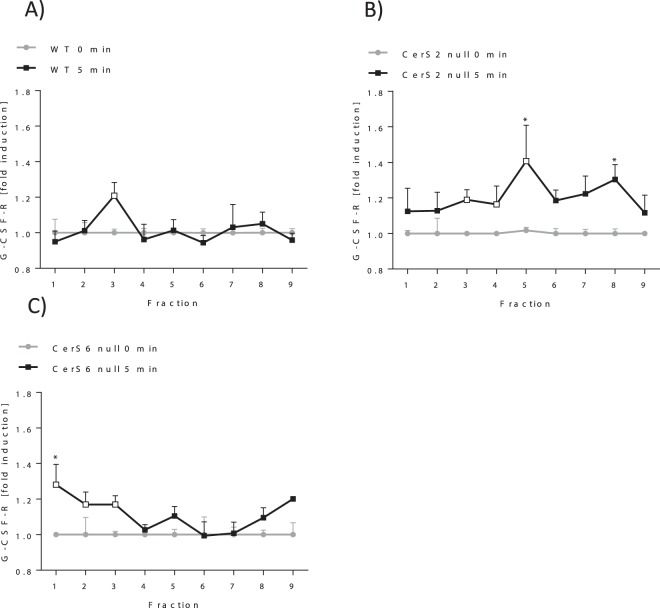
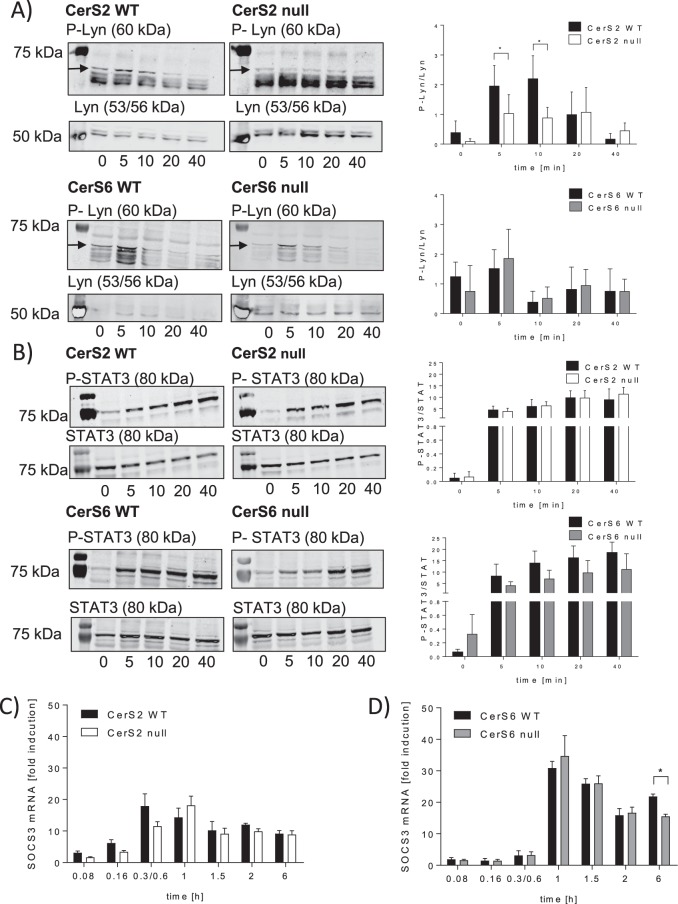
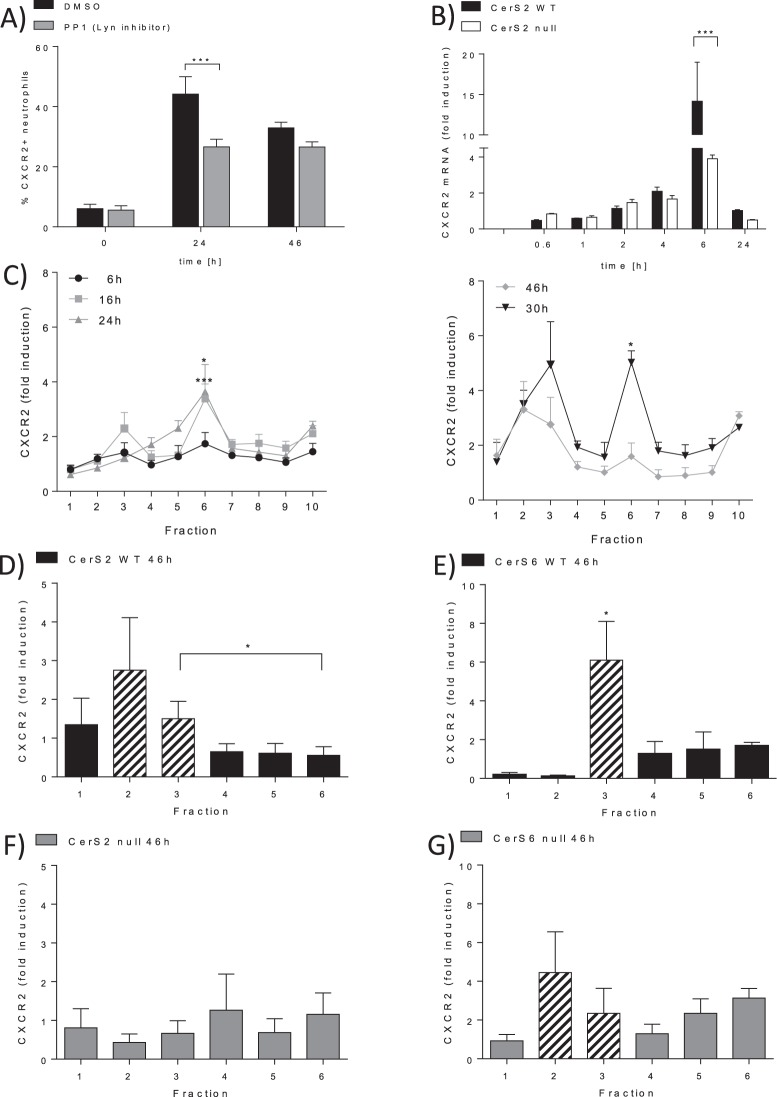
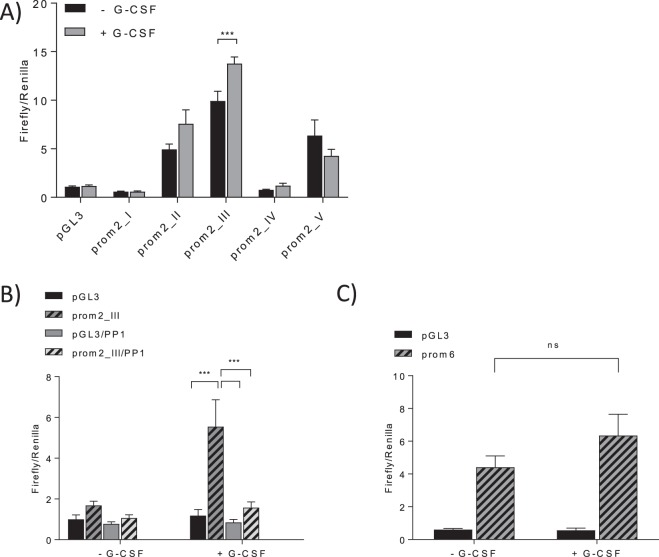
Ceramides are sphingolipids with defined acyl chain lengths, which are produced by corresponding ceramide synthases (CerS1-6). In experimental autoimmune encephalomyelitis (EAE), an animal model of multiple sclerosis (MS), the ablation of CerS2 suppresses EAE-pathology by reducing neutrophil migration into the central nervous system. This migration is induced by granulocyte-colony stimulating factor (G-CSF) signaling. G-CSF signaling leads to a signal cascade including the phosphorylation of Lyn kinase and STAT3. This in turn regulates expression of the neutrophil surface receptor chemokine receptor 2 (CXCR2) and causes translocation of the receptor into detergent-resistant membranes (DRMs). In this study we investigated the role of ceramides in G-CSF signaling. We found, that G-CSF treatment of wild type bone marrow cells (BMCs) leads to translocation of G-CSF-receptor (G-CSF-R) into DRMs. G-CSF also induces downregulation of ceramides in WT and CerS2 null BMCs, as well as upregulation of very long chain lactosylceramides. However, in CerS2 null BMCs, G-CSF failed to induce translocation of G-CSF-R into DRMs, leading to reduced phosphorylation of Lyn and reduced CXCR2 expression. Interestingly, G-CSF signaling in CerS6 null BMCs was not affected. In conclusion, very long chain ceramides are important for G-CSF signaling and translocation of G-CSF-R into DRMs.
神经酰胺是具有特定酰链长度的神经鞘脂,由相应的神经酰胺合酶(CerS1-6)产生。在实验性自身免疫性脑脊髓炎(EAE),即多发性硬化症(MS)的动物模型中,CerS2 的缺失通过减少中性粒细胞向中枢神经系统的迁移来抑制 EAE 病理学。这种迁移是由粒细胞集落刺激因子(G-CSF)信号诱导的。G-CSF 信号导致包括 Lyn 激酶和 STAT3 磷酸化的信号级联反应。这反过来又调节中性粒细胞表面受体趋化因子受体 2(CXCR2)的表达,并导致受体易位到去污剂抗性膜(DRMs)中。在这项研究中,我们研究了神经酰胺在 G-CSF 信号中的作用。我们发现,G-CSF 处理野生型骨髓细胞(BMCs)会导致 G-CSF 受体(G-CSF-R)易位到 DRMs 中。G-CSF 还诱导 WT 和 CerS2 缺失 BMC 中神经酰胺的下调,以及非常长链乳糖基神经酰胺的上调。然而,在 CerS2 缺失的 BMC 中,G-CSF 未能诱导 G-CSF-R 易位到 DRMs,导致 Lyn 磷酸化减少和 CXCR2 表达减少。有趣的是,CerS6 缺失的 BMC 中的 G-CSF 信号不受影响。总之,非常长链神经酰胺对于 G-CSF 信号和 G-CSF-R 易位到 DRMs 非常重要。