Doellman Meredith M, Egan Scott P, Ragland Gregory J, Meyers Peter J, Hood Glen R, Powell Thomas H Q, Lazorchak Peter, Hahn Daniel A, Berlocher Stewart H, Nosil Patrik, Feder Jeffrey L
Department of Biological Sciences University of Notre Dame Notre Dame Indiana.
Advanced Diagnostics and Therapeutics Initiative University of Notre Dame Notre Dame Indiana.
Ecol Evol. 2018 Dec 14;9(1):393-409. doi: 10.1002/ece3.4758. eCollection 2019 Jan.
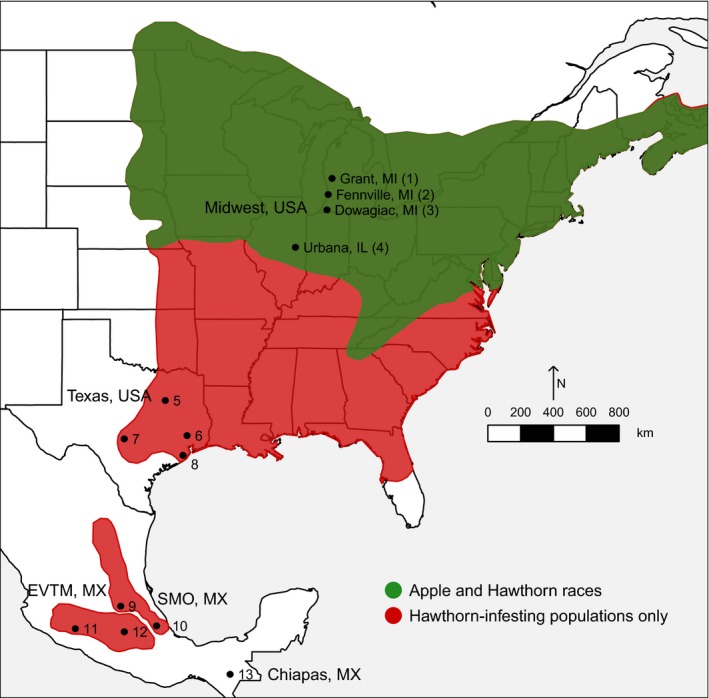
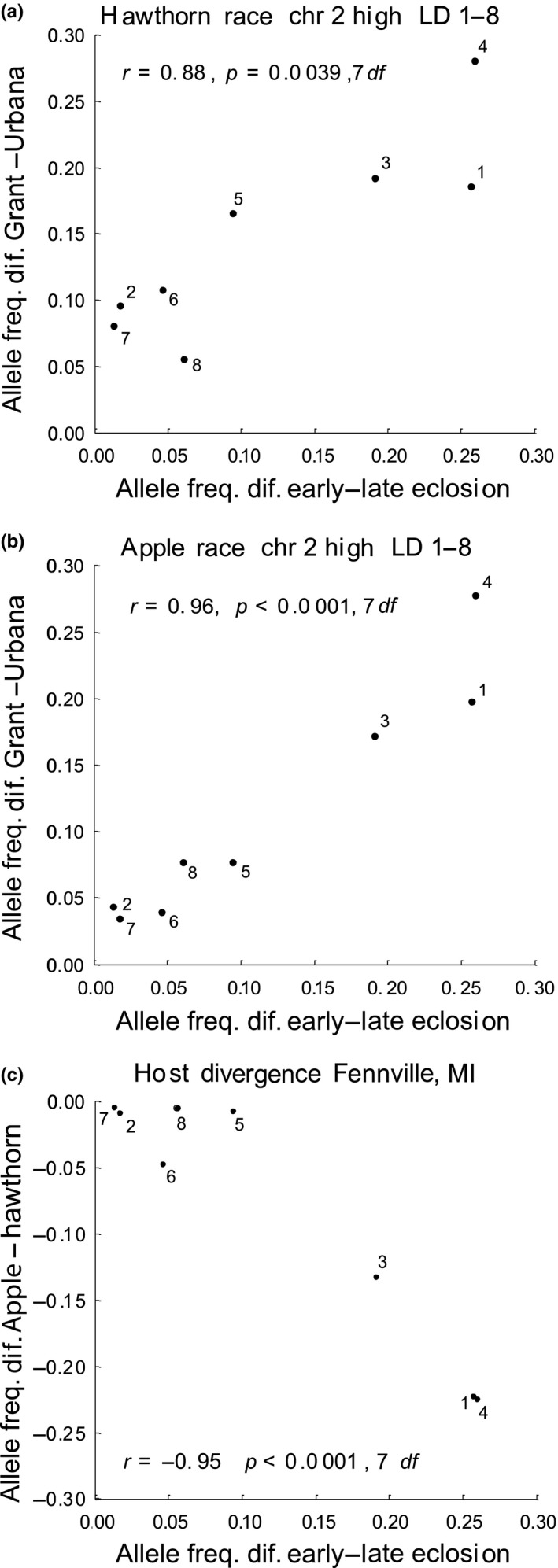
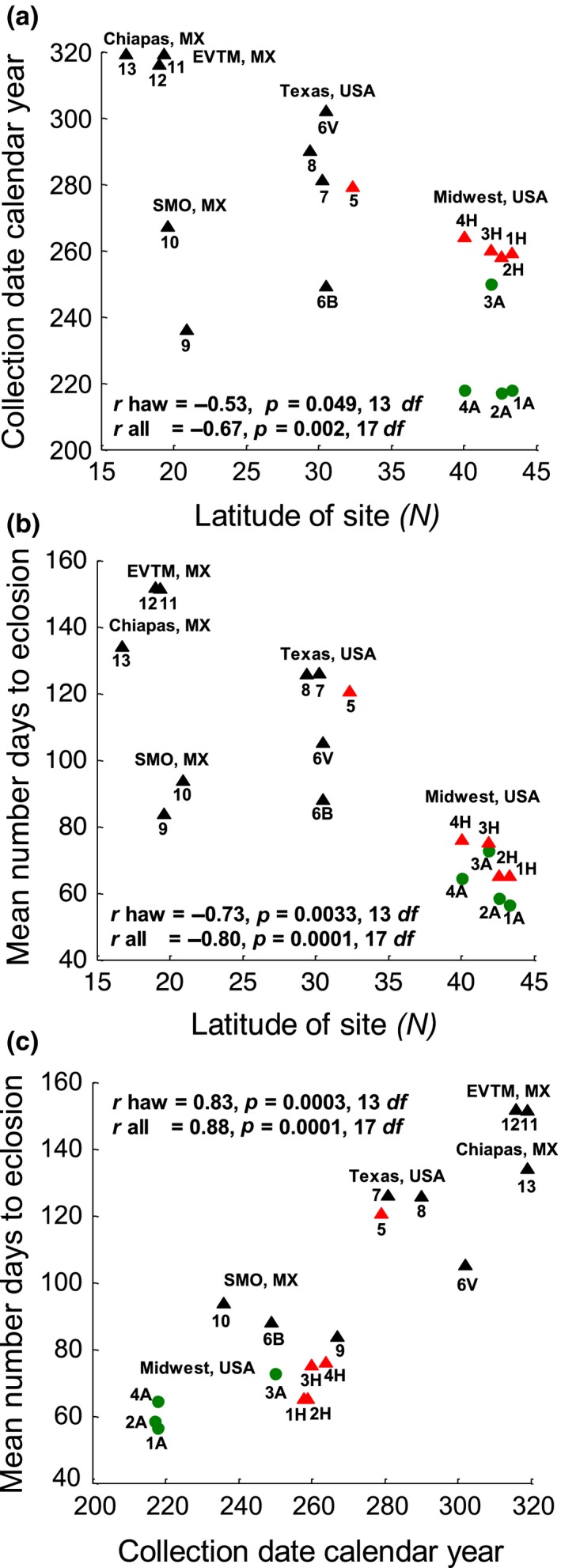
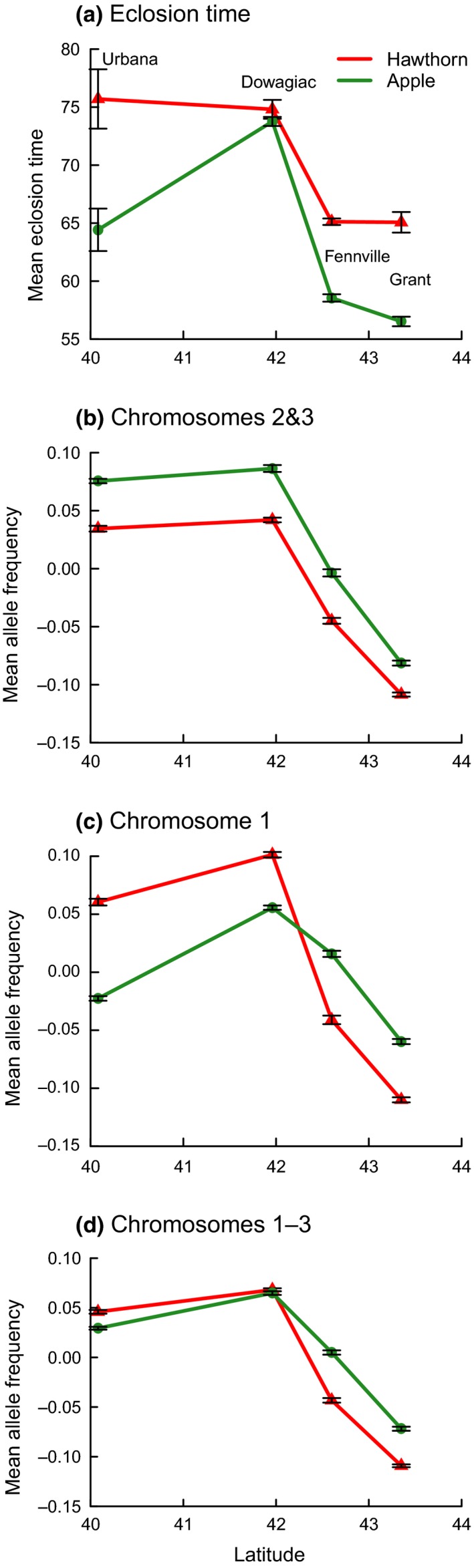
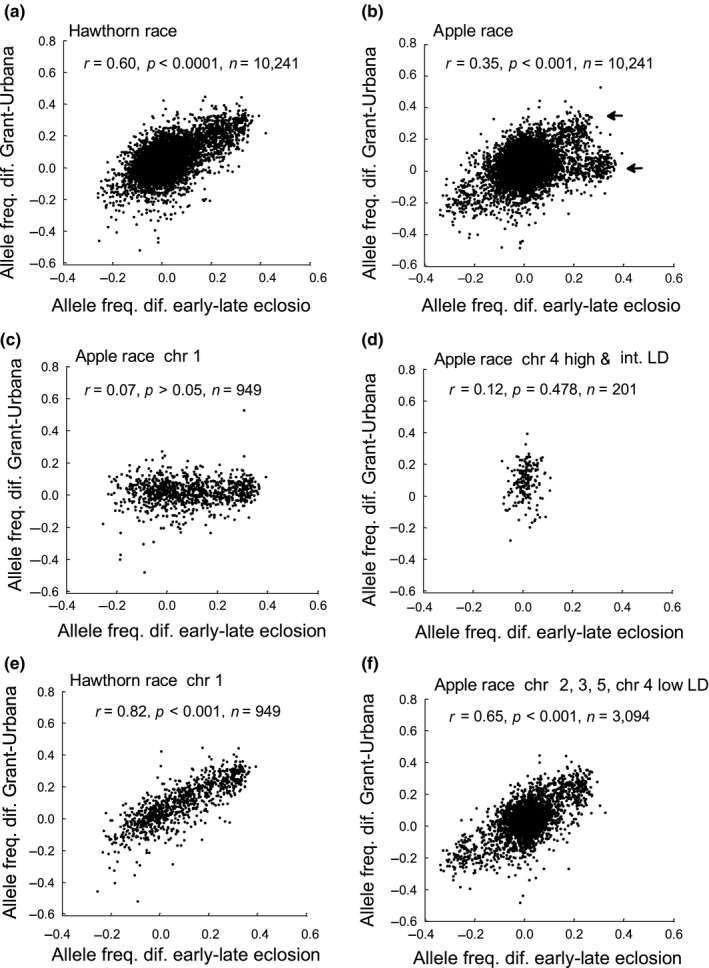
Taxa harboring high levels of standing variation may be more likely to adapt to rapid environmental shifts and experience ecological speciation. Here, we characterize geographic and host-related differentiation for 10,241 single nucleotide polymorphisms in fruit flies to infer whether standing genetic variation in adult eclosion time in the ancestral hawthorn ( spp.)-infesting host race, as opposed to new mutations, contributed substantially to its recent shift to earlier fruiting apple (). Allele frequency differences associated with early vs. late eclosion time within each host race were significantly related to geographic genetic variation and host race differentiation across four sites, arrayed from north to south along a 430-km transect, where the host races co-occur in sympatry in the Midwest United States. Host fruiting phenology is clinal, with both apple and hawthorn trees fruiting earlier in the North and later in the South. Thus, we expected alleles associated with earlier eclosion to be at higher frequencies in northern populations. This pattern was observed in the hawthorn race across all four populations; however, allele frequency patterns in the apple race were more complex. Despite the generally earlier eclosion timing of apple flies and corresponding apple fruiting phenology, alleles on chromosomes 2 and 3 associated with earlier emergence were paradoxically at lower frequency in the apple than hawthorn host race across all four sympatric sites. However, loci on chromosome 1 did show higher frequencies of early eclosion-associated alleles in the apple than hawthorn host race at the two southern sites, potentially accounting for their earlier eclosion phenotype. Thus, although extensive clinal genetic variation in the ancestral hawthorn race exists and contributed to the host shift to apple, further study is needed to resolve details of how this standing variation was selected to generate earlier eclosing apple fly populations in the North.
拥有高水平现存变异的分类群可能更有可能适应快速的环境变化并经历生态物种形成。在这里,我们对果蝇中10241个单核苷酸多态性的地理和宿主相关分化进行了表征,以推断在祖先寄生山楂(山楂属物种)的宿主种群中,成虫羽化时间的现存遗传变异,而非新突变,是否对其最近向更早结果的苹果(苹果属)的转变有重大贡献。在四个地点(沿着430公里的样带从北到南排列,在美国中西部地区宿主种群同域共存),每个宿主种群内与早羽化时间和晚羽化时间相关的等位基因频率差异与地理遗传变异和宿主种群分化显著相关。宿主结果物候是渐变的,苹果和山楂树在北方结果较早,在南方结果较晚。因此,我们预计与较早羽化相关的等位基因在北方种群中的频率会更高。在所有四个种群的山楂种群中都观察到了这种模式;然而,苹果种群中的等位基因频率模式更为复杂。尽管苹果果蝇的羽化时间通常较早,且与苹果结果物候相对应,但在所有四个同域地点,与较早羽化相关的2号和3号染色体上的等位基因在苹果种群中的频率反而比山楂宿主种群中的频率低。然而,在两个南部地点,1号染色体上的位点确实显示出与较早羽化相关的等位基因在苹果种群中的频率高于山楂宿主种群,这可能解释了它们较早羽化的表型。因此,尽管在祖先山楂种群中存在广泛的渐变遗传变异,并促成了向苹果的宿主转变,但仍需要进一步研究来解决这种现存变异是如何被选择以在北方产生更早羽化的苹果果蝇种群的细节问题。