Mallett Christiane L, Shuboni-Mulligan Dorela D, Shapiro Erik M
Molecular and Cellular Imaging Laboratory, Department of Radiology, Michigan State University, East Lansing, MI, United States.
Institute for Quantitative Health Science and Engineering, Michigan State University, East Lansing, MI, United States.
Front Neurosci. 2019 Jan 11;12:995. doi: 10.3389/fnins.2018.00995. eCollection 2018.
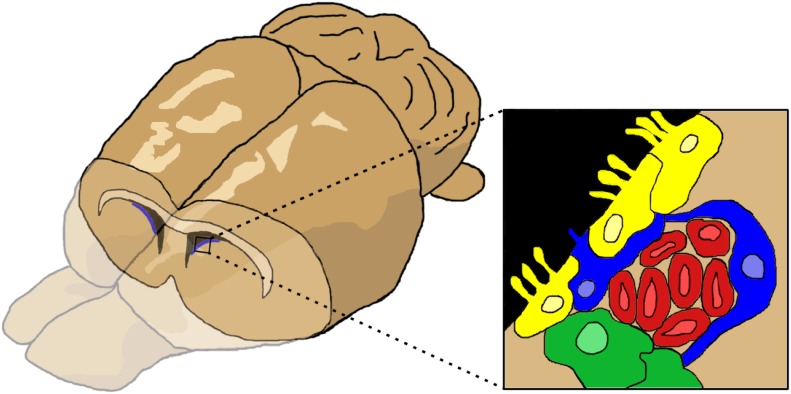
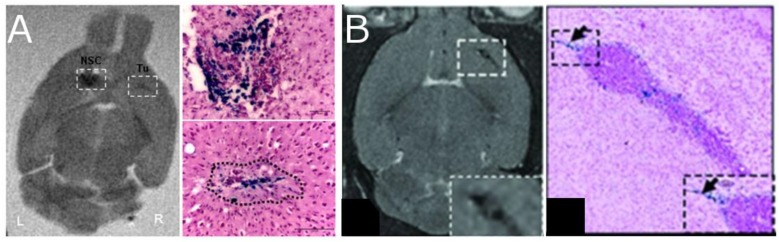
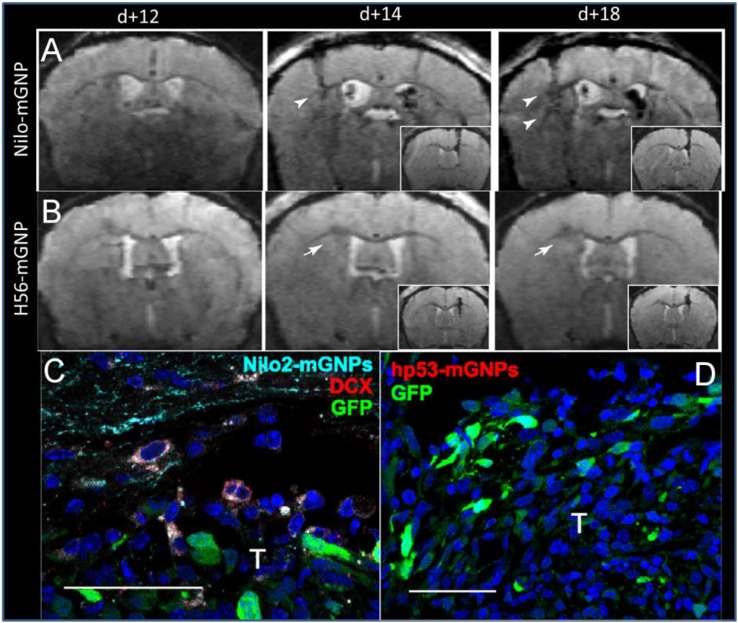
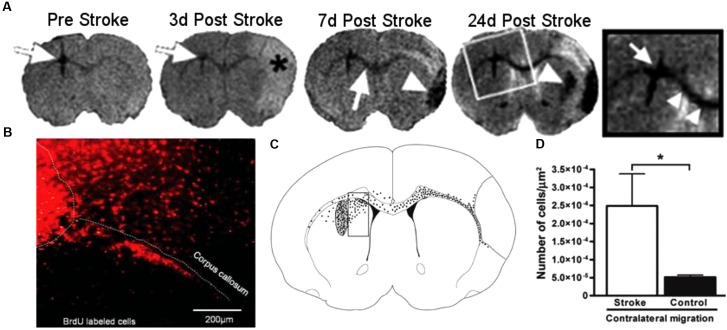
The study of neurogenesis and neural progenitor cells (NPCs) is important across the biomedical spectrum, from learning about normal brain development and studying disease to engineering new strategies in regenerative medicine. In adult mammals, NPCs proliferate in two main areas of the brain, the subventricular zone (SVZ) and the subgranular zone, and continue to migrate even after neurogenesis has ceased within the rest of the brain. In healthy animals, NPCs migrate along the rostral migratory stream (RMS) from the SVZ to the olfactory bulb, and in diseased animals, NPCs migrate toward lesions such as stroke and tumors. Here we review how MRI-based cell tracking using iron oxide particles can be used to monitor and quantify NPC migration in the intact rodent brain, in a serial and relatively non-invasive fashion. NPCs can either be labeled directly by injecting particles into the lateral ventricle or RMS, where NPCs can take up particles, or cells can be harvested and labeled , then injected into the brain. For labeling experiments, the particle type, injection site, and image analysis methods have been optimized and cell migration toward stroke and multiple sclerosis lesions has been investigated. Delivery of labeled exogenous NPCs has allowed imaging of cell migration toward more sites of neuropathology, which may enable new diagnostic and therapeutic opportunities for as-of-yet untreatable neurological diseases.
神经发生和神经祖细胞(NPCs)的研究在整个生物医学领域都很重要,涵盖了从了解正常大脑发育、研究疾病到设计再生医学新策略等方面。在成年哺乳动物中,NPCs在大脑的两个主要区域——脑室下区(SVZ)和颗粒下区增殖,并且即使在大脑其他部位的神经发生停止后仍继续迁移。在健康动物中,NPCs沿着嘴侧迁移流(RMS)从SVZ迁移到嗅球,而在患病动物中,NPCs会向中风和肿瘤等病变部位迁移。在此,我们综述了如何利用基于磁共振成像(MRI)的细胞追踪技术,通过氧化铁颗粒以连续且相对无创的方式监测和量化完整啮齿动物大脑中NPCs的迁移。NPCs可以通过将颗粒注射到侧脑室或RMS中直接进行标记,因为NPCs能够摄取颗粒,或者也可以先收获细胞并进行标记,然后再注入大脑。对于标记实验,颗粒类型、注射部位和图像分析方法都已得到优化,并且已经对细胞向中风和多发性硬化症病变部位的迁移进行了研究。递送标记的外源性NPCs使得能够对细胞向更多神经病理学部位的迁移进行成像,这可能为目前无法治疗的神经疾病带来新的诊断和治疗机会。