Silveira Gabriela da Paz, Ishimura Mayari Eika, Teixeira Daniela, Galindo Layla Tesla, Sardinha Agnes Araujo, Porcionatto Marimelia, Longo-Maugéri Ieda Maria
Division of Immunology, Department of Microbiology, Immunology and Parasitology, Paulista School of Medicine, Federal University of São Paulo, São Paulo, Brazil.
Division of Molecular Biology, Department of Biochemistry, Paulista School of Medicine, Federal University of São Paulo, São Paulo, Brazil.
Front Mol Neurosci. 2019 Jan 10;11:489. doi: 10.3389/fnmol.2018.00489. eCollection 2018.
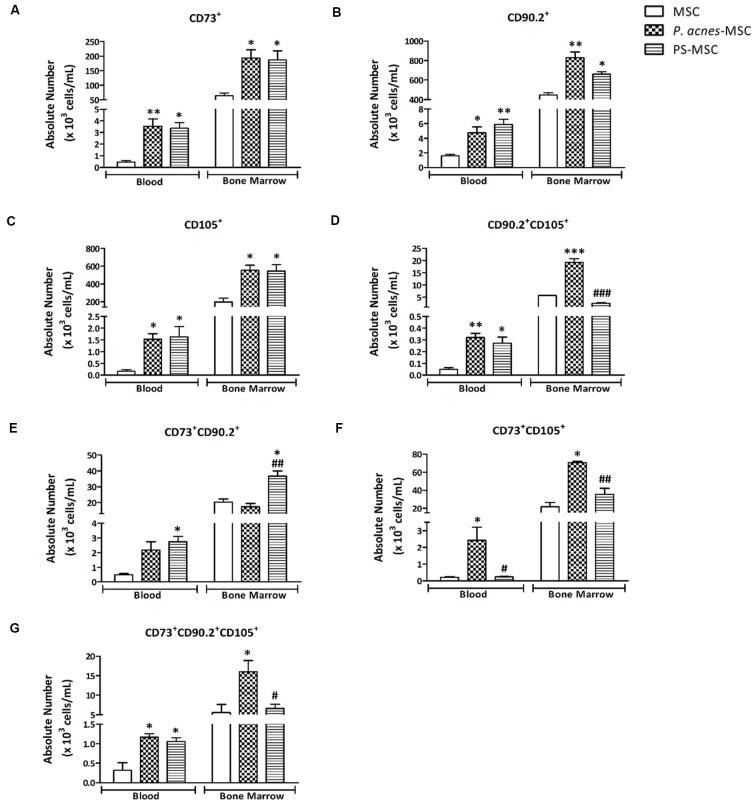
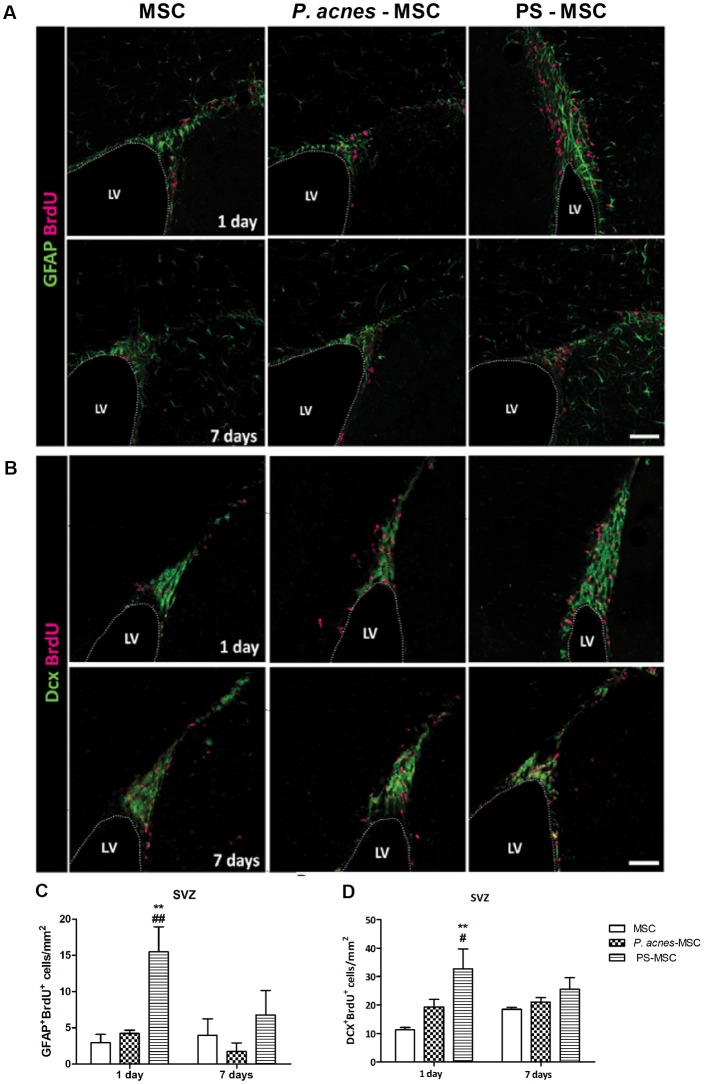
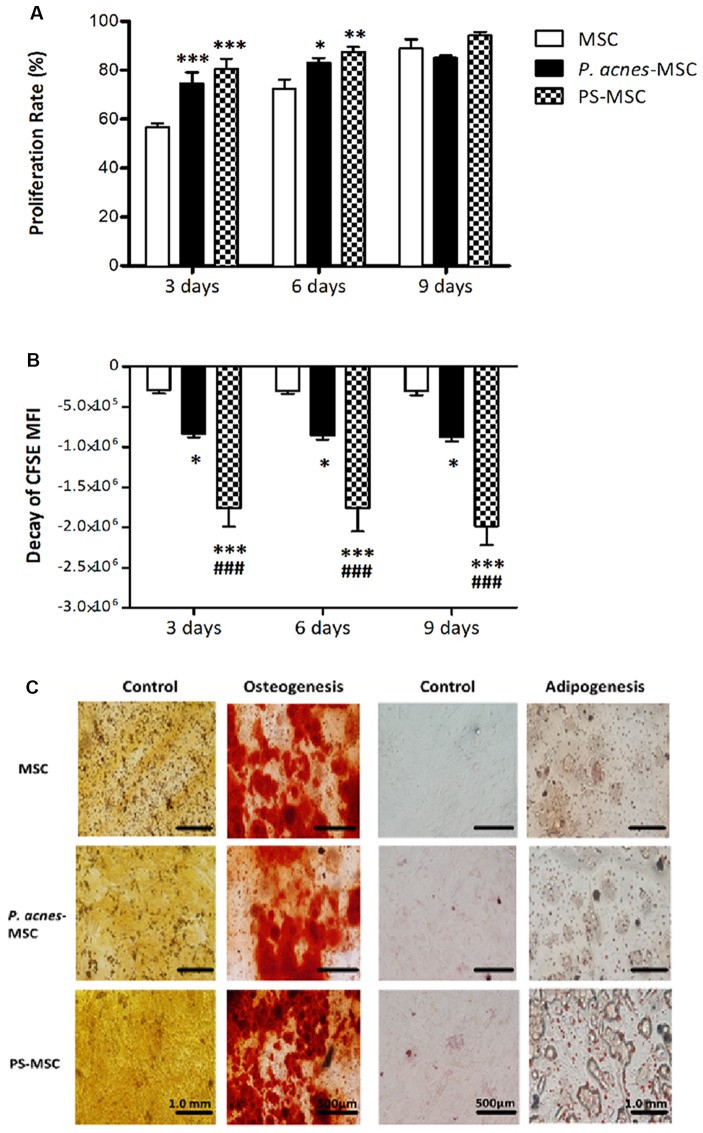
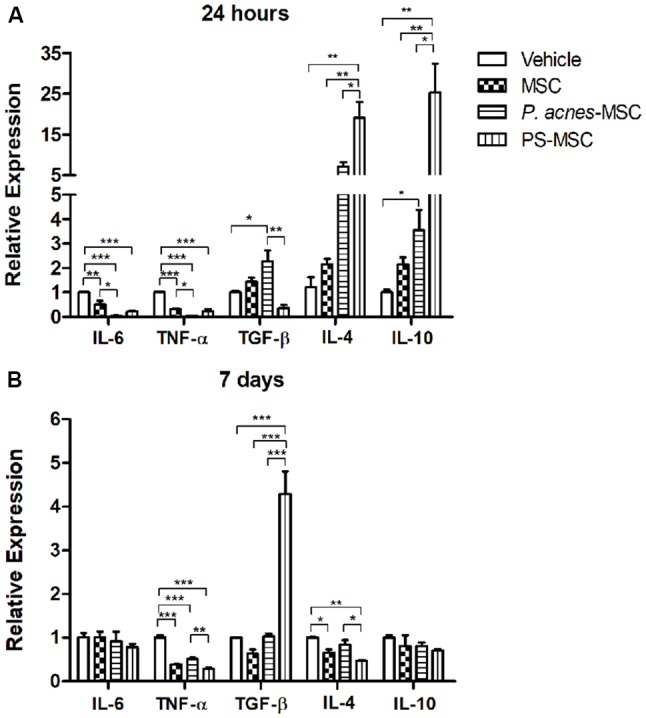
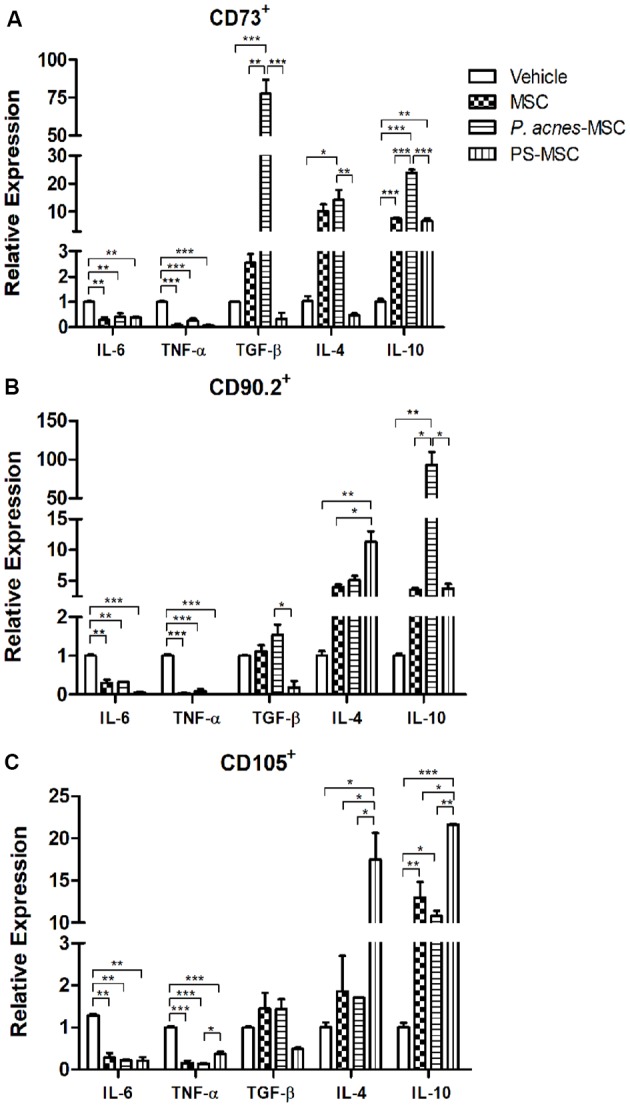
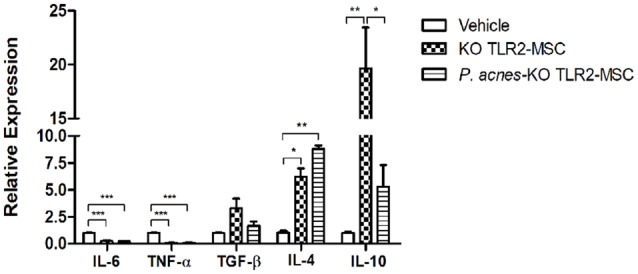
Mesenchymal stem cells (MSCs) are an essential tool for regenerative medicine, which aims to develop new technologies to improve their effects to obtain useful transplantation results. MSC immunomodulatory role has been just demonstrated; however, how they react when they are stimulated by an adjuvant is poorly understood. Our group showed the adjuvant effect of killed () on hematopoietic stem cells. As these cells share the same MSCs bone marrow (BM) site and interact with each other, here we evaluated the and its soluble polysaccharide (PS) effect on MSCs and their immunomodulatory role in a murine model of traumatic brain injury (TBI). The bacteria increased the absolute number of MSCs, including MSC subpopulations, and maintained MSC plasticity. and PS enhanced MSC proliferation and improved their immunomodulatory effect. -MSC and PS-MSC transplantation increased anti-inflammatory cytokine expression and diminished pro-inflammatory cytokine expression after injury. This effect seemed to be mediated via TLR2 since -KOTLR2-MSC transplantation decreased TGF-β and IL-10 expression. Increasing in neural stem cells and neuroblasts after PS-MSC transplantation was also observed. The adjuvant effect of is an alternative means of expanding MSCs and important to identify their subpopulations to know better their role under exogenous stimuli including inflammation resolution in an experimental model.
间充质干细胞(MSCs)是再生医学的重要工具,再生医学旨在开发新技术以提高其效果从而获得有效的移植结果。MSCs的免疫调节作用刚刚得到证实;然而,人们对它们在佐剂刺激下的反应了解甚少。我们小组展示了灭活的()对造血干细胞的佐剂作用。由于这些细胞与MSCs共享相同的骨髓(BM)位点并相互作用,在此我们评估了及其可溶性多糖(PS)对MSCs的影响及其在创伤性脑损伤(TBI)小鼠模型中的免疫调节作用。该细菌增加了MSCs的绝对数量,包括MSC亚群,并维持了MSC的可塑性。和PS增强了MSC的增殖并改善了它们的免疫调节作用。-MSC和PS-MSC移植增加了损伤后抗炎细胞因子的表达并减少了促炎细胞因子的表达。这种作用似乎是通过TLR2介导的,因为-KOTLR2-MSC移植降低了TGF-β和IL-10的表达。PS-MSC移植后神经干细胞和成神经细胞也有所增加。的佐剂作用是扩增MSCs的一种替代方法,并且对于识别其亚群以更好地了解它们在包括实验模型中炎症消退在内的外源性刺激下的作用很重要。