Comprehensive Cancer Centre Eugène Marquis, 35042 Rennes, France.
Univ Rennes, CNRS, ISCR (Institut des Sciences Chimiques de Rennes), UMR 6226, 35000 Rennes, France.
Biomed Res Int. 2018 Dec 31;2018:1435302. doi: 10.1155/2018/1435302. eCollection 2018.
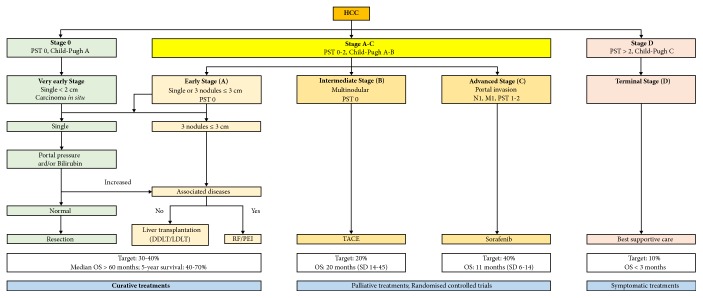
Liver malignancies, either primary tumours (mainly hepatocellular carcinoma and cholangiocarcinoma) or secondary hepatic metastases, are a major cause of death, with an increasing incidence. Among them, hepatocellular carcinoma (HCC) presents with a dark prognosis because of underlying liver diseases and an often late diagnosis. A curative surgical treatment can therefore only be proposed in 20 to 30% of the patients. However, new treatment options for intermediate to advanced stages, such as internal radionuclide therapy, seem particularly attractive. Transarterial radioembolization (TARE), which consists in the use of intra-arterial injection of a radiolabelled embolising agent, has led to very promising results. TARE with Y-loaded microspheres is now becoming an established procedure to treat liver tumours, with two commercially available products (namely, SIR-Sphere® and TheraSphere®). However, this technology remains expensive and is thus not available everywhere. The aim of this review is to describe TARE alternative technologies currently developed and investigated in clinical trials, with special emphasis on HCC.
肝脏恶性肿瘤,包括原发性肿瘤(主要是肝细胞癌和胆管细胞癌)或继发性肝转移瘤,是导致死亡的主要原因,其发病率正在不断上升。其中,由于基础肝脏疾病和经常较晚的诊断,肝细胞癌(HCC)的预后较差。因此,只有 20%至 30%的患者可以进行治愈性手术治疗。然而,对于中晚期患者,如内部放射性核素治疗等新的治疗选择似乎特别有吸引力。经动脉放射性栓塞术(TARE)是指经动脉内注射放射性标记的栓塞剂,已取得非常有前景的结果。载钇微球的 TARE 现已成为治疗肝脏肿瘤的一种既定方法,有两种市售产品(即 SIR-Sphere®和 TheraSphere®)。然而,这项技术仍然很昂贵,并非到处都能提供。本综述的目的是描述目前正在临床试验中开发和研究的 TARE 替代技术,特别强调 HCC。