Wu Huiqun, Zhou Ju, Chen Jialu, Gu Yuwei, Shi Lili, Ni Haosheng
Department of Medical Informatics, Medical School of Nantong University, Nantong 226001, People's Republic of China.
Department of Otorhinolaryngology, Affiliated Hospital of Nantong University, Nantong 226001, People's Republic of China,
J Pain Res. 2019 Jan 18;12:423-441. doi: 10.2147/JPR.S176960. eCollection 2019.
The objective of this study was to summarize the effectiveness and safety of trigeminal neuralgia (TN) treatment via different radiofrequency approaches such as continuous radiofrequency (CRF), pulsed radiofrequency (PRF), and combined CRF and pulsed radiofrequency (CCPRF) treatments, thus providing high-quality clinical evidence for TN treatment.
A series of databases were searched for relevant articles published between January 1998 and April 2018. The modified Jadad scale was referred to evaluate the methodological quality of the included studies. Data were extracted independently, and the outcome and safety of different routes, temperatures, and guidance used in CRF, PRF, and CCPRF were compared. Meta-analysis and publication bias were calculated using Review Manager software.
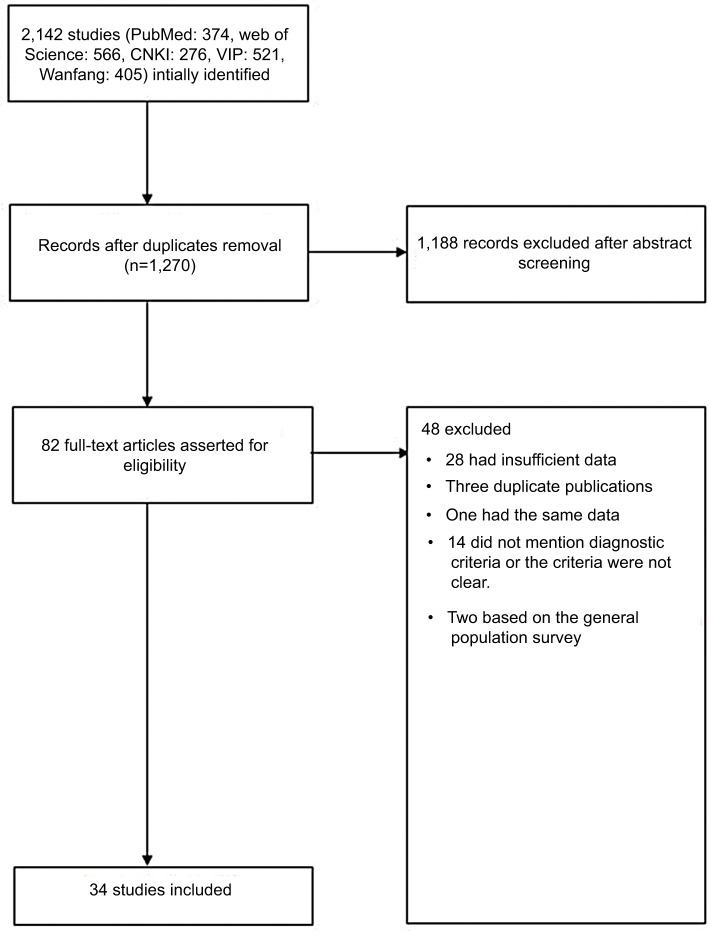
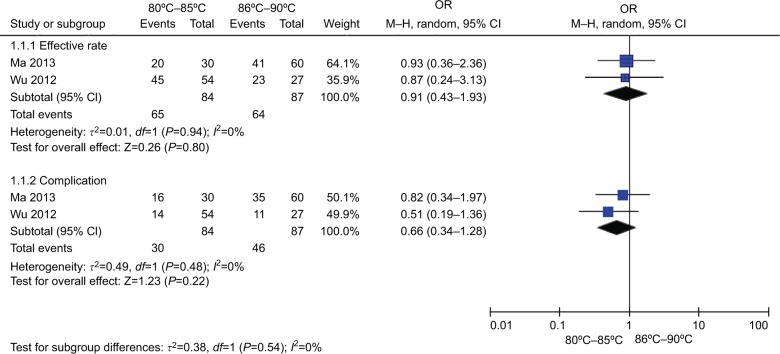
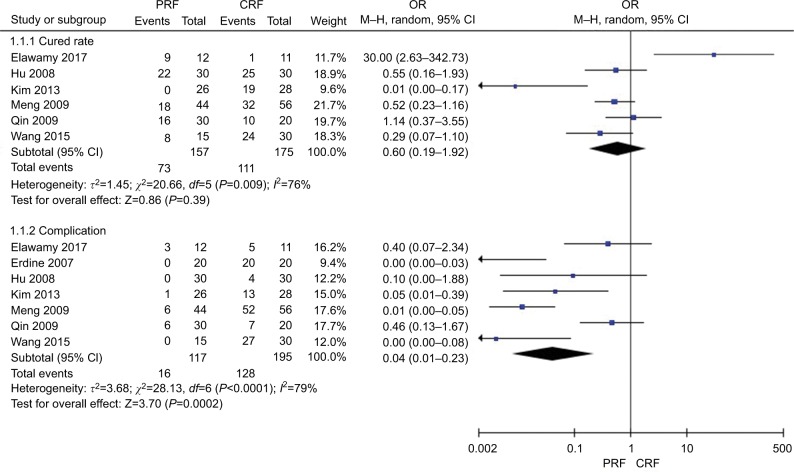
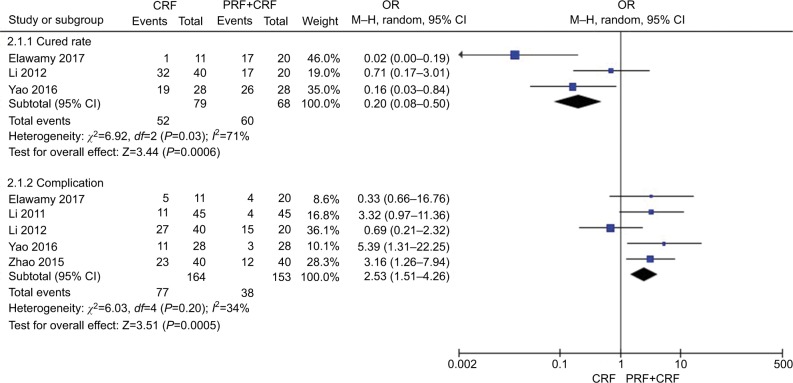
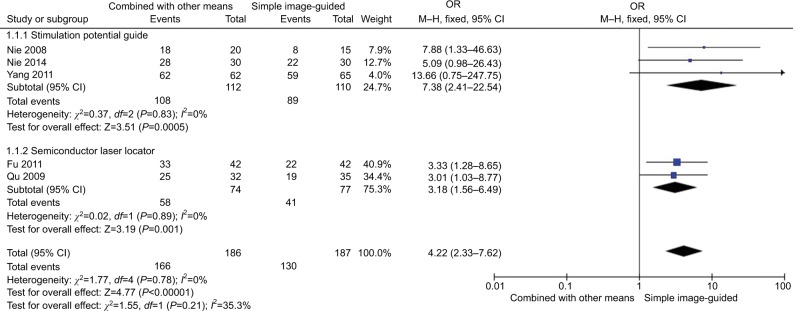
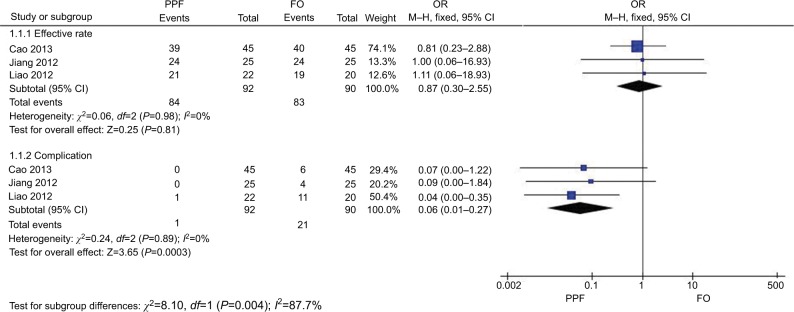
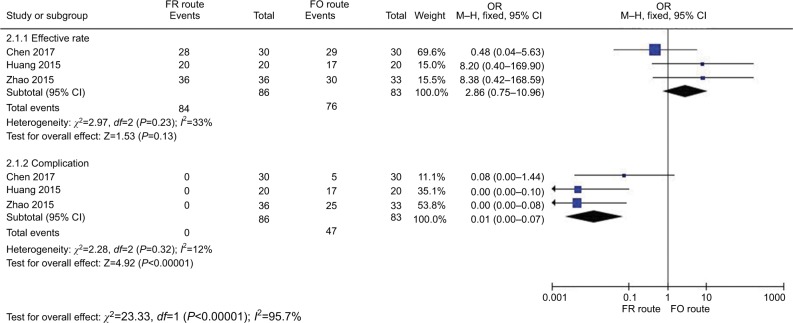
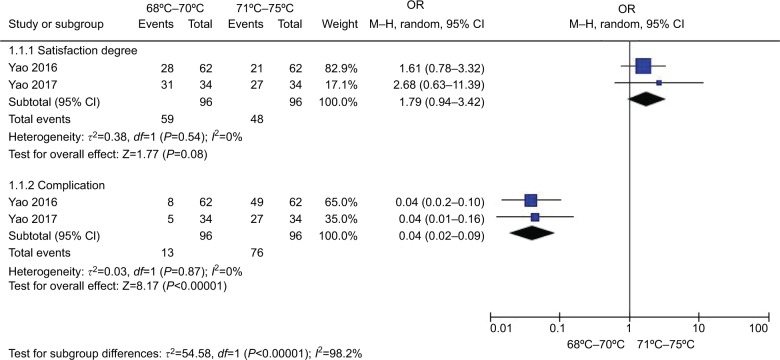
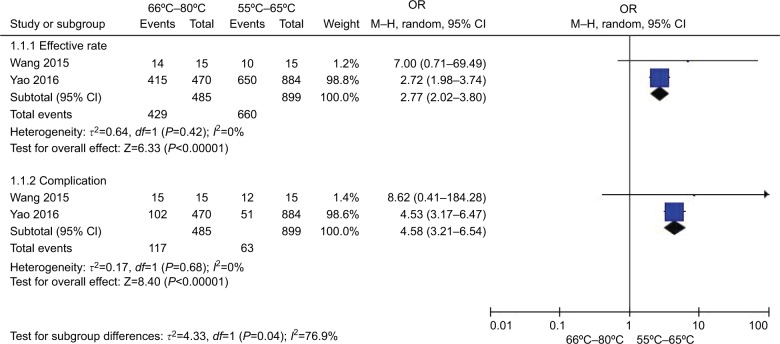
In total, 34 studies involving 3,558 participants were included. With regard to TN treatment, PRF had no difference in cured rate in comparison with CRF, while CRF was more effective than CCPRF (<0.05). The comparison of complication rates showed that PRF and CCPRF were safer. For puncture guidance via CRF, three-dimensional-printed template was more accurate in success rate at first puncture than computed tomography guidance (<0.05). For puncture route, foramen rotundum (FR) or pterygopalatine fossa (PPF) route had no significance in efficiency rate via CRF in comparison with foramen oval (FO) route, but PPF and FR routes were safer. For CRF treatment, low temperature (68°C-70°C) compared with high temperature (71°C-75°C) had no effect. Moreover, higher temperature (66°C-80°C) had a greater effect compared with lower temperature (55°C-65°C) on TN treatment (<0.05), while the safety of which was decreasing.
CCPRF could achieve a greater effect and safety on TN treatment. FR and FO routes in TN puncture treatment via CRF are safer. Medium temperature range is better for CRF therapy, and higher temperature is recommended in PRF, especially for the elders. Further international multicenter trials are needed to confirm the evidence.
本研究旨在总结通过不同射频方法(如连续射频(CRF)、脉冲射频(PRF)以及联合CRF与脉冲射频(CCPRF)治疗)治疗三叉神经痛(TN)的有效性和安全性,从而为TN治疗提供高质量的临床证据。
检索一系列数据库中1998年1月至2018年4月发表的相关文章。参考改良的Jadad量表评估纳入研究的方法学质量。独立提取数据,并比较CRF、PRF和CCPRF中不同路径、温度及引导方式的疗效和安全性。使用Review Manager软件进行荟萃分析和发表偏倚计算。
共纳入34项研究,涉及3558名参与者。在TN治疗方面,PRF与CRF相比治愈率无差异,而CRF比CCPRF更有效(<0.05)。并发症发生率比较显示PRF和CCPRF更安全。对于CRF穿刺引导,三维打印模板首次穿刺成功率比计算机断层扫描引导更准确(<0.05)。对于穿刺路径,与卵圆孔(FO)路径相比,圆孔(FR)或翼腭窝(PPF)路径通过CRF治疗的有效率无显著差异,但PPF和FR路径更安全。对于CRF治疗,低温(68°C - 70°C)与高温(71°C - 75°C)相比无影响。此外,较高温度(66°C - 80°C)与较低温度(55°C - 65°C)相比对TN治疗效果更大(<0.05),但其安全性降低。
CCPRF在TN治疗中可实现更大的疗效和安全性。通过CRF进行TN穿刺治疗时,FR和FO路径更安全。中等温度范围对CRF治疗更佳,PRF推荐较高温度,尤其对于老年人。需要进一步的国际多中心试验来证实这些证据。