Ciałkowska-Rysz Aleksandra, Dzierżanowski Tomasz
Paliative Care Unit, Oncology Chair, Medical University of Lodz, Lodz, Poland.
Arch Med Sci. 2019 Jan;15(1):146-151. doi: 10.5114/aoms.2018.72566. Epub 2018 Jan 2.
Painful mucosal and cutaneous lesions are often less responsive or even refractory to systemic opioid analgesics. There is evidence suggesting that the effectiveness of topical morphine be restricted to inflammatory pain. The studied groups were small and the observation period relatively short. The aim of this study was to assess the effectiveness and safety of topical morphine for pain related to mucosal lesions and skin ulcers.
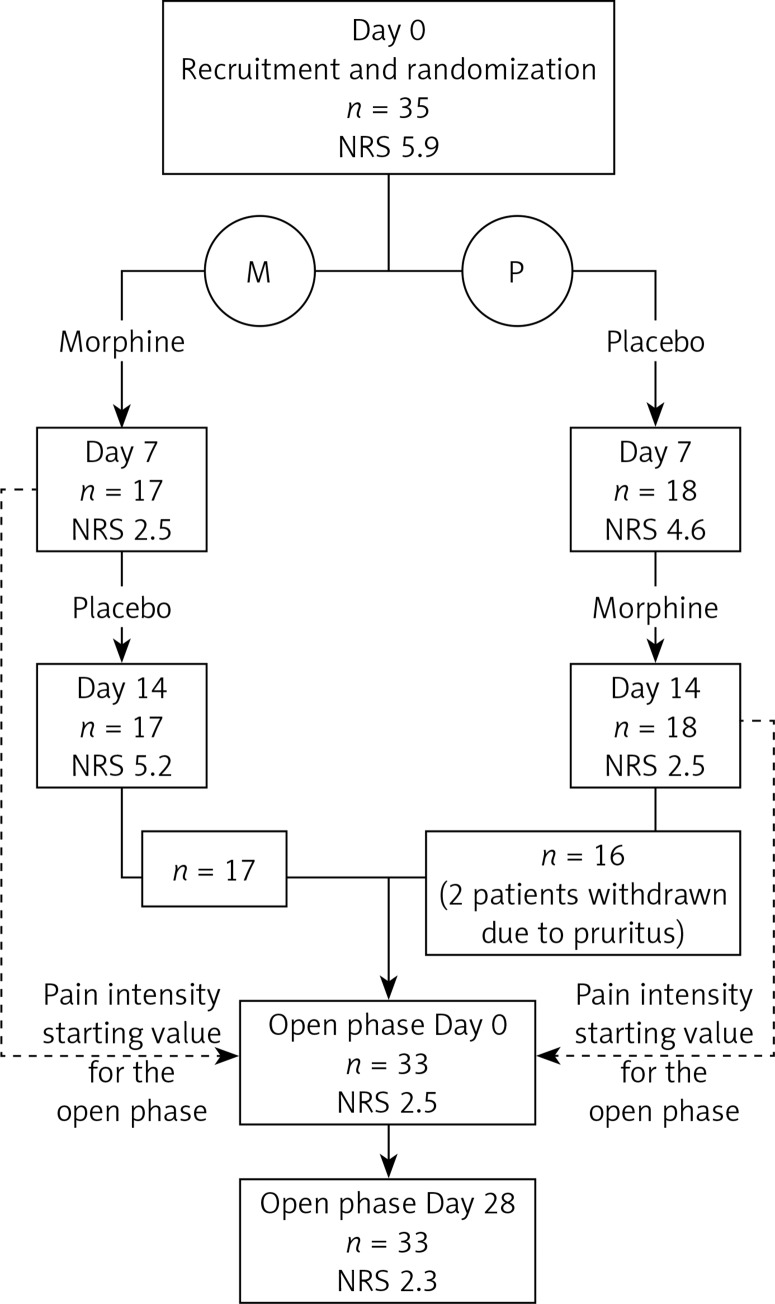
The study was a 14-day randomized placebo-controlled cross-over trial (RCT) with a 28-day follow-up open phase (OP). The trial was conducted in adult patients with localized cancer-related pain and treated with systemic opioids in an oncology center or home hospice. The patients administered 0.2% gel on the mucosal lesion or 0.2% ointment on the skin lesion by themselves, without restrictions regarding the number of doses per day. The primary measurements were mean pain intensity (MPI) and mean pain relief (MPR) on the numeric rating scale (NRS 0-10), and ITT analysis was performed.
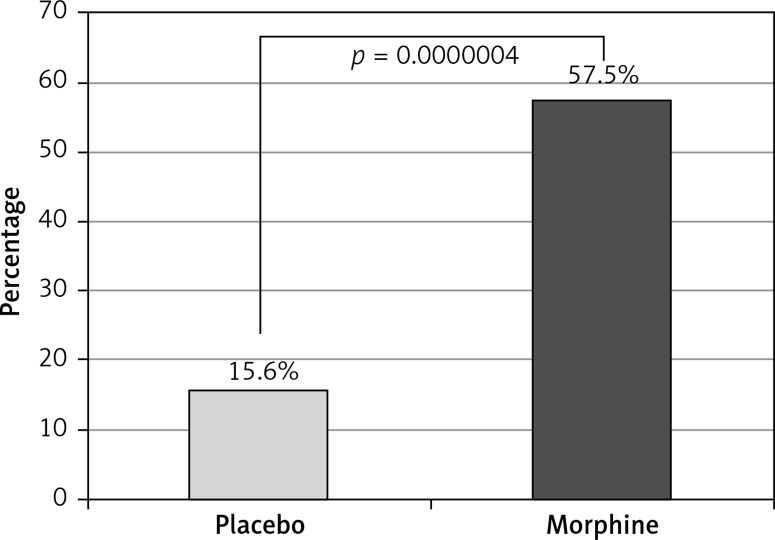
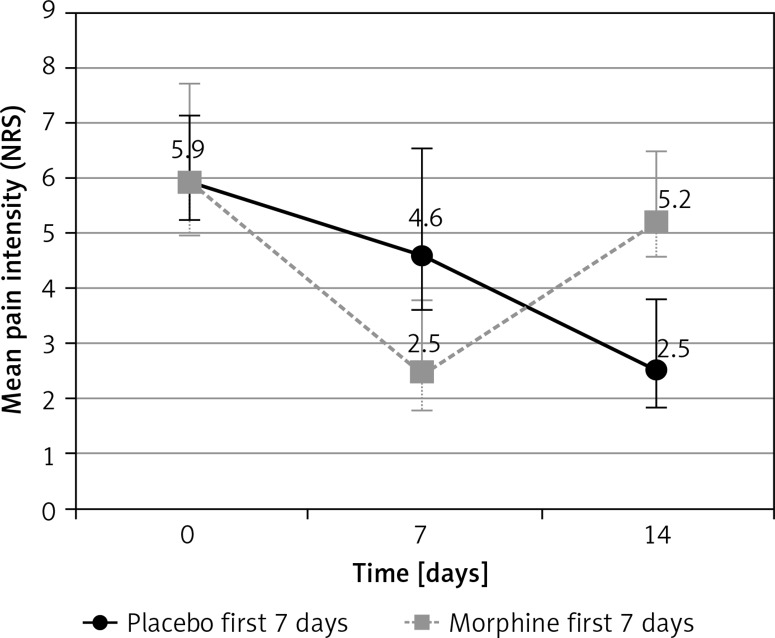
Thirty-five patients were randomized to the RCT, and all of them completed 14-day observation. The MPI before the treatment was NRS 5.9 and decreased to 2.5 after morphine ( < 0.0001 vs. placebo). The MPR was 57% after morphine, and 77% of the patients using topical morphine obtained clinically significant (at least 50% of the starting value) pain relief, statistically different from placebo. The analgesic effect was sustained over the 28-day OP period ( = 0.00001). There were only 2 cases of moderate pruritus, and no other side effects were reported.
Topical morphine was found to be a fast acting, highly effective, and safe medication for mucosal and skin lesions in palliative patients, with a sustainable pain relief effect over the 28-day observation period.
疼痛性黏膜和皮肤病变对全身性阿片类镇痛药往往反应较差甚至无效。有证据表明,局部应用吗啡的有效性仅限于炎性疼痛。以往研究的样本量较小,观察期相对较短。本研究旨在评估局部应用吗啡治疗黏膜病变和皮肤溃疡相关疼痛的有效性和安全性。
本研究为一项为期14天的随机安慰剂对照交叉试验(RCT),并设有28天的随访开放期(OP)。该试验在一家肿瘤中心或家庭临终关怀机构中,对患有局部癌症相关疼痛并接受全身性阿片类药物治疗的成年患者进行。患者自行在黏膜病变处涂抹0.2%的凝胶或在皮肤病变处涂抹0.2%的软膏,每天的用药剂量不限。主要测量指标为数字评分量表(NRS 0 - 10)上的平均疼痛强度(MPI)和平均疼痛缓解程度(MPR),并进行意向性分析(ITT)。
35名患者被随机分配至RCT组,所有患者均完成了为期14天的观察。治疗前MPI为NRS 5.9,使用吗啡后降至2.5(与安慰剂相比,P < 0.0001)。使用吗啡后的MPR为57%,77%使用局部吗啡的患者获得了临床上显著的(至少为起始值的50%)疼痛缓解,与安慰剂组有统计学差异。镇痛效果在28天的开放期内持续存在(P = 0.00001)。仅出现2例中度瘙痒,未报告其他副作用。
局部应用吗啡被发现是一种快速起效、高效且安全的药物,可用于缓解姑息治疗患者的黏膜和皮肤病变疼痛,在28天的观察期内具有持续的疼痛缓解效果。