Pain Research Center, Department of Anesthesiology, University of Cincinnati College of Medicine, 231 Albert Sabin Way, ML0531, Cincinnati, OH 45267-0531, USA.
Pain Research Center, Department of Anesthesiology, University of Cincinnati College of Medicine, 231 Albert Sabin Way, ML0531, Cincinnati, OH 45267-0531, USA.
Neuroscience. 2019 Mar 15;402:51-65. doi: 10.1016/j.neuroscience.2019.01.012. Epub 2019 Jan 27.
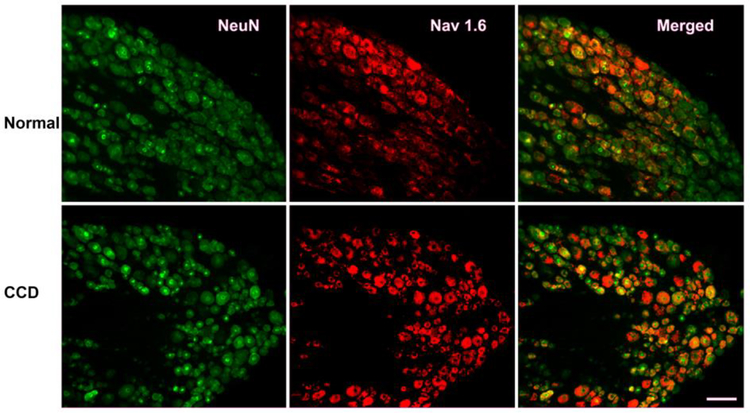
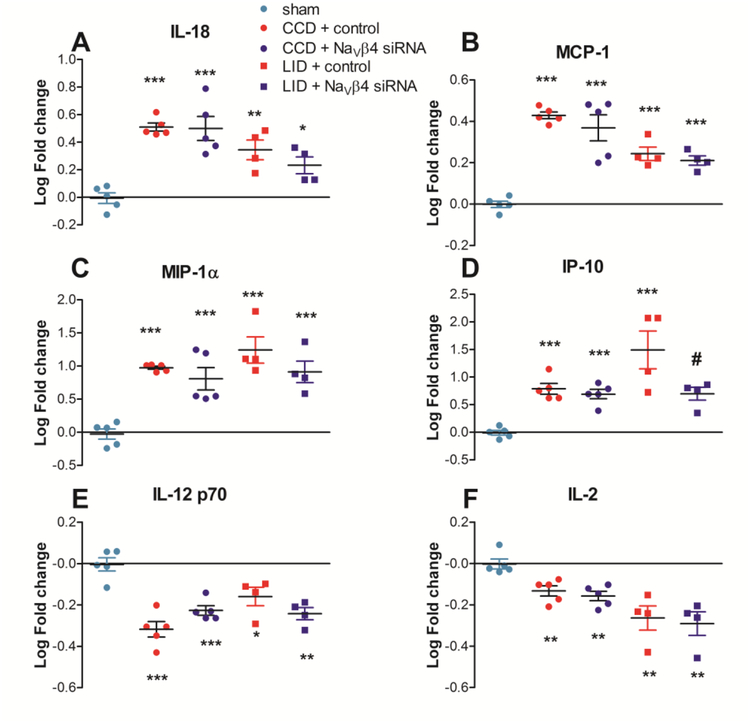
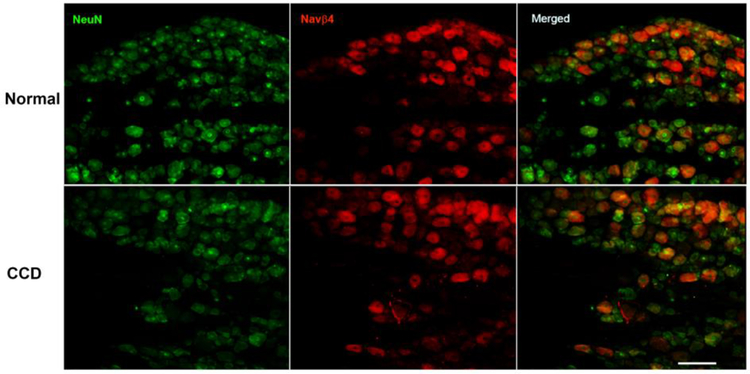
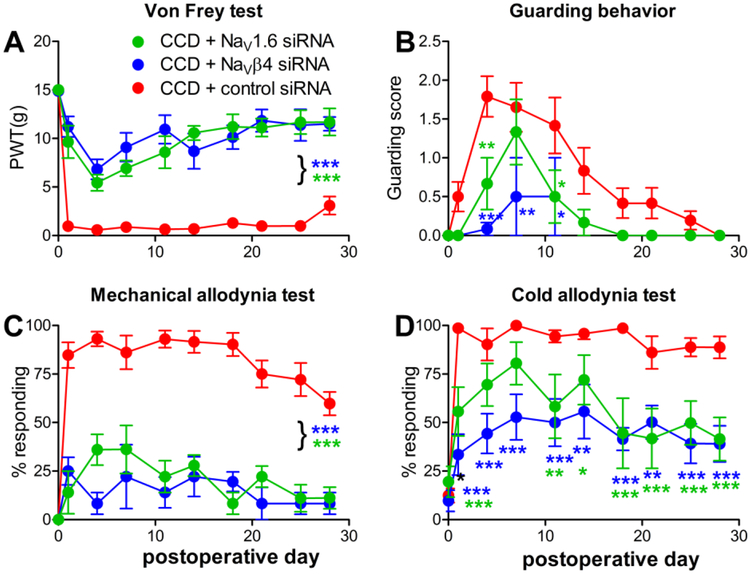
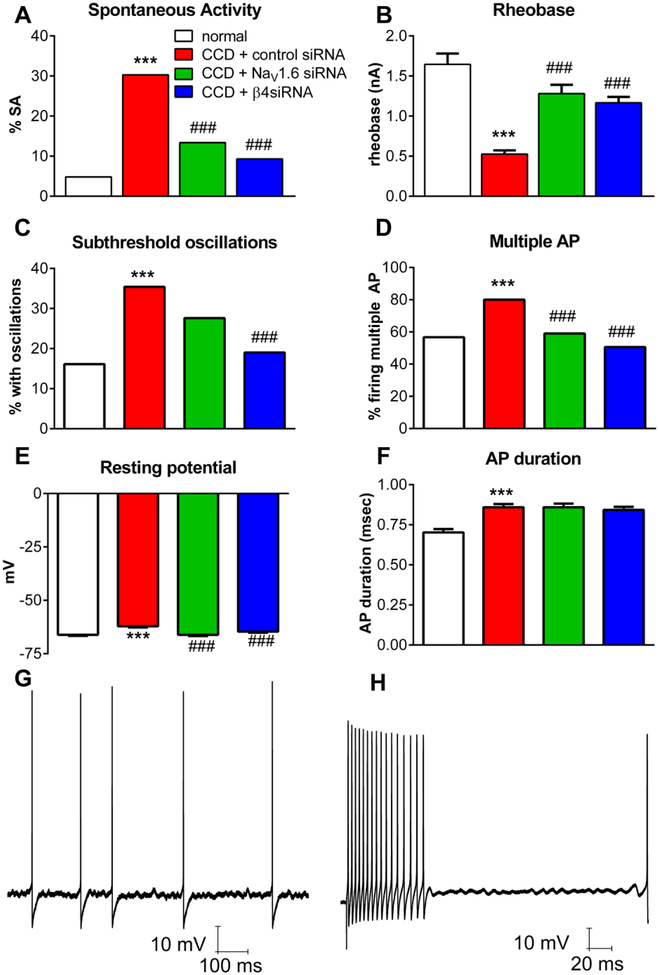
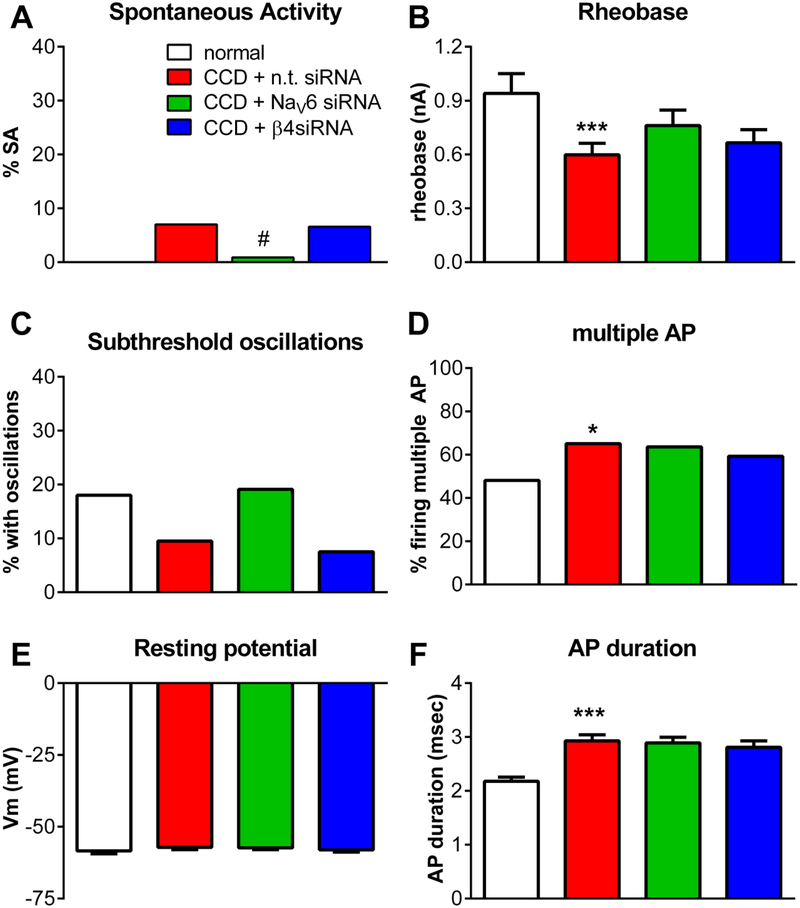
Low back pain is a common cause of chronic pain and disability. It is modeled in rodents by chronically compressing the lumbar dorsal root ganglia (DRG) with small metal rods, resulting in ipsilateral mechanical and cold hypersensitivity, and hyperexcitability of sensory neurons. Sodium channels are implicated in this hyperexcitability, but the responsible isoforms are unknown. In this study, we used siRNA-mediated knockdown of the pore-forming Na1.6 and regulatory Naβ4 sodium channel isoforms that have been previously implicated in a different model of low back pain caused by locally inflaming the L5 DRG. Knockdown of either subunit markedly reduced spontaneous pain and mechanical and cold hypersensitivity induced by DRG compression, and reduced spontaneous activity and hyperexcitability of sensory neurons with action potentials <1.5 msec (predominately cells with myelinated axons, based on conduction velocities measured in a subset of cells) 4 days after DRG compression. These results were similar to those previously obtained in the DRG inflammation model and some neuropathic pain models, in which sensory neurons other than nociceptors seem to play key roles. The cytokine profiles induced by DRG compression and DRG inflammation were also very similar, with upregulation of several type 1 pro-inflammatory cytokines and downregulation of type 2 anti-inflammatory cytokines. Surprisingly, the cytokine profile was largely unaffected by Naβ4 knockdown in either model. The Na1.6 channel, and the Naβ4 subunit that can regulate Na1.6 to enhance repetitive firing, play key roles in both models of low back pain; targeting the abnormal spontaneous activity they generate may have therapeutic value.
下背痛是慢性疼痛和残疾的常见原因。通过用小金属棒慢性压缩腰椎背根神经节 (DRG),在啮齿动物中模拟该疾病,导致同侧机械性和冷超敏反应以及感觉神经元的过度兴奋。钠离子通道与这种过度兴奋有关,但负责的同工型尚不清楚。在这项研究中,我们使用 siRNA 介导的纳通道亚基 Na1.6 和 Naβ4 的敲低,这两种亚型先前与由局部炎症引起的不同的下背痛模型有关。这两种亚基的敲低都显著降低了 DRG 压迫引起的自发性疼痛和机械性及冷超敏反应,并降低了自发活动和动作电位 <1.5 msec 的感觉神经元的过度兴奋(主要是基于在一部分细胞中测量的传导速度为有髓轴突的细胞)4 天后 DRG 压迫。这些结果与先前在 DRG 炎症模型和一些神经性疼痛模型中获得的结果相似,在这些模型中,感觉神经元(而非伤害感受器)似乎发挥着关键作用。DRG 压迫和 DRG 炎症引起的细胞因子谱也非常相似,几种 1 型促炎细胞因子上调,2 型抗炎细胞因子下调。令人惊讶的是,在这两种模型中,Naβ4 的敲低对细胞因子谱的影响都不大。Na1.6 通道和可以调节 Na1.6 以增强重复放电的 Naβ4 亚基在下背痛的两种模型中都起着关键作用;针对它们产生的异常自发性活动可能具有治疗价值。