UCL Alzheimer's Research UK, Drug Discovery Institute, London, UK.
Department of Neuroscience, Center for Translational Research in Neurodegenerative Disease, and McKnight Brain Institute, College of Medicine, University of Florida, Gainesville, FL, USA.
Alzheimers Res Ther. 2019 Feb 2;11(1):16. doi: 10.1186/s13195-019-0469-0.
Recent Genome Wide Association Studies (GWAS) have identified novel rare coding variants in immune genes associated with late onset Alzheimer's disease (LOAD). Amongst these, a polymorphism in phospholipase C-gamma 2 (PLCG2) P522R has been reported to be protective against LOAD. PLC enzymes are key elements in signal transmission networks and are potentially druggable targets. PLCG2 is highly expressed in the hematopoietic system. Hypermorphic mutations in PLCG2 in humans have been reported to cause autoinflammation and immune disorders, suggesting a key role for this enzyme in the regulation of immune cell function.
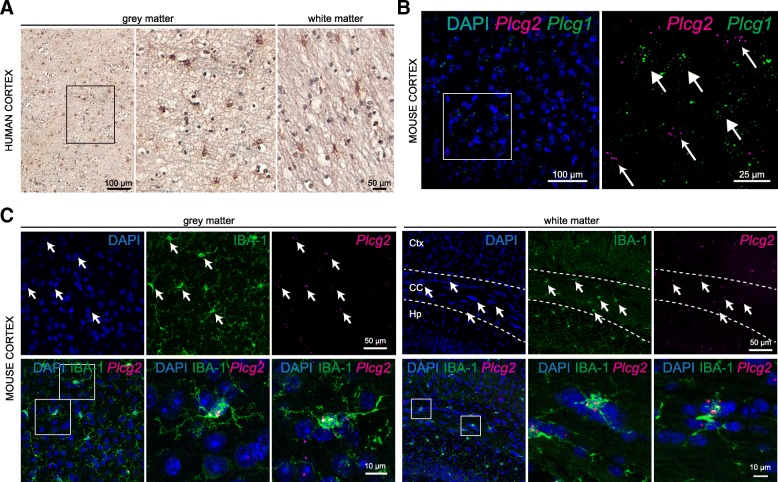
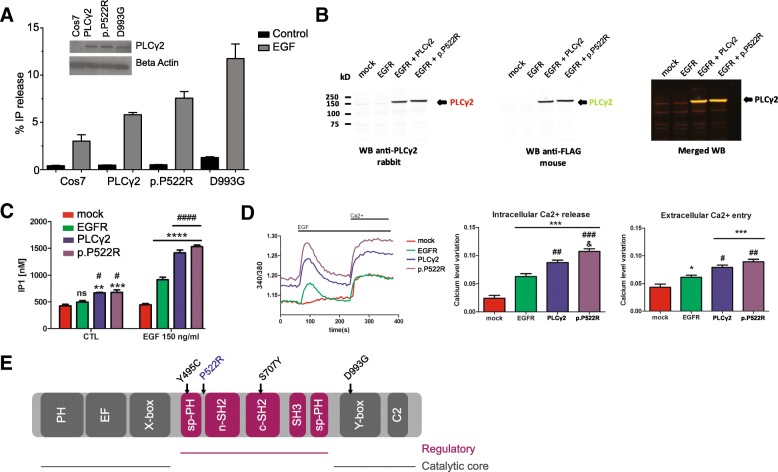
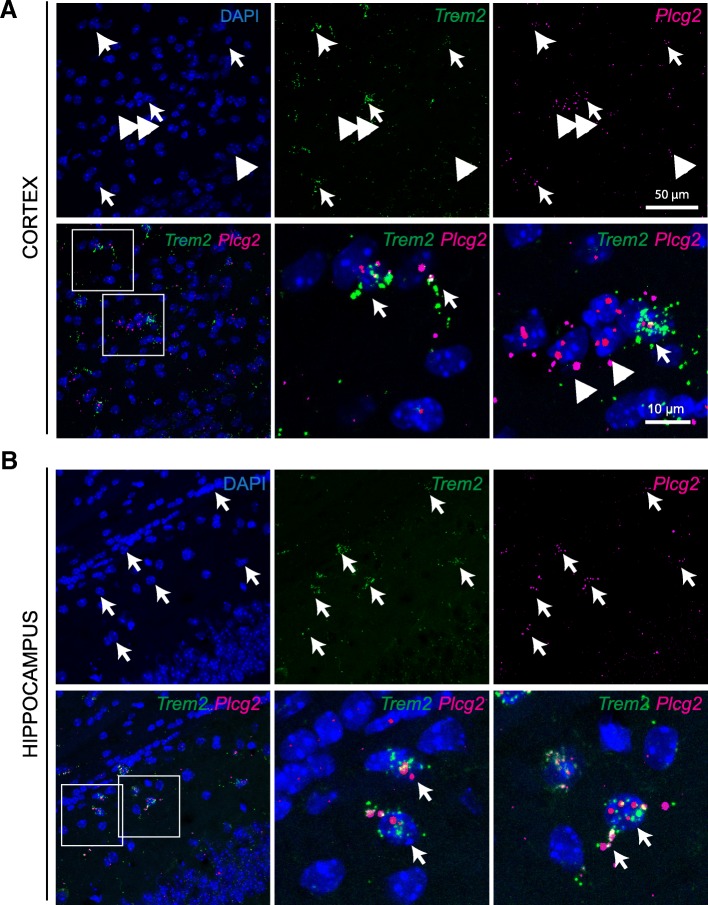
We assessed PLCG2 distribution in human and mouse brain tissue via immunohistochemistry and in situ hybridization. We transfected heterologous cell systems (COS7 and HEK293T cells) to determine the effect of the P522R AD-associated variant on enzymatic function using various orthogonal assays, including a radioactive assay, IP-One ELISA, and calcium assays.
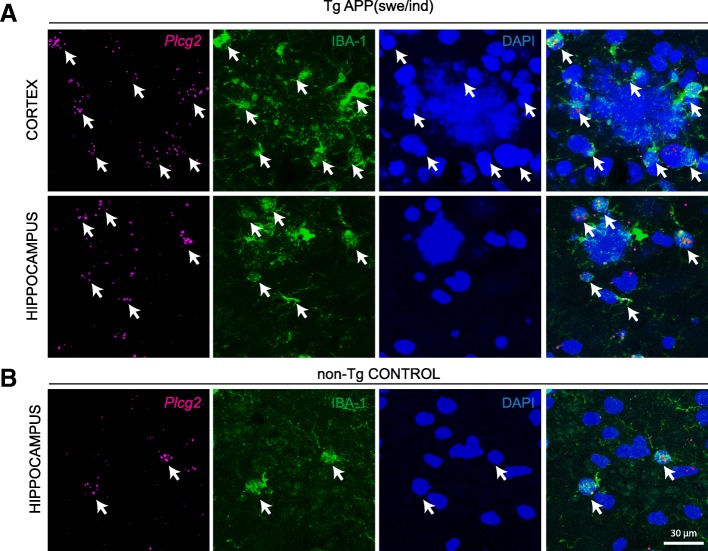
PLCG2 expression is restricted primarily to microglia and granule cells of the dentate gyrus. Plcg2 mRNA is maintained in plaque-associated microglia in the cerebral tissue of an AD mouse model. Functional analysis of the p.P522R variant demonstrated a small hypermorphic effect of the mutation on enzyme function.
The PLCG2 P522R variant is protective against AD. We show that PLCG2 is expressed in brain microglia, and the p.P522R polymorphism weakly increases enzyme function. These data suggest that activation of PLCγ2 and not inhibition could be therapeutically beneficial in AD. PLCγ2 is therefore a potential target for modulating microglia function in AD, and a small molecule drug that weakly activates PLCγ2 may be one potential therapeutic approach.
最近的全基因组关联研究(GWAS)已经确定了与晚发性阿尔茨海默病(LOAD)相关的免疫基因中的新型罕见编码变异。在这些变异中,已经报道磷脂酶 C-γ 2(PLCG2)中的 P522R 多态性对 LOAD 具有保护作用。PLC 酶是信号转导网络的关键组成部分,并且是潜在的可药物治疗靶点。PLCG2 在造血系统中高度表达。已经报道人类中 PLCG2 的超形突变会引起自身炎症和免疫紊乱,这表明该酶在调节免疫细胞功能方面起着关键作用。
我们通过免疫组织化学和原位杂交评估了 PLCG2 在人类和小鼠脑组织中的分布。我们转染了异源细胞系统(COS7 和 HEK293T 细胞),使用各种正交测定法(包括放射性测定法、IP-One ELISA 和钙测定法)来确定 AD 相关变体对酶功能的影响。
PLCG2 表达主要局限于小胶质细胞和齿状回的颗粒细胞。在 AD 小鼠模型的脑组织中,与斑块相关的小胶质细胞中保留了 Plcg2 mRNA。对 p.P522R 变体的功能分析表明,该突变对酶功能具有微小的超形效应。
PLCG2 P522R 变体对 AD 具有保护作用。我们表明 PLCG2 在大脑小胶质细胞中表达,并且 p.P522R 多态性微弱增加酶功能。这些数据表明,PLCγ2 的激活而不是抑制可能在 AD 中具有治疗益处。因此,PLCγ2 是调节 AD 中小胶质细胞功能的潜在靶点,弱激活 PLCγ2 的小分子药物可能是一种潜在的治疗方法。