State Key Laboratory of Oncology in South China, Collaborative Innovation Center for Cancer Medicine, Sun Yat-sen University Cancer Center, No. 651, Dongfeng East Road, Guangzhou, 510060, China.
Department of Radiotherapy, Sun Yat-sen University Cancer Center, Guangzhou, China.
Support Care Cancer. 2019 Oct;27(10):3759-3767. doi: 10.1007/s00520-019-4643-5. Epub 2019 Feb 2.
Pain due to oral mucositis (OM) is a major problem during concurrent chemoradiotherapy (CCRT) in nasopharyngeal carcinoma (NPC) patients.
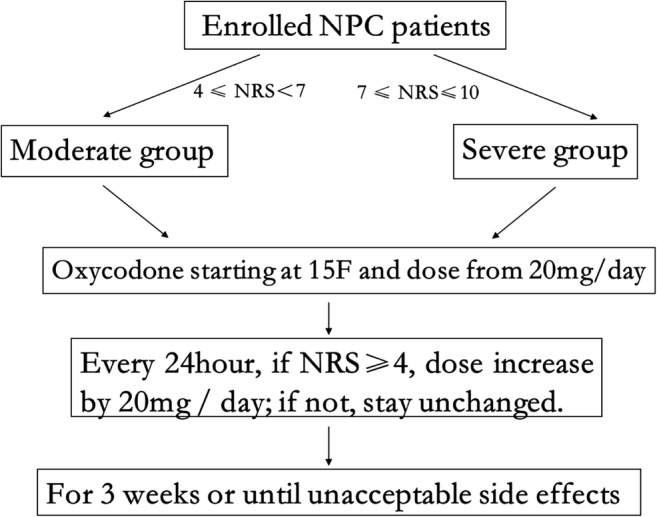
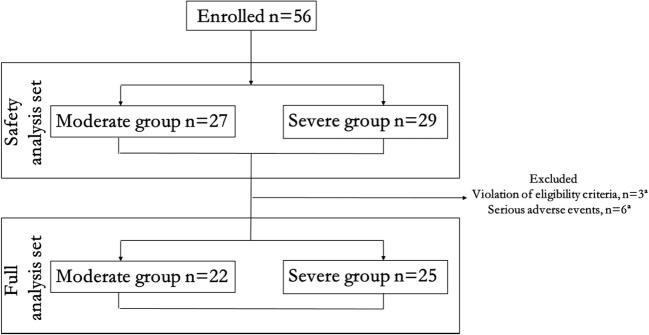
We enrolled 56 NPC patients receiving CCRT and allocated them into two groups: moderate pain group (n = 27) and a severe pain group (n = 29) according to the degree of pain reported (moderate = numerical rating scale (NRS) score 4-6 or severe = NRS score 7-10) at initiation of controlled-release oxycodone (CRO) treatment.
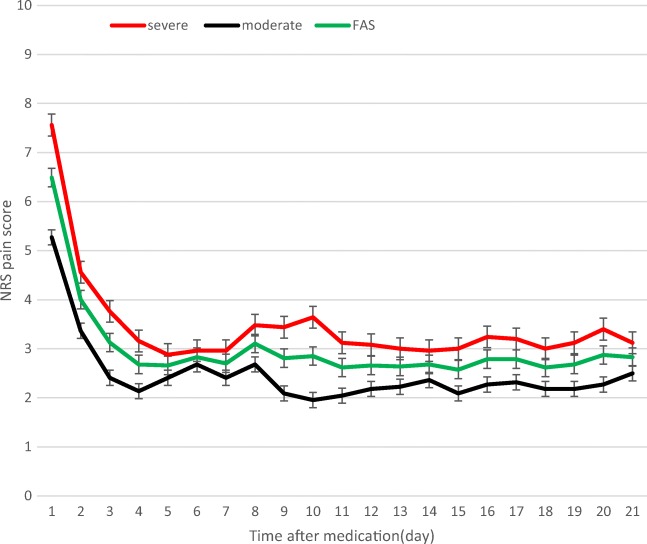
Total dose of CRO was significantly higher in severe pain patients than in moderate pain patients (791.60 ± 332.449 mg vs. 587.27 ± 194.940 mg; P = 0.015). Moderate pain patients had significantly better quality of life (P = 0.037), lower weight loss (P = 0.030) and more active CCRT response (90.9% vs. 64.0%; P = 0.041). Although 24-h pain control rate was comparable in the two groups (85.2% vs. 86.2%; P = 0.508), the moderate pain group score eventually stabilized at ~ 2 vs. 3 in the severe pain group (P < 0.001); the titration time to reach bearable pain (NRS ≤ 3) was also significantly shorter in moderate pain patients (2.45 ± 0.60 days vs. 3.60 ± 1.98 days; P = 0.012). Incidence of adverse events was comparable in both groups.
The study findings suggest that early introduction of low-dose CRO at the moderate pain stage could help reduce the total dose required, provide better pain control, improve quality of life, and enhance CCRT response.
口腔黏膜炎(OM)引起的疼痛是鼻咽癌(NPC)患者同步放化疗(CCRT)期间的主要问题。
我们纳入了 56 名接受 CCRT 的 NPC 患者,并根据疼痛报告程度(中度:数字评分量表(NRS)评分 4-6 或重度:NRS 评分 7-10)将其分为两组:中度疼痛组(n=27)和重度疼痛组(n=29)。在开始使用控释羟考酮(CRO)治疗时。
重度疼痛患者的 CRO 总剂量明显高于中度疼痛患者(791.60±332.449mg 比 587.27±194.940mg;P=0.015)。中度疼痛患者的生活质量明显更好(P=0.037),体重减轻较少(P=0.030),CCRT 反应更活跃(90.9%比 64.0%;P=0.041)。尽管两组 24 小时疼痛控制率相当(85.2%比 86.2%;P=0.508),但中度疼痛组的评分最终稳定在 2 左右,而重度疼痛组的评分稳定在 3 左右(P<0.001);达到可忍受疼痛(NRS≤3)的滴定时间也明显缩短中度疼痛患者(2.45±0.60 天比 3.60±1.98 天;P=0.012)。两组不良反应发生率相当。
研究结果表明,在中度疼痛阶段早期引入低剂量 CRO 有助于减少所需的总剂量,提供更好的疼痛控制,改善生活质量,并增强 CCRT 反应。