Yuge Ryo, Fujii Toshiko, Shinagawa Kei, Sanomura Yoji, Oka Shiro, Nagashima Shintaro, Ohisa Masayuki, Kitadai Yasuhiko, Tanaka Shinji, Kohno Nobuoki, Tanaka Junko
Department of Endoscopy, Hiroshima University Hospital, Japan.
Department of Epidemiology, Infectious Disease Control and Prevention, Hiroshima University Institute of Biomedical and Health Sciences, Japan.
Intern Med. 2019 Jun 1;58(11):1541-1547. doi: 10.2169/internalmedicine.1826-18. Epub 2019 Feb 1.
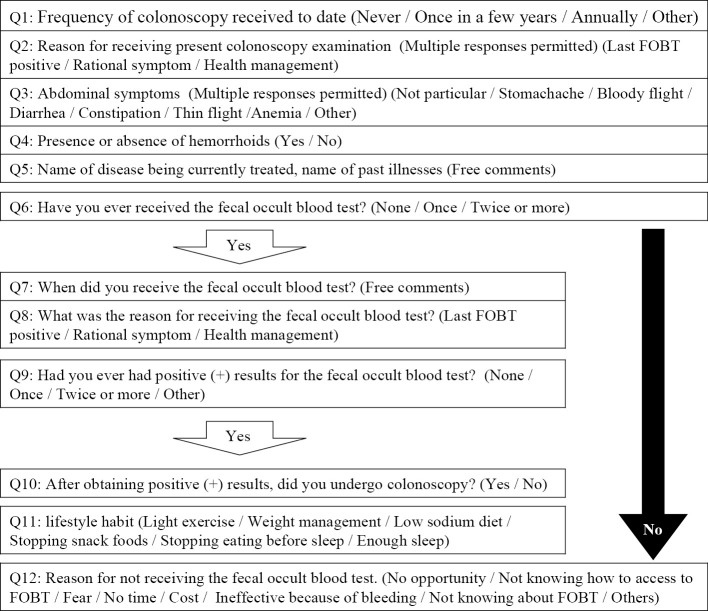
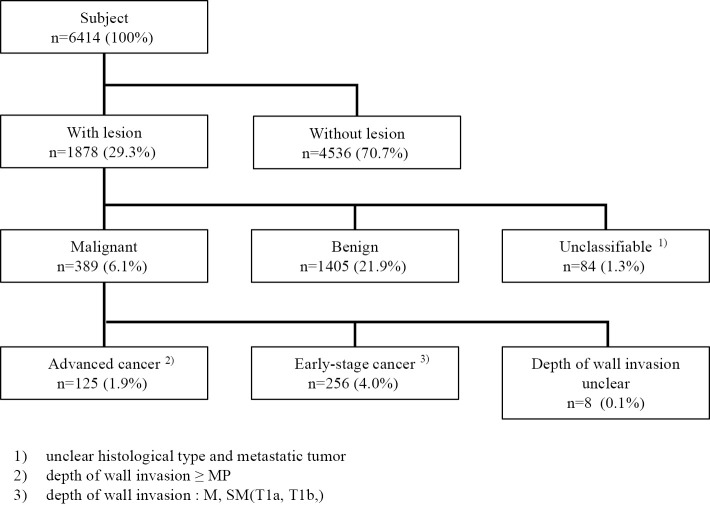
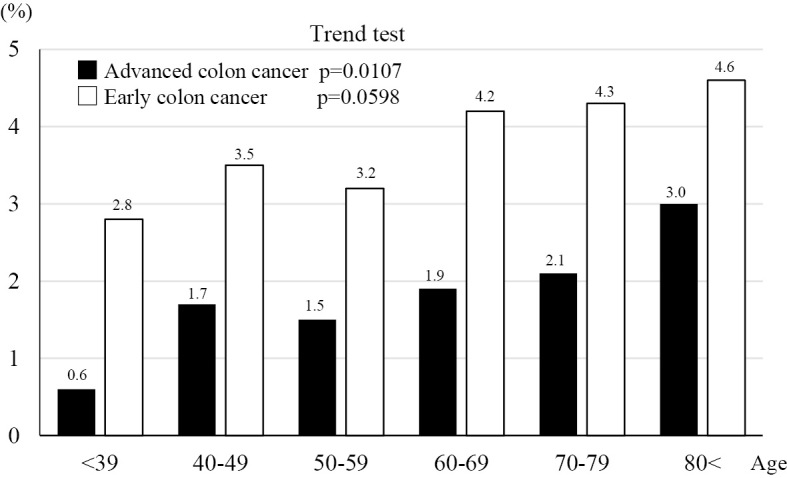
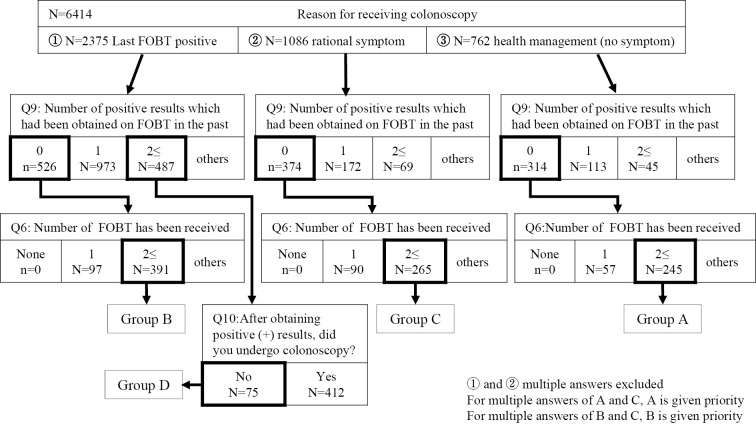
Objective The fecal occult blood (FOB) test is commonly used for colorectal cancer screening; however, it is uncertain if further diagnostic interventions, such as a colonoscopy, should be performed based on its results. Method To better understand patient behavior following the FOB test, 6,414 patients (3,807 men and 2,607 women) who underwent colonoscopy between August 2015 and March 2016 at any of the 26 medical institutions throughout Hiroshima Prefecture were invited to participate in the study. All patients provided their written consent, after which they completed a questionnaire, and their colonoscopy results were obtained. These datasets were analyzed in a blinded manner, and the unique codes linking the records were revealed at the end of the analysis. Results Of the total study population, 4,749 patients (74.0%) had previously undergone FOB testing. After classification of common behavioral responses that the patients displayed following their FOB test, the group who had undergone the test several times, who had not had positive test results in the past, and whose latest FOB test results were positive had a significantly higher diagnosis rate of both early- and advanced-stage cancer than the other groups. Furthermore, patients in whom several previous FOB test results had been negative whose previous colonoscopy was positive were associated with a higher diagnosis rate of early-stage cancer than other groups. Conclusion These results suggested that colonoscopy should be performed immediately for patients with positive FOB test results due to their association with colorectal cancer and the possible detection of cancer at an early stage.
目的 粪便潜血(FOB)检测常用于结直肠癌筛查;然而,基于其检测结果是否应进行进一步的诊断干预(如结肠镜检查)尚不确定。方法 为了更好地了解FOB检测后患者的行为,邀请了2015年8月至2016年3月期间在广岛县26家医疗机构中的任何一家接受结肠镜检查的6414名患者(3807名男性和2607名女性)参与研究。所有患者均提供了书面知情同意书,之后他们完成了一份问卷,并获取了他们的结肠镜检查结果。这些数据集以盲法进行分析,分析结束时揭示了链接记录的唯一代码。结果 在整个研究人群中,4749名患者(74.0%)之前接受过FOB检测。在对患者FOB检测后表现出的常见行为反应进行分类后,多次接受检测、过去检测结果未呈阳性且最新FOB检测结果呈阳性的组,其早期和晚期癌症的诊断率均显著高于其他组。此外,之前多次FOB检测结果为阴性但之前结肠镜检查呈阳性的患者,其早期癌症的诊断率高于其他组。结论 这些结果表明,由于FOB检测结果呈阳性的患者与结直肠癌相关且可能在早期检测到癌症,因此应立即对其进行结肠镜检查。