Centre National de la Recherche Scientifique (CNRS), Sorbonne Université, Integrative Biology of Marine Models (LBI2M), Station Biologique de Roscoff (SBR), 29680 Roscoff, France.
Int J Mol Sci. 2019 Feb 1;20(3):626. doi: 10.3390/ijms20030626.
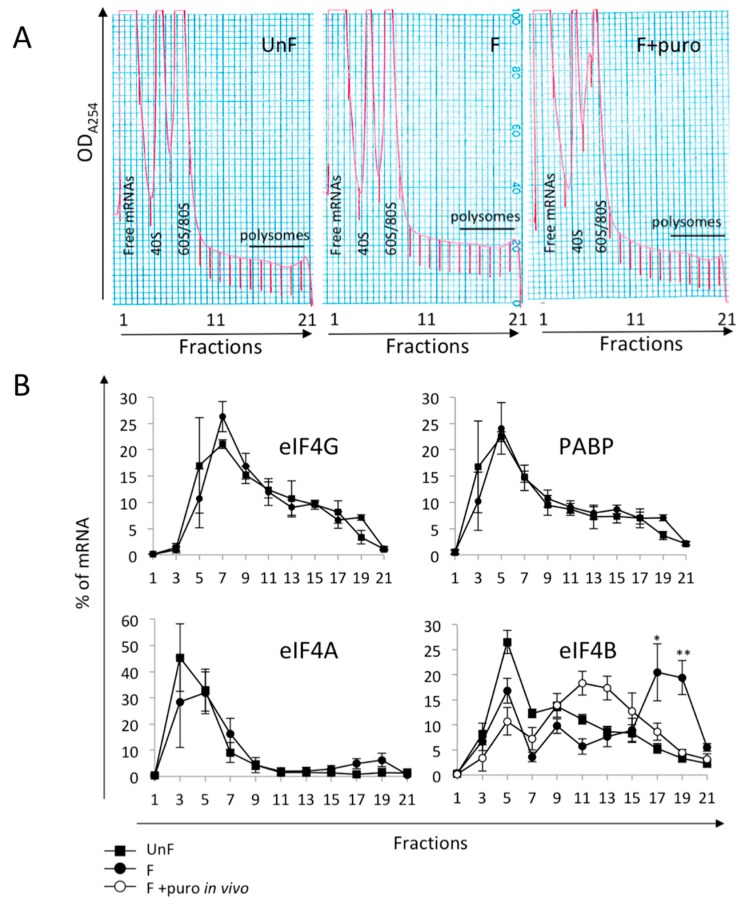
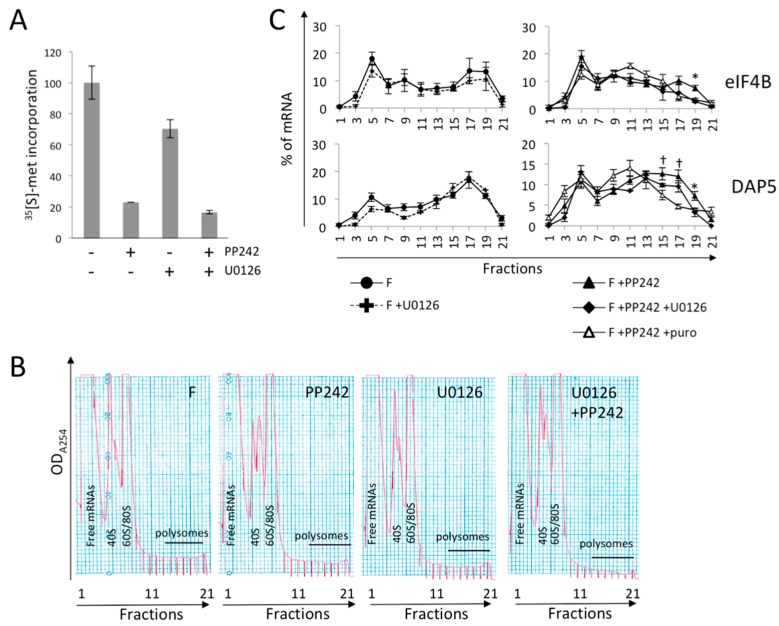
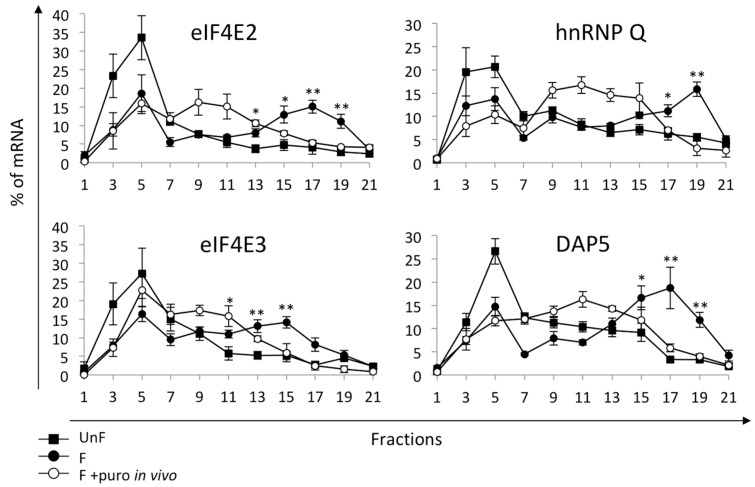
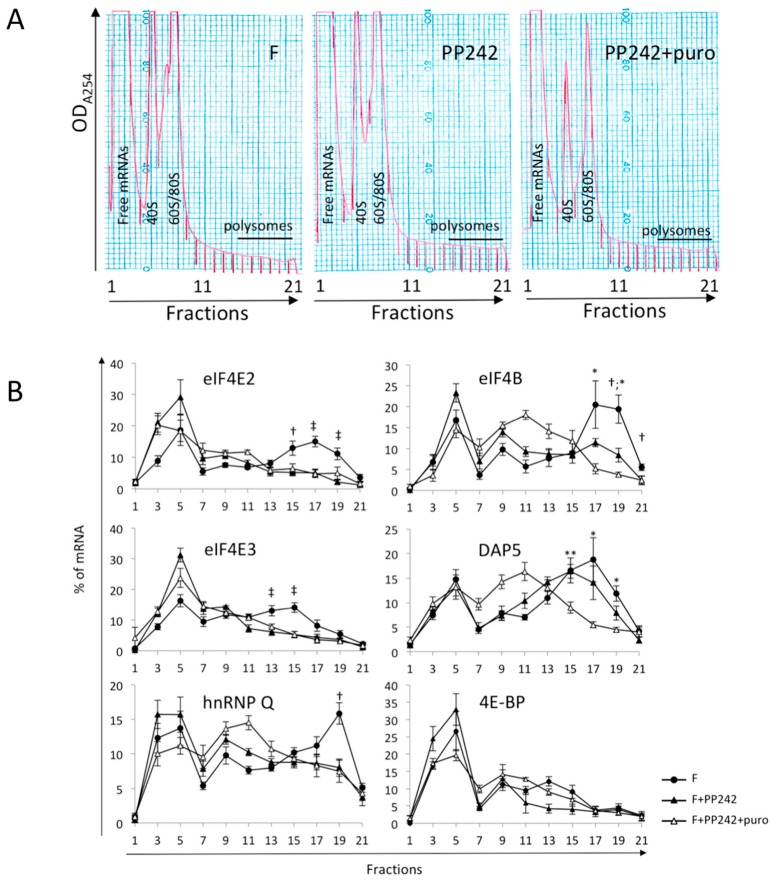
Sea urchin early development is a powerful model to study translational regulation under physiological conditions. Fertilization triggers an activation of the translation machinery responsible for the increase of protein synthesis necessary for the completion of the first embryonic cell cycles. The cap-binding protein eIF4E, the helicase eIF4A and the large scaffolding protein eIF4G are assembled upon fertilization to form an initiation complex on mRNAs involved in cap-dependent translation initiation. The presence of these proteins in unfertilized and fertilized eggs has already been demonstrated, however data concerning the translational status of translation factors are still scarce. Using polysome fractionation, we analyzed the impact of fertilization on the recruitment of mRNAs encoding initiation factors. Strikingly, whereas the mRNAs coding eIF4E, eIF4A, and eIF4G were not recruited into polysomes at 1 h post-fertilization, mRNAs for eIF4B and for non-canonical initiation factors such as DAP5, eIF4E2, eIF4E3, or hnRNP Q, are recruited and are differentially sensitive to the activation state of the mechanistic target of rapamycin (mTOR) pathway. We discuss our results suggesting alternative translation initiation in the context of the early development of sea urchins.
海胆早期发育是研究生理条件下翻译调控的有力模型。受精引发翻译机制的激活,负责增加蛋白质合成,这对于完成第一个胚胎细胞周期是必要的。帽结合蛋白 eIF4E、解旋酶 eIF4A 和大型支架蛋白 eIF4G 在受精时组装在涉及帽依赖性翻译起始的 mRNA 上,形成起始复合物。这些蛋白质在未受精和受精卵中的存在已经得到证实,然而关于翻译因子翻译状态的数据仍然很少。通过多核糖体分段,我们分析了受精对起始因子编码 mRNA 募集的影响。引人注目的是,尽管编码 eIF4E、eIF4A 和 eIF4G 的 mRNA 不在受精后 1 小时被募集到多核糖体中,但编码 eIF4B 和非典型起始因子(如 DAP5、eIF4E2、eIF4E3 或 hnRNP Q)的 mRNA 被募集,并对雷帕霉素(mTOR)途径的激活状态表现出不同的敏感性。我们讨论了我们的结果,表明在海胆早期发育的背景下存在替代翻译起始。