Que Zujun, Luo Bin, Zhou Zhiyi, Dong Changsheng, Jiang Yi, Wang Lin, Shi Qihui, Tian Jianhui
Institute of Traditional Chinese Medicine Oncology, Shanghai Institute of Traditional Chinese Medicine, Shanghai, 200032 People's Republic of China.
2Department of Oncology, Longhua Hospital, Shanghai University of Traditional Chinese Medicine, Shanghai, 200032 People's Republic of China.
Cancer Cell Int. 2019 Jan 29;19:21. doi: 10.1186/s12935-019-0735-z. eCollection 2019.
Circulating tumor cells (CTCs) have been described as a population of cells that may seed metastasis, which is a reliable target for the prevention of metastases in lung cancer patients at the early stage. The culturing of CTCs in vitro can be used to study the mechanism of lung cancer metastasis and to screen antimetastasis drugs. This study aims to establish CTC cell line in vitro and explore the potential mechanism of its metastasis.
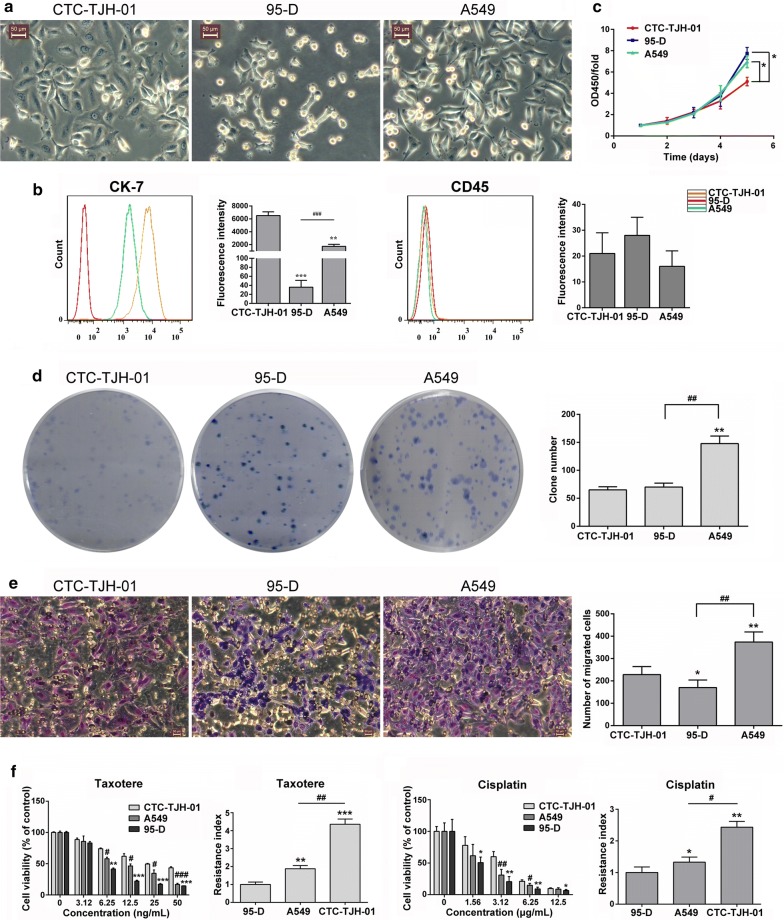
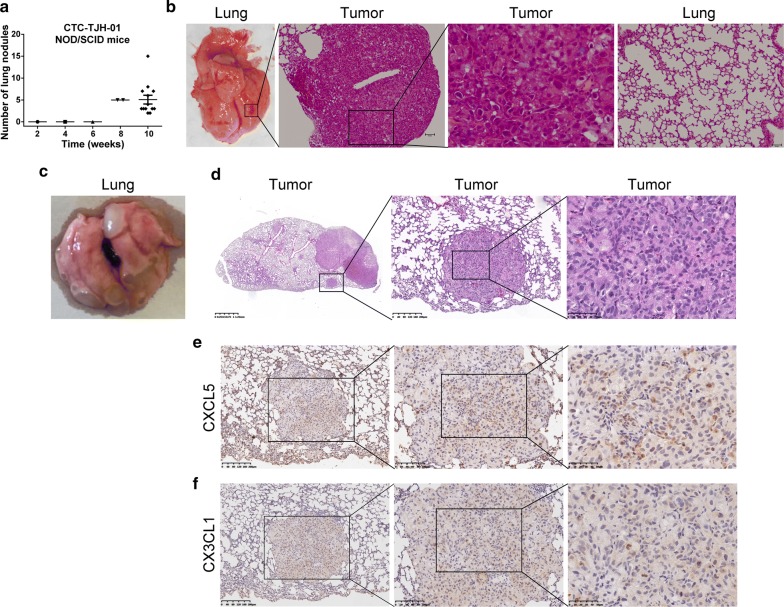
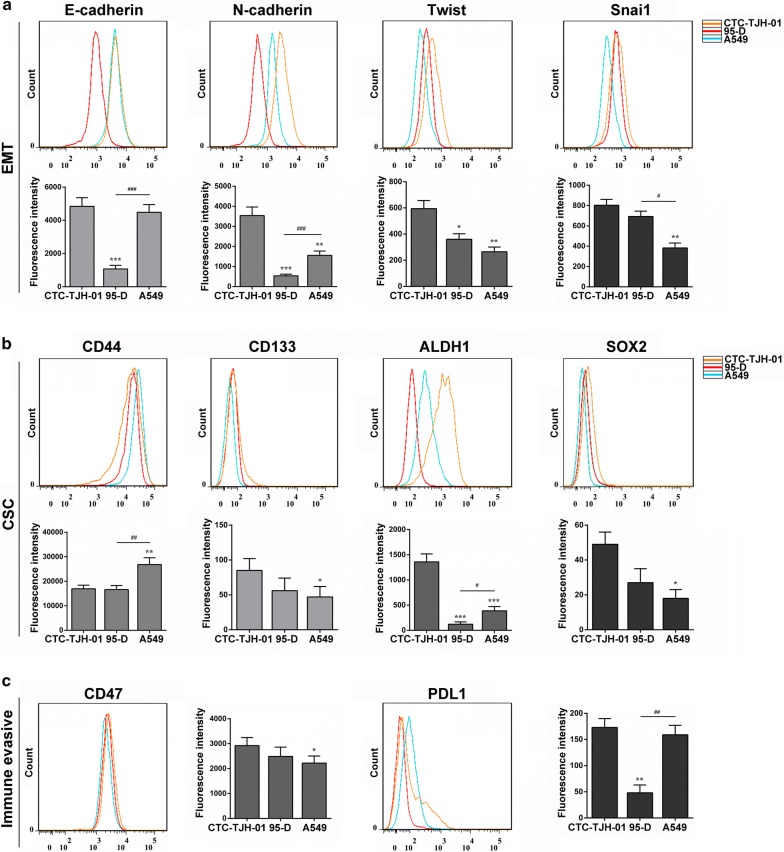
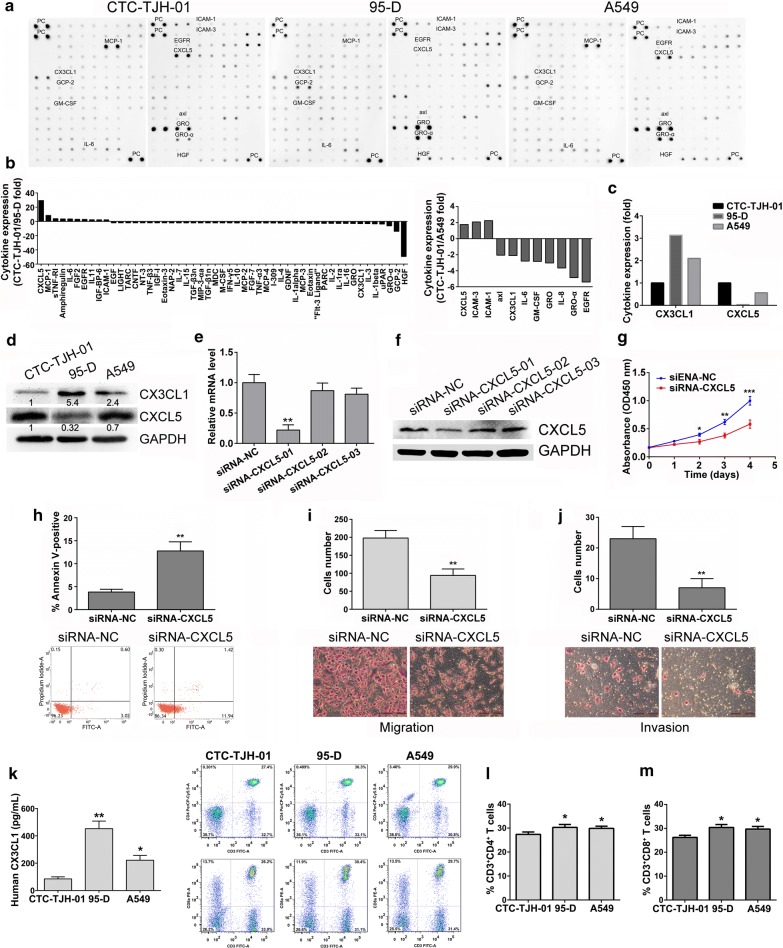
A mixture of EpCAM- and EGFR-coated immunomagnetic microbeads in microfluidic Herringbone-Chip was used to capture CTCs. The CTCs, 95-D and A549 cells was evaluated by cell proliferation assays, clonal formation assays, migration assays and drug resistance. Flow cytometry and cytokine protein chip were used to detect the difference in phenotype and cytokine secretion between CTCs, 95-D and A549 cells. The NOD/SCID mice were used to study tumorigenicity, lung organ colonization and metastasis of CTCs. The H&E staining, immunohistochemistry and immunofluorescence assay were used to detect the pathological status of CTCs.
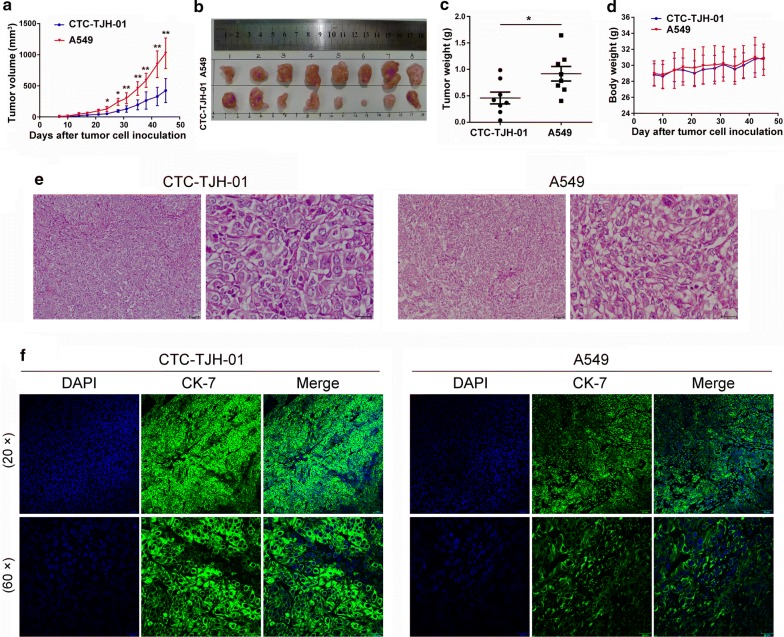
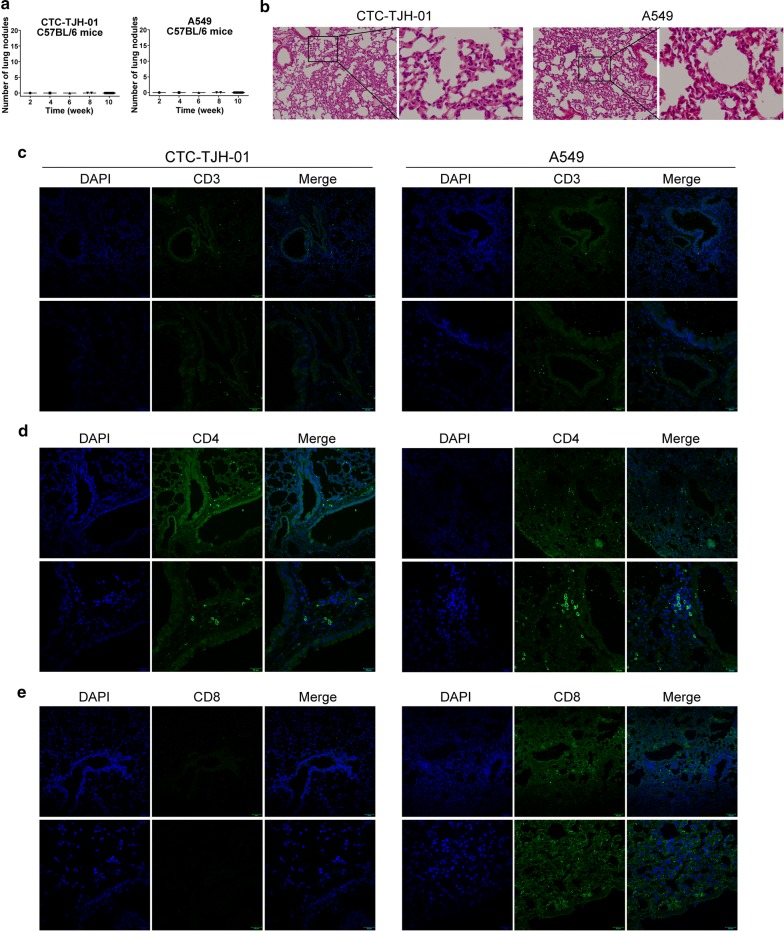
The number of EpCAM(+)/EGFR(+)/CK(+)/CD45(-) lung CTCs showed a weak negative correlation with clinical stages in patients with non-small cell lung cancer (NSCLC). In a phase IIa lung cancer patient, we successfully establish a permanent CTC cell line, named CTC-TJH-01. In vitro studies showed the CTC-TJH-01 cells were in the intermediate stage of epithelial to mesenchymal transition (EMT), had stem cell characteristics and were drug resistant. In vivo studies showed that CTC-TJH-01 cells can induce tumorigenesis, lung organ colonization and metastasis after xenografting in immunodeficient mice. In addition, the low expression level of CX3CL1 and high expression level of CXCL5 in the CTC-TJH-01 cells may be an important mechanism for their metastasis.
We successfully established a permanent CTC cell line with metastatic ability, which can be used to screen antimetastatic drugs and study the mechanism of lung cancer metastasis.
循环肿瘤细胞(CTCs)被认为是一群可能引发转移的细胞,是早期肺癌患者预防转移的可靠靶点。体外培养CTCs可用于研究肺癌转移机制及筛选抗转移药物。本研究旨在体外建立CTCs细胞系并探索其转移的潜在机制。
在微流控人字形芯片中使用EpCAM和EGFR包被的免疫磁珠混合物捕获CTCs。通过细胞增殖试验、克隆形成试验、迁移试验和耐药性评估CTCs、95-D和A549细胞。采用流式细胞术和细胞因子蛋白芯片检测CTCs、95-D和A549细胞在表型和细胞因子分泌方面的差异。利用NOD/SCID小鼠研究CTCs的致瘤性、肺器官定植和转移。采用苏木精-伊红染色、免疫组织化学和免疫荧光分析检测CTCs的病理状态。
非小细胞肺癌(NSCLC)患者中,EpCAM(+)/EGFR(+)/CK(+)/CD45(-)肺CTCs数量与临床分期呈弱负相关。在一名IIa期肺癌患者中,我们成功建立了一个永久性CTCs细胞系,命名为CTC-TJH-01。体外研究表明,CTC-TJH-01细胞处于上皮-间质转化(EMT)的中间阶段,具有干细胞特征且耐药。体内研究表明,将CTC-TJH-01细胞接种到免疫缺陷小鼠体内后可诱导肿瘤发生、肺器官定植和转移。此外,CTC-TJH-01细胞中CX3CL1低表达和CXCL5高表达可能是其转移的重要机制。
我们成功建立了具有转移能力的永久性CTCs细胞系,可用于筛选抗转移药物及研究肺癌转移机制。