Wu Irene X Y, Wong Charlene H L, Ho Robin S T, Cheung William K W, Ford Alexander C, Wu Justin C Y, Mak Arthur D P, Cramer Holger, Chung Vincent C H
Xiangya School of Public Health, Central South University, Changsha Hunan, China.
Department of Medicine and Therapeutics, Chung Chi College, The Chinese University of Hong Kong, Rm LG02, Li Wai Chun Building, Shatin, Hong Kong; Hong Kong Institute of Integrative Medicine, The Chinese University of Hong Kong, Hong Kong.
Therap Adv Gastroenterol. 2019 Jan 20;12:1756284818820438. doi: 10.1177/1756284818820438. eCollection 2019.
An overview of systematic reviews (SRs) and a network meta-analysis (NMA) were conducted to evaluate the comparative effectiveness of acupuncture and related therapies used either alone, or as an add-on to other irritable bowel syndrome (IBS) treatments.
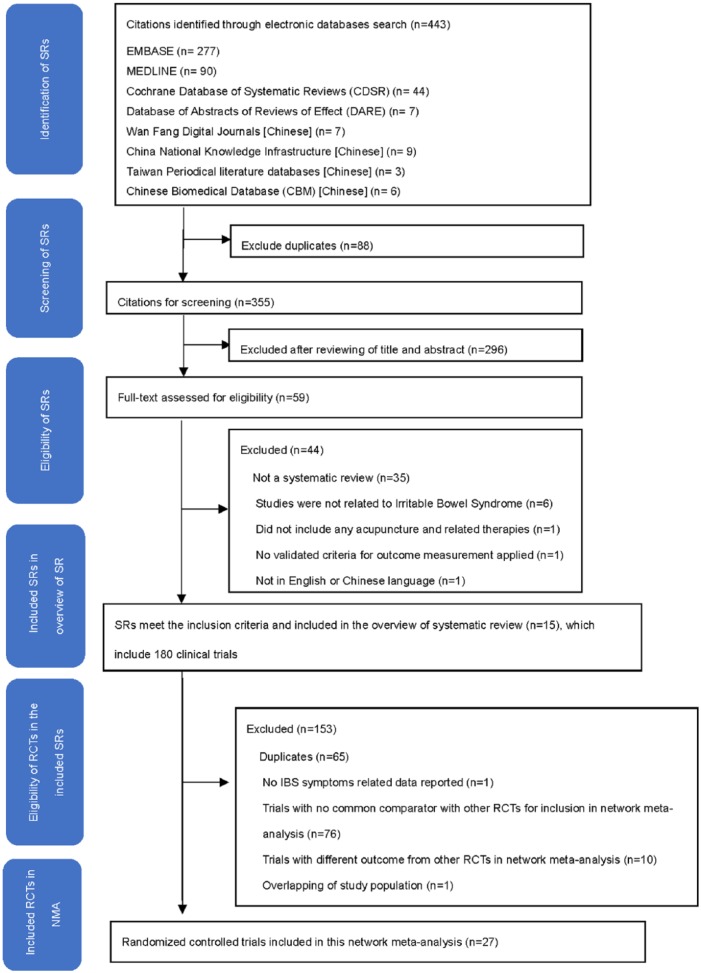
A total of eight international and Chinese databases were searched for SRs of randomized controlled trials (RCTs). The methodological quality of SRs was appraised using the AMSTAR instrument. From the included SRs, data from RCTs were extracted for the random-effect pairwise meta-analyses. An NMA was used to evaluate the comparative effectiveness of different treatment options. The risk of bias among included RCTs was assessed using the Cochrane risk of bias tool.
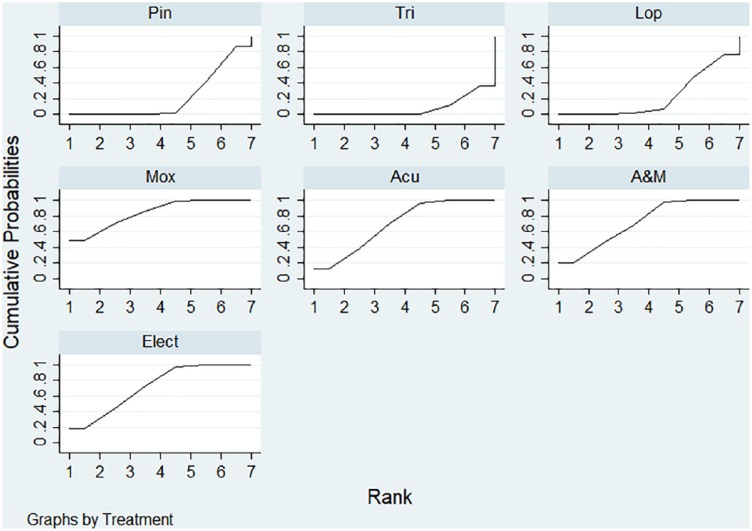
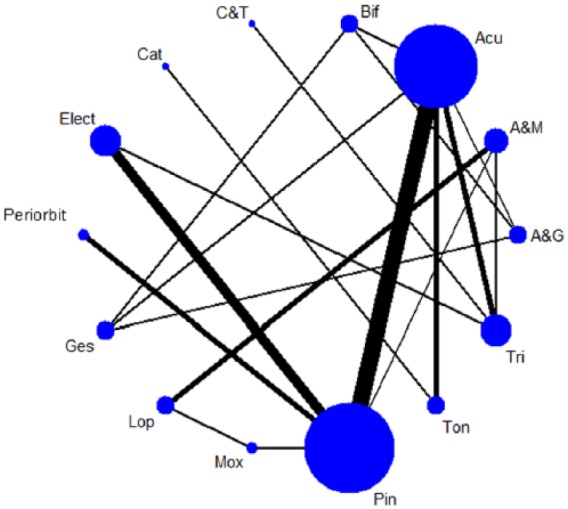
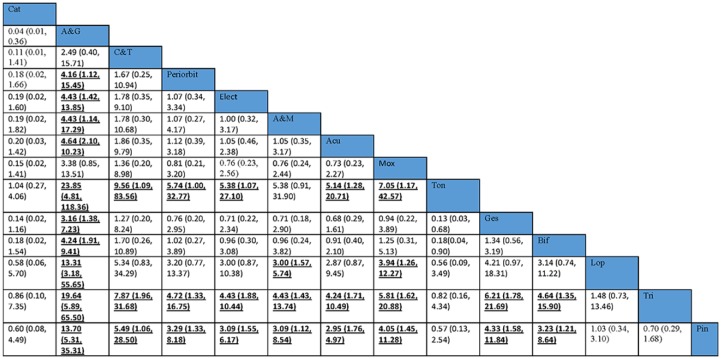
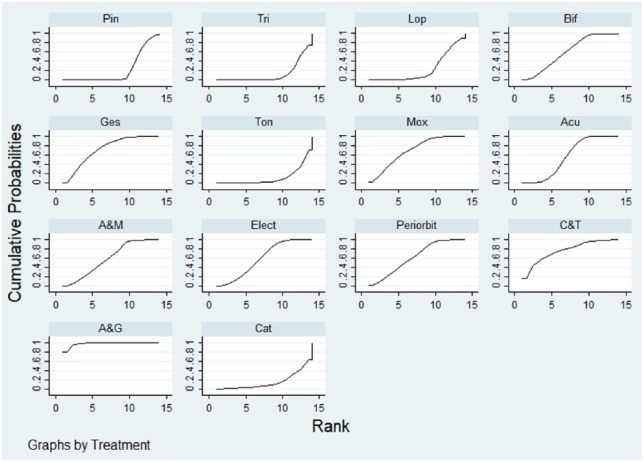
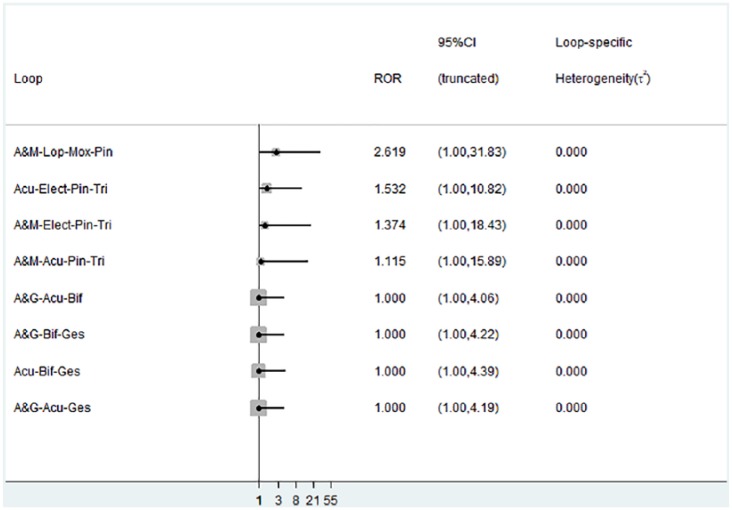
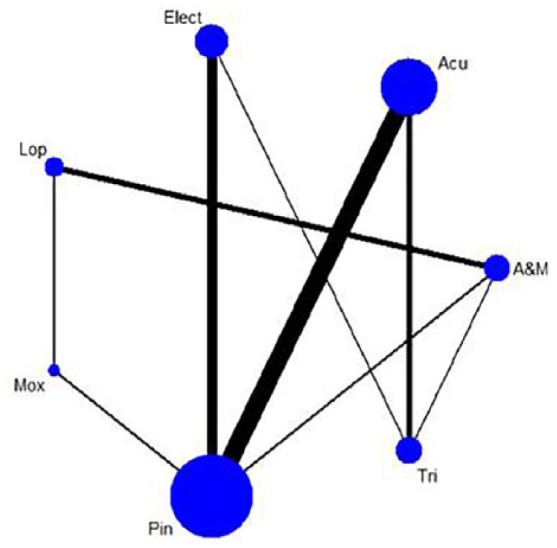
From 15 SRs of mediocre quality, 27 eligible RCTs ( = 2141) were included but none performed proper blinding. Results from pairwise meta-analysis showed that both needle acupuncture and electroacupuncture were superior in improving global IBS symptoms when compared with pinaverium bromide. NMA results showed needle acupuncture plus Geshanxiaoyao formula had the highest probability of being the best option for improving global IBS symptoms among 14 included treatment options, but a slight inconsistency exists.
The risk of bias and NMA inconsistency among included trials limited the trustworthiness of the conclusion. Patients who did not respond well to first-line conventional therapies or antidepressants may consider acupuncture as an alternative. Future trials should investigate the potential of (1) acupuncture as an add-on to antidepressants and (2) the combined effect of Chinese herbs and acupuncture, which is the norm of routine Chinese medicine practice.
进行了系统评价(SRs)概述和网状Meta分析(NMA),以评估单独使用或作为其他肠易激综合征(IBS)治疗附加疗法的针灸及相关疗法的比较疗效。
共检索了8个国际和中文数据库,查找随机对照试验(RCTs)的SRs。使用AMSTAR工具评估SRs的方法学质量。从纳入的SRs中,提取RCTs的数据进行随机效应成对Meta分析。使用NMA评估不同治疗方案的比较疗效。使用Cochrane偏倚风险工具评估纳入RCTs的偏倚风险。
从15篇质量中等的SRs中,纳入了27项符合条件的RCTs(n = 2141),但均未进行适当的盲法。成对Meta分析结果显示,与匹维溴铵相比,针刺和电针在改善整体IBS症状方面均更具优势。NMA结果显示,在纳入的14种治疗方案中,针刺加隔山消遥方最有可能是改善整体IBS症状的最佳选择,但存在轻微的不一致性。
纳入试验中的偏倚风险和NMA不一致性限制了结论的可信度。对一线传统疗法或抗抑郁药反应不佳的患者可考虑将针灸作为一种替代疗法。未来的试验应研究(1)针灸作为抗抑郁药附加疗法的潜力,以及(2)中药与针灸联合应用的效果,这是中医常规治疗的规范。