Min Xiaoli, Huang Fangling, Huang Huichao, Zhao Shuang, Wang Guoqiang, Zhou Minze, Chen Zhuchu, Li Maoyu, Chen Yongheng
Key Laboratory of Oncoproteomics of Chinese National Health and Family Planning Commission, Xiangya Hospital, Central South University, Changsha, 410008, Hunan Province, China.
Department of Dermatology, Second Xiangya Hospital, Central South University, Hunan Key Laboratory of Medical Epigenomics, Changsha, 410008, Hunan Province, China.
J Cancer. 2019 Jan 1;10(2):305-312. doi: 10.7150/jca.25941. eCollection 2019.
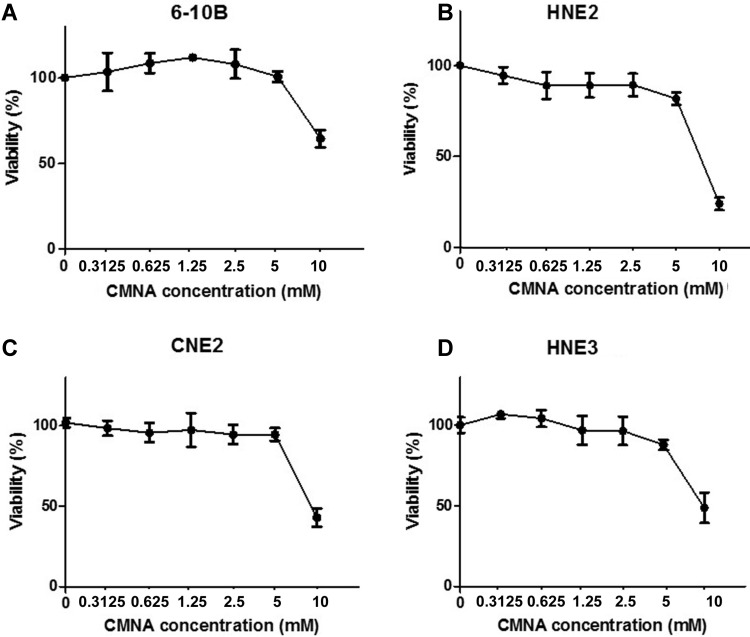
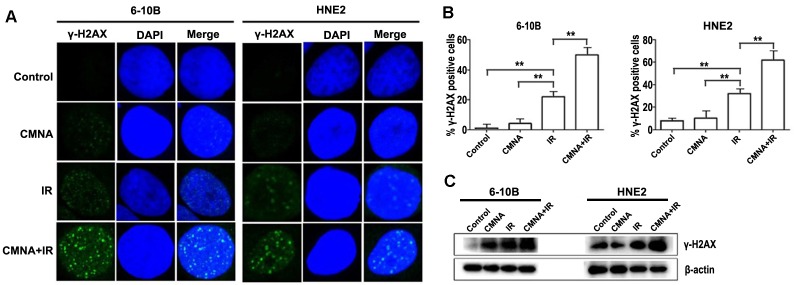
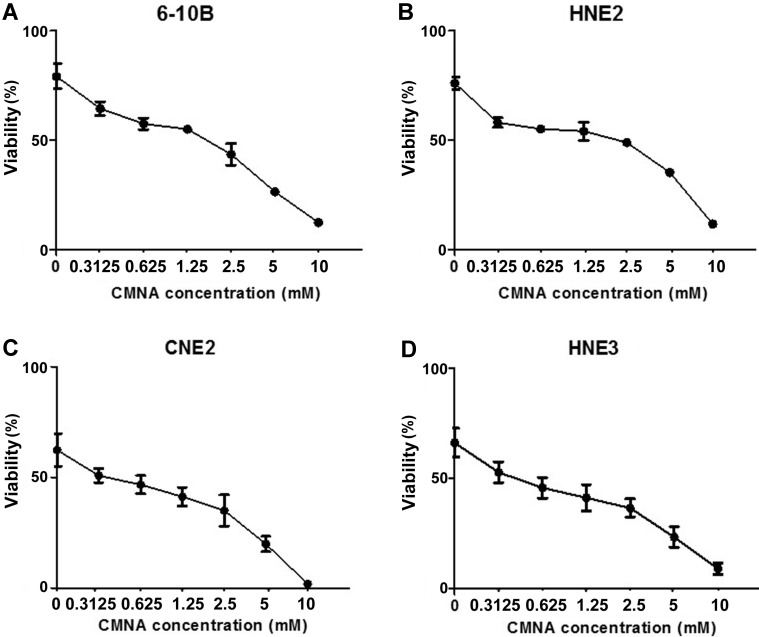
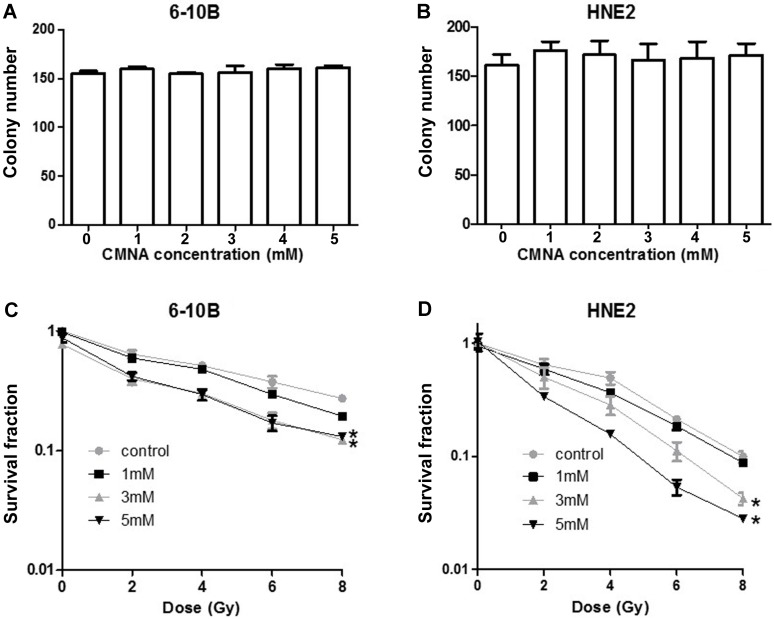
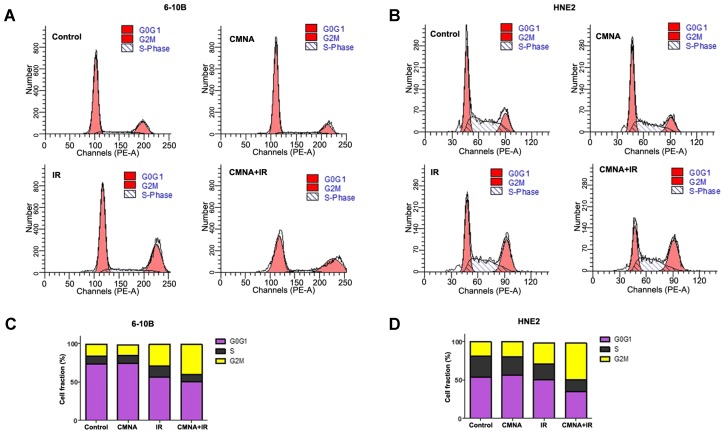
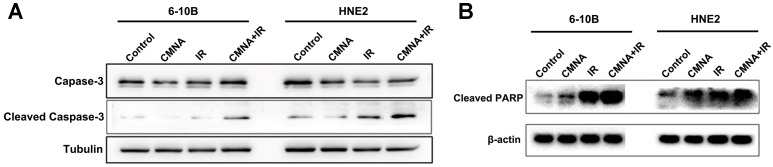
: The radioresistance of nasopharyngeal carcinoma (NPC) was the main cause of radiotherapy failure and it was still a challenge in the treatment of advanced NPC patients. Previous clinical studies demonstrated that sodium glycididazole(CMNA) can enhance the radiosensitivity of NPC, but the corresponding cellular mechanisms or processes remains largely unclear. : To clarify the radiosensitizing effects of CMNA on NPC cells and reveal its cellular mechanisms, its effect on cell survival of NPC cells was assessed by MTT and clonogenic assay, with or without radiation. The potential cellular mechanisms such as cell cycle distribution, apoptosis and DNA damage were assessed. A retrospective analysis of the outcome of patients with III-IV stage NPC who undergo same radiochemotherapy with or without concurrent CMNA treatment was performed to elucidate the role of CMNA in the improvement of the curative effects. : The treatment with CMNA at the concentration lower or close to the clinical dosage had little effect on cell survival, cell cycle distribution and a weak effect on DNA damage and cell apoptosis of NPC cells. The combination of CMNA and radiation significantly increased the DNA damage and enhanced the apoptosis of NPC cells, but did not significantly alter the cell cycle distribution as compared with the irradiation (IR) alone. A total of 99 patients who underwent radiochemotherapy were categorized into those with (treatment group, n=52) and without (control group, n=47) the treatment with CMNA. The complete response rates of patients in treatment group were significantly higher than in control group. : Our results suggested that CMNA enhance the sensitivity of the NPC cells to radiation via enhancing DNA damage and promoting cell apoptosis. It provides clues for further investigation of the molecular mechanism of the radiosensitization of CMNA on NPC cells.
鼻咽癌(NPC)的放射抗性是放疗失败的主要原因,对于晚期鼻咽癌患者的治疗仍然是一项挑战。以往的临床研究表明,甘氨双唑钠(CMNA)可增强鼻咽癌的放射敏感性,但其相应的细胞机制或过程仍不清楚。
为了阐明CMNA对鼻咽癌细胞的放射增敏作用并揭示其细胞机制,通过MTT和克隆形成试验评估了其对鼻咽癌细胞存活的影响,无论有无辐射。评估了潜在的细胞机制,如细胞周期分布、凋亡和DNA损伤。对接受相同放化疗且有或无CMNA同步治疗的III-IV期鼻咽癌患者的结局进行回顾性分析,以阐明CMNA在提高疗效中的作用。
低浓度或接近临床剂量的CMNA处理对鼻咽癌细胞的存活、细胞周期分布影响不大,对DNA损伤和细胞凋亡的影响较弱。CMNA与辐射联合使用显著增加了DNA损伤并增强了鼻咽癌细胞的凋亡,但与单独照射(IR)相比,并未显著改变细胞周期分布。共有99例接受放化疗的患者被分为接受CMNA治疗组(治疗组,n = 52)和未接受CMNA治疗组(对照组,n = 47)。治疗组患者的完全缓解率显著高于对照组。
我们的结果表明,CMNA通过增强DNA损伤和促进细胞凋亡来增强鼻咽癌细胞对辐射的敏感性。这为进一步研究CMNA对鼻咽癌细胞放射增敏的分子机制提供了线索。