Hou Yapeng, Cui Yong, Zhou Zhiyu, Liu Hongfei, Zhang Honglei, Ding Yan, Nie Hongguang, Ji Hong-Long
Department of Stem Cells and Regenerative Medicine, Key Laboratory of Cell Biology, National Health Commission of China, Key Laboratory of Medical Cell Biology, Ministry of Education of China, China Medical University, Shenyang, China.
Department of Anesthesiology, The First Affiliated Hospital of China Medical University, Shenyang, China.
Front Pharmacol. 2019 Jan 22;10:12. doi: 10.3389/fphar.2019.00012. eCollection 2019.
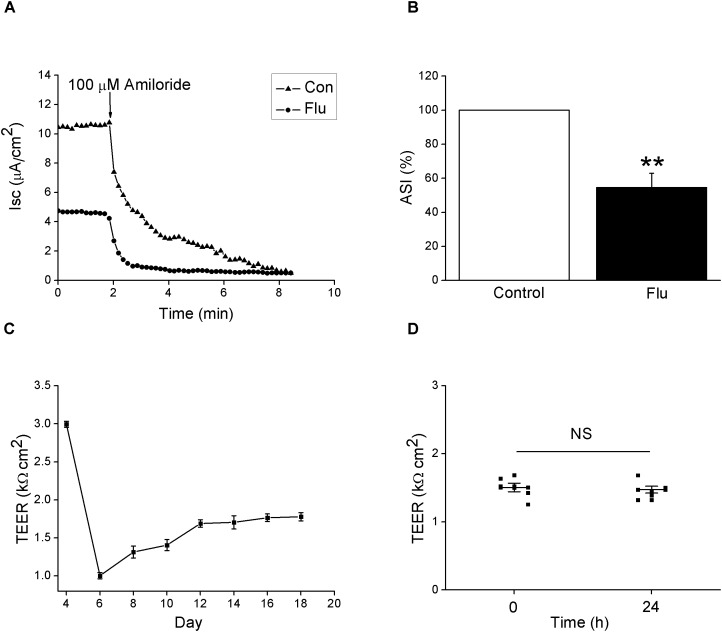
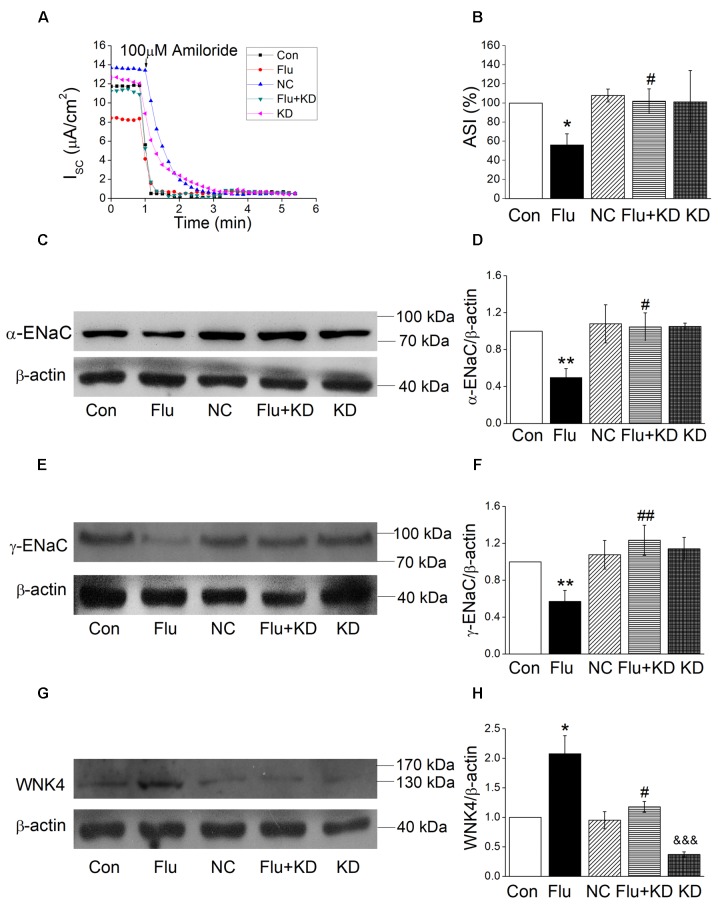
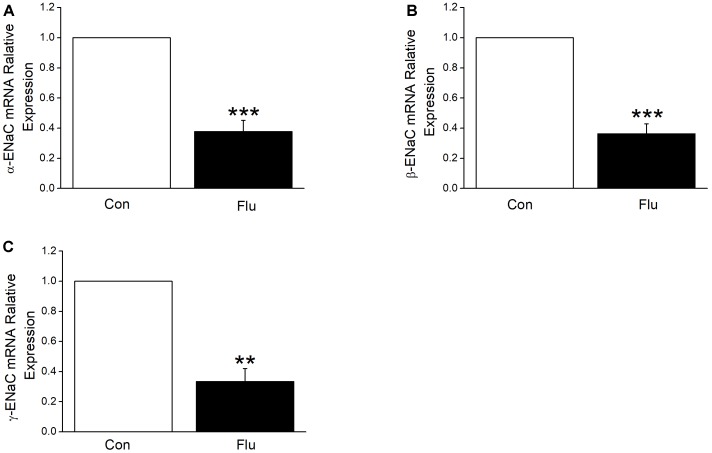
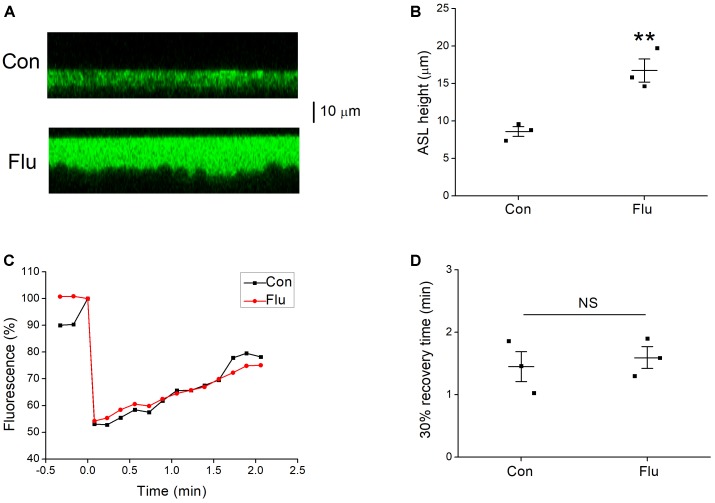
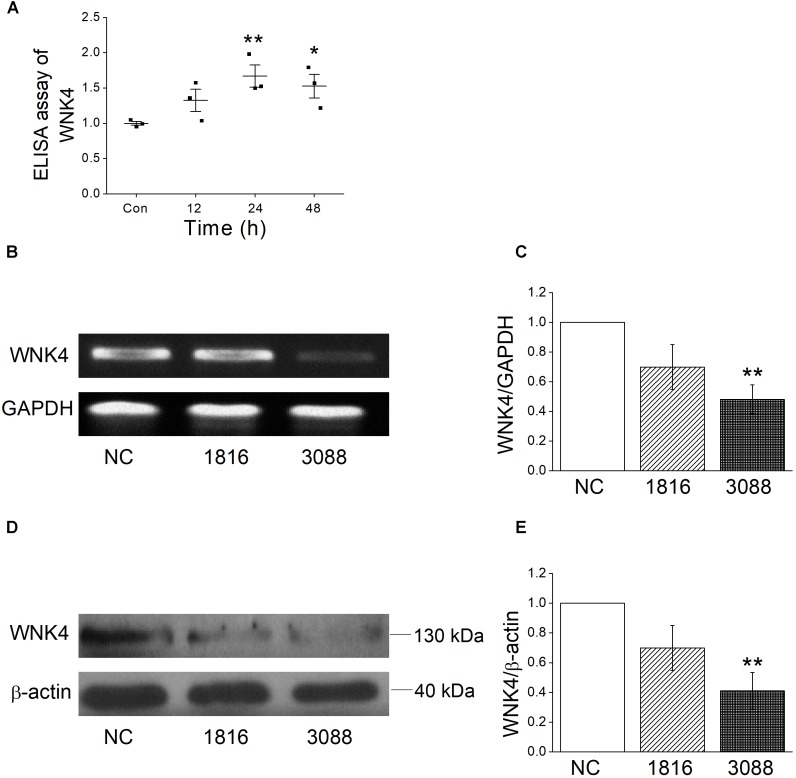
Influenza virus has a significant impact on the respiratory system. The mechanism of how influenza virus impairs the fluid transport in airway is not fully understood. We examined its effects on epithelial sodium channels (ENaC), which are very important for water and salt transport in the respiratory system. We focused on the impacts of influenza virus on ENaC activity in mouse tracheal epithelial cells (MTECs) and applied Ussing chamber apparatus for recording the short-circuit currents in primary cultured MTECs. Expressions of α and γ-ENaC were measured at the protein and mRNA levels by western blot and quantitative real-time polymerase chain reaction, respectively. Roles of the with-no-lysine-kinase-4 (WNK4) pathway were considered in participating influenza virus-involved ENaC regulation by using siRNA to knockdown WNK4 and the physical properties of airway surface liquid (ASL) were detected by confocal microscopy. Our results showed that influenza virus reduced ENaC activity, and the expressions of α and γ-ENaC were decreased at the protein and mRNA levels, respectively. WNK4 expression increased time-dependently at the protein level after influenza virus infection, while knockdown of WNK4 rescued the impact of influenza virus on ENaC and ASL height increased obviously after MTECs were treated with influenza virus. Taken together, these results suggest that influenza virus causes the changes of biophysical profile in the airway by altering the ENaC activity at least partly via facilitating the expression of WNK4.
流感病毒对呼吸系统有重大影响。流感病毒如何损害气道中的液体转运机制尚未完全了解。我们研究了其对上皮钠通道(ENaC)的影响,该通道对呼吸系统中的水和盐转运非常重要。我们重点关注流感病毒对小鼠气管上皮细胞(MTECs)中ENaC活性的影响,并应用尤斯灌流室装置记录原代培养的MTECs中的短路电流。分别通过蛋白质印迹法和定量实时聚合酶链反应在蛋白质和mRNA水平上测量α和γ-ENaC的表达。通过使用小干扰RNA(siRNA)敲低无赖氨酸激酶4(WNK4)来探讨WNK4途径在参与流感病毒相关的ENaC调节中的作用,并通过共聚焦显微镜检测气道表面液体(ASL)的物理性质。我们的结果表明,流感病毒降低了ENaC活性,α和γ-ENaC的表达分别在蛋白质和mRNA水平上下降。流感病毒感染后,WNK4的蛋白质水平随时间依赖性增加,而敲低WNK4可挽救流感病毒对ENaC的影响,并且在用流感病毒处理MTECs后ASL高度明显增加。综上所述,这些结果表明,流感病毒至少部分地通过促进WNK4的表达来改变ENaC活性,从而导致气道生物物理特征的变化。