Bisht Babita, Darling Warren G, Shivapour E Torage, Lutgendorf Susan K, Snetselaar Linda G, Chenard Catherine A, Wahls Terry L
Department of Internal Medicine, Carver College of Medicine, University of Iowa.
Department of Health and Human Physiology, College of Liberal Arts and Sciences, University of Iowa.
Degener Neurol Neuromuscul Dis. 2015;5:19-35. doi: 10.2147/DNND.S76523. Epub 2015 Feb 27.
Fatigue is a disabling symptom of multiple sclerosis (MS) and reduces quality of life. The aim of this study was to investigate the effects of a multimodal intervention, including a modified Paleolithic diet, nutritional supplements, stretching, strengthening exercises with electrical stimulation of trunk and lower limb muscles, and stress management on perceived fatigue and quality of life of persons with progressive MS.
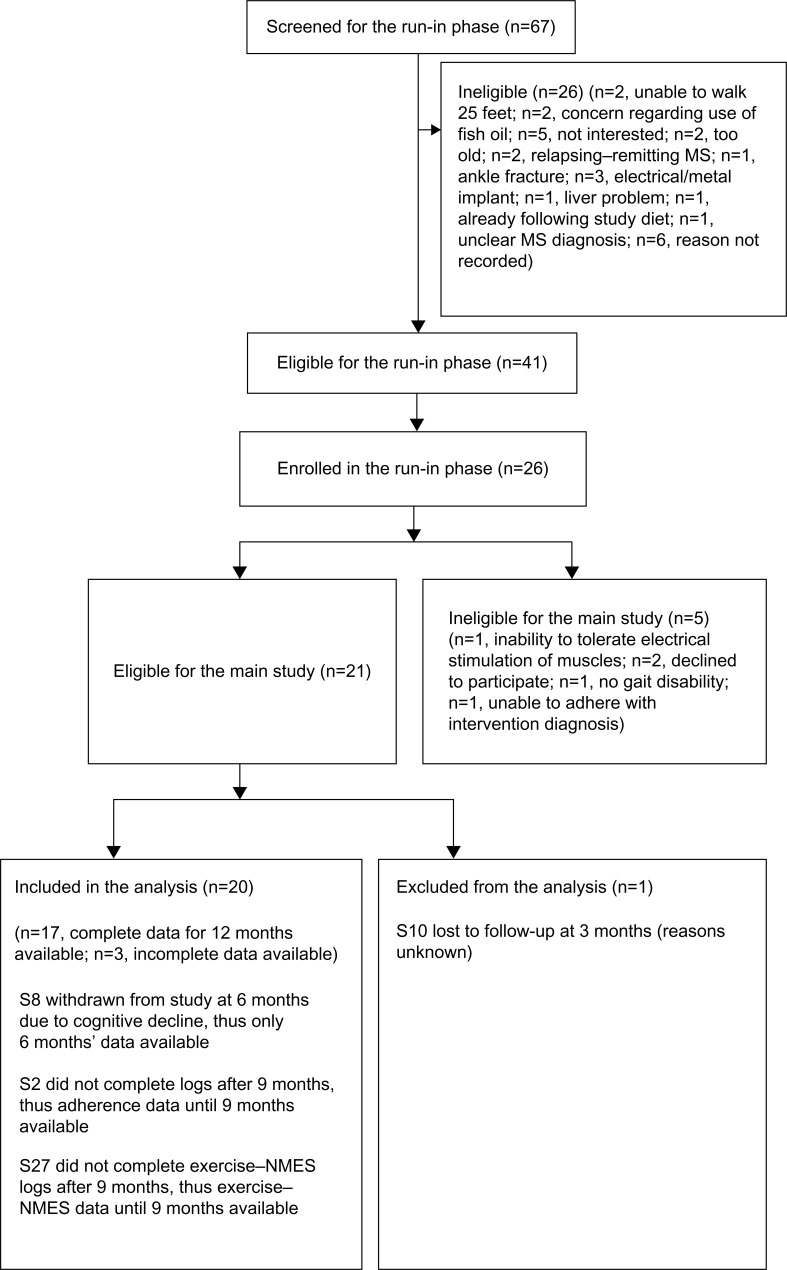
Twenty subjects with progressive MS and average Expanded Disability Status Scale (EDSS) score of 6.2 (range: 3.5-8.0) participated in the 12-month phase of the study. Assessments were completed at baseline and at 3 months, 6 months, 9 months, and 12 months. Safety analyses were based on monthly side effects questionnaires and blood analyses at 1 month, 3 months, 6 months, 9 months, and 12 months.
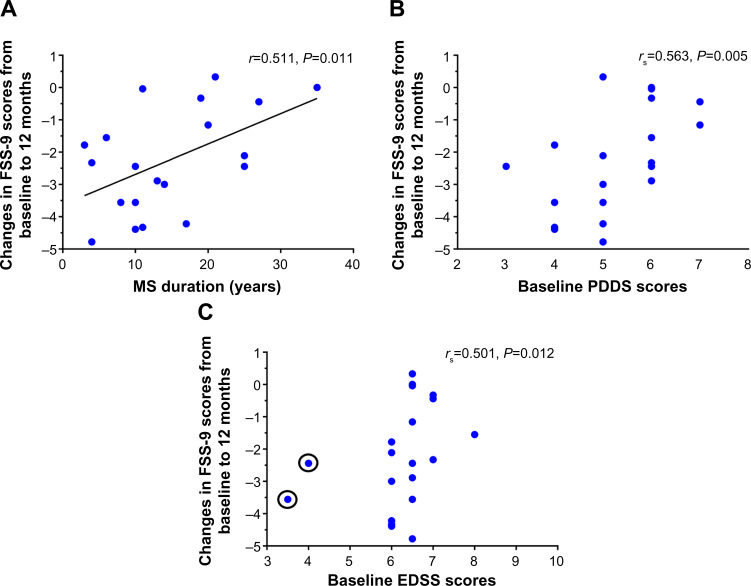
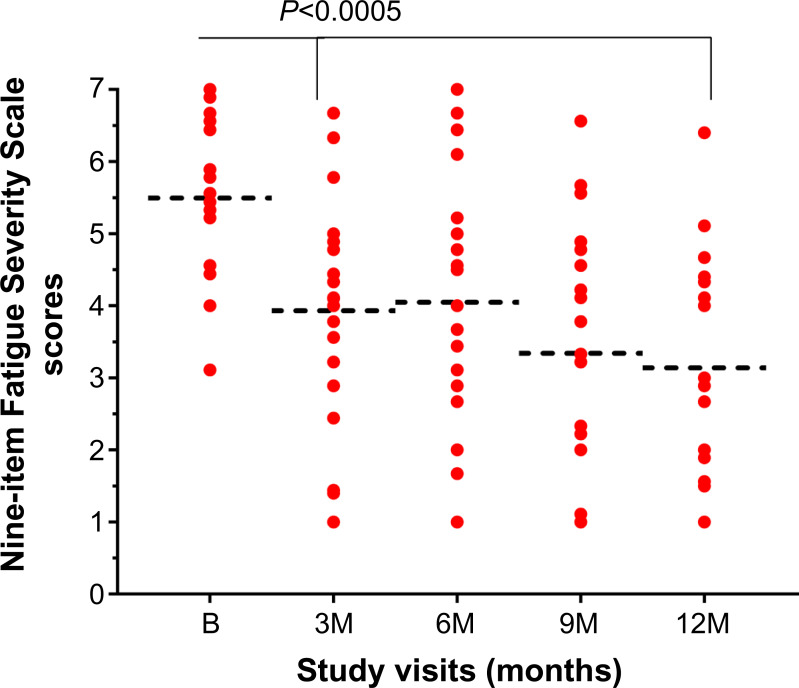
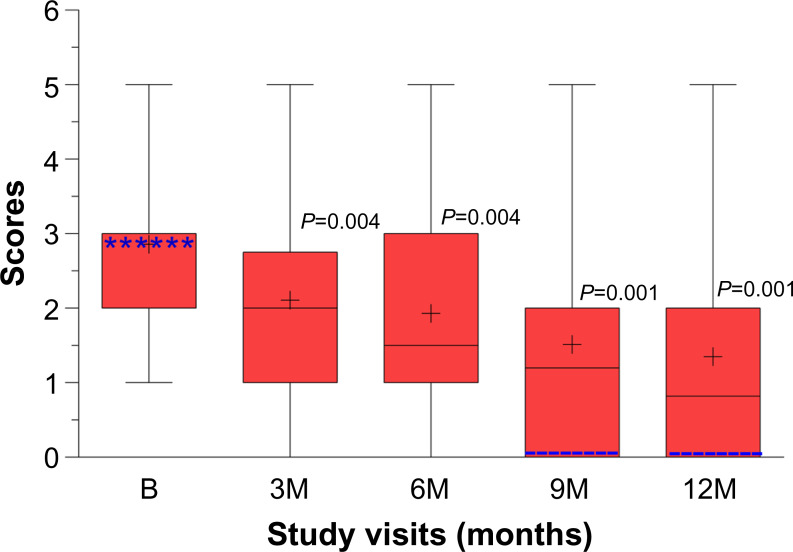
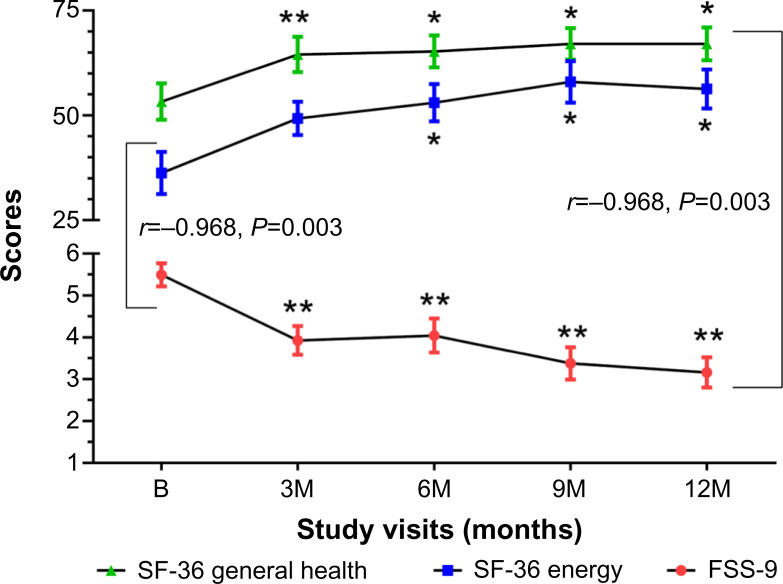
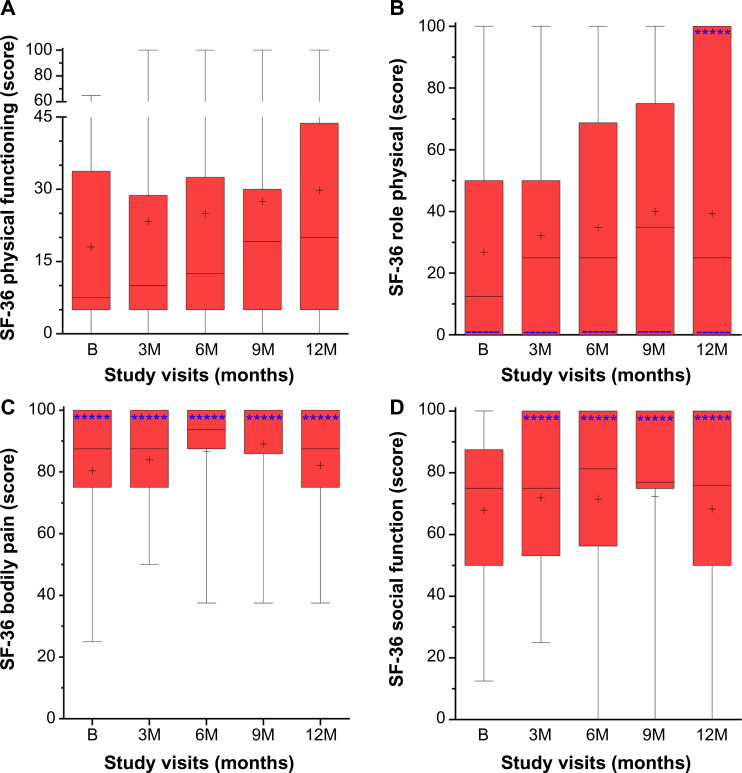
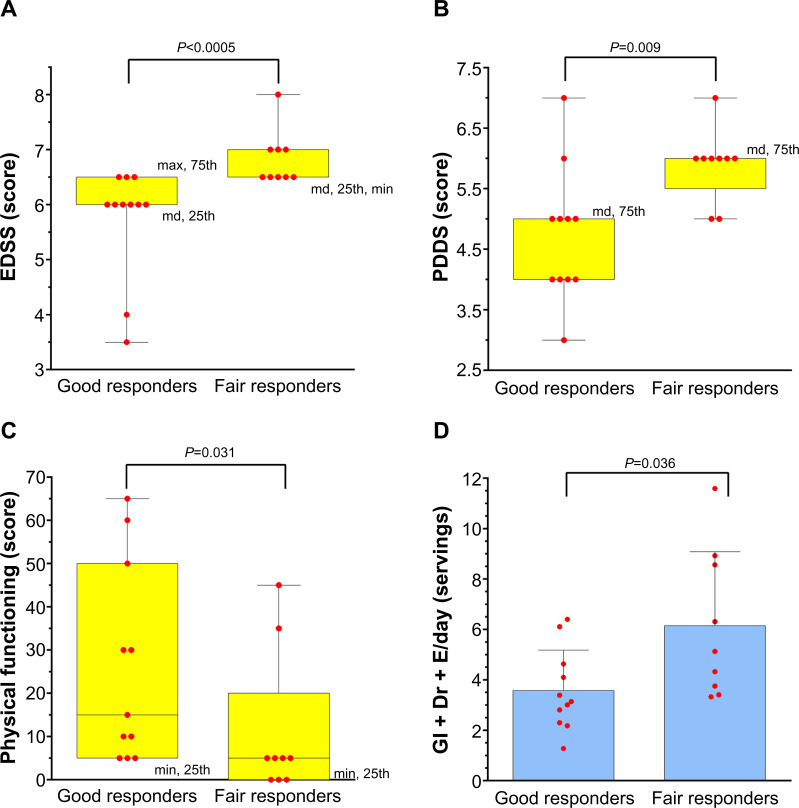
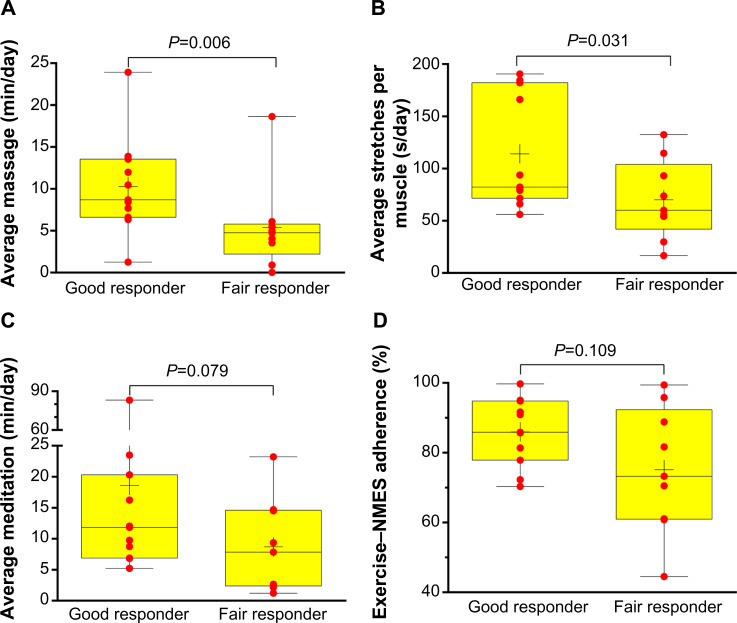
Subjects showed good adherence (assessed from subjects' daily logs) with this intervention and did not report any serious side effects. Fatigue Severity Scale (FSS) and Performance Scales-fatigue subscale scores decreased in 12 months (P<0.0005). Average FSS scores of eleven subjects showed clinically significant reduction (more than two points, high response) at 3 months, and this improvement was sustained until 12 months. Remaining subjects (n=9, low responders) either showed inconsistent or less than one point decrease in average FSS scores in the 12 months. Energy and general health scores of RAND 36-item Health Survey (Short Form-36) increased during the study (<0.05). Decrease in FSS scores during the 12 months was associated with shorter disease duration (=0.511, =0.011), and lower baseline Patient Determined Disease Steps score ( =0.563, =0.005) and EDSS scores ( =0.501, =0.012). Compared to low responders, high responders had lower level of physical disability (< 0.05) and lower intake of gluten, dairy products, and eggs (=0.036) at baseline. High responders undertook longer duration of massage and stretches per muscle (<0.05) in 12 months.
A multimodal intervention may reduce fatigue and improve quality of life of subjects with progressive MS. Larger randomized controlled trials with blinded raters are needed to prove efficacy of this intervention on MS-related fatigue.
疲劳是多发性硬化症(MS)的一种致残症状,会降低生活质量。本研究的目的是调查一种多模式干预措施的效果,该措施包括改良的旧石器时代饮食、营养补充剂、伸展运动、对躯干和下肢肌肉进行电刺激的强化运动以及压力管理,对进展性MS患者的感知疲劳和生活质量的影响。
20名进展性MS患者参与了为期12个月的研究阶段,其平均扩展残疾状态量表(EDSS)评分为6.2(范围:3.5 - 8.0)。在基线以及3个月、6个月、9个月和12个月时完成评估。安全性分析基于每月的副作用问卷以及在1个月、3个月、6个月、9个月和12个月时的血液分析。
受试者对该干预措施表现出良好的依从性(根据受试者的每日日志评估),且未报告任何严重副作用。疲劳严重程度量表(FSS)和性能量表 - 疲劳子量表得分在12个月内下降(P<0.0005)。11名受试者的平均FSS得分在3个月时显示出临床显著降低(超过2分,高反应者),且这种改善持续到12个月。其余受试者(n = 9,低反应者)在12个月内平均FSS得分要么显示不一致,要么下降少于1分。兰德36项健康调查(简表 - 36)的能量和总体健康得分在研究期间有所增加(<0.05)。12个月内FSS得分的下降与病程较短(=0.511,=0.011)、基线患者确定疾病阶段得分较低(=0.563,=0.005)以及EDSS得分较低(=0.501,=0.012)相关。与低反应者相比,高反应者在基线时身体残疾程度较低(<0.05),且麸质、乳制品和鸡蛋的摄入量较低(=0.036)。高反应者在12个月内每块肌肉接受按摩和伸展的持续时间更长(<0.05)。
多模式干预可能会减轻进展性MS患者的疲劳并改善其生活质量。需要更大规模的、有盲法评估者的随机对照试验来证明该干预措施对MS相关疲劳的疗效。