Carnagarin Revathy, Kiuchi Marcio G, Ho Jan K, Matthews Vance B, Schlaich Markus P
Dobney Hypertension Centre, School of Medicine, Royal Perth Hospital Unit, Medical Research Foundation, The University of Western Australia, Perth, WA, Australia.
Departments of Cardiology and Nephrology, Royal Perth Hospital, Perth, WA, Australia.
Front Neurosci. 2019 Jan 23;12:1058. doi: 10.3389/fnins.2018.01058. eCollection 2018.
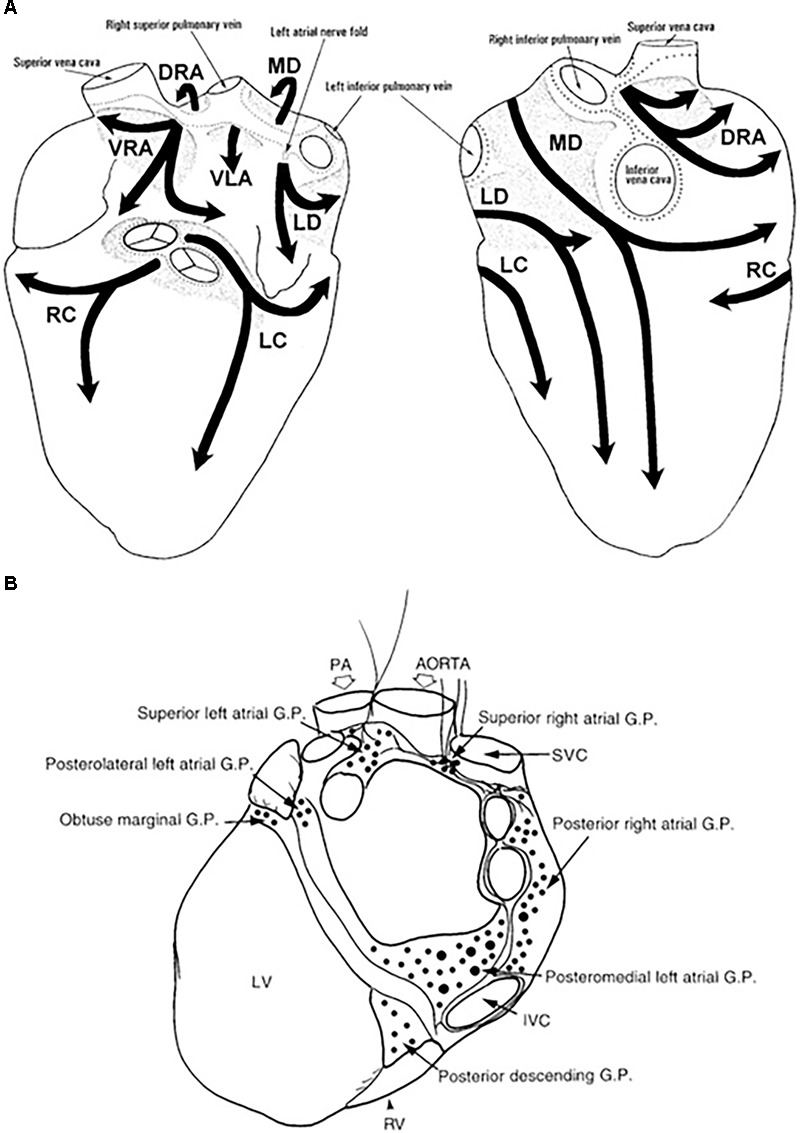
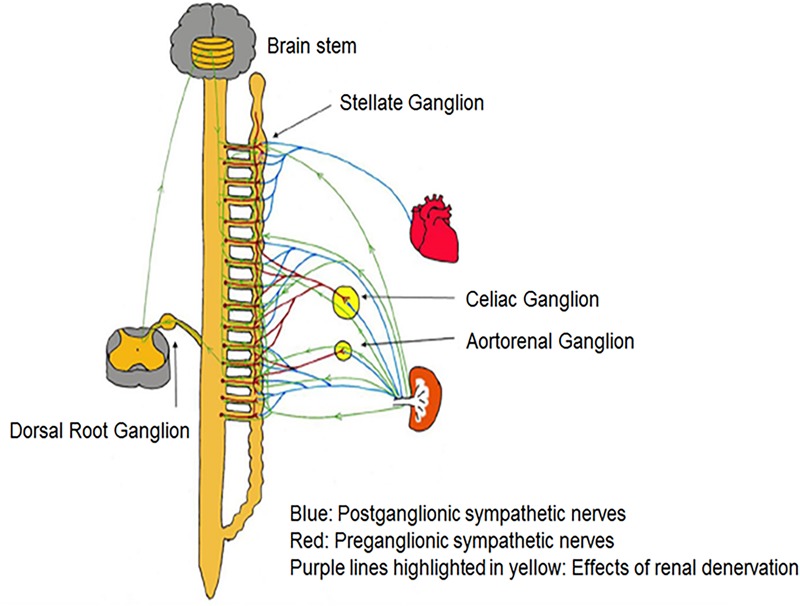
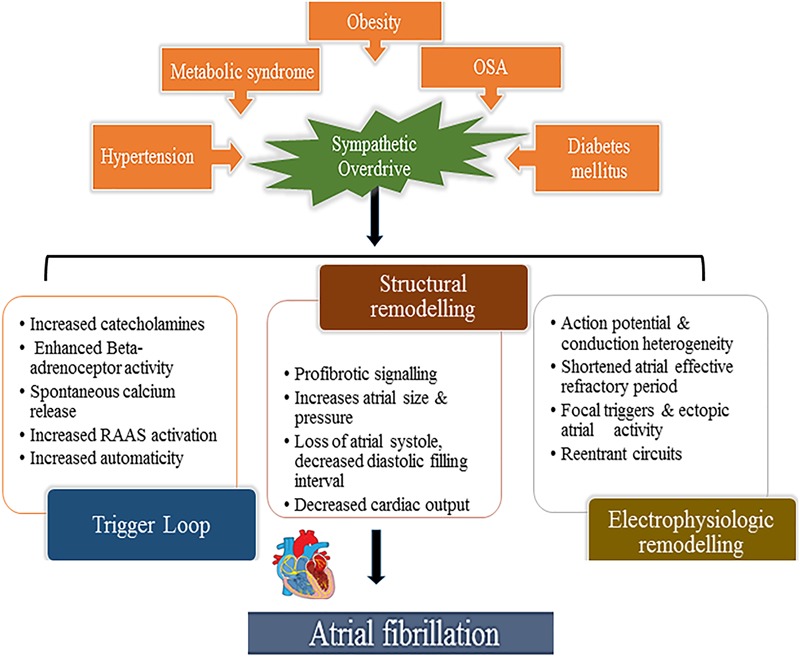
The autonomic nervous system (ANS) has a significant influence on the structural integrity and electrical conductivity of the atria. Aberrant activation of the sympathetic nervous system can induce heterogeneous changes with arrhythmogenic potential which can result in atrial tachycardia, atrial tachyarrhythmias and atrial fibrillation (AF). Methods to modulate autonomic activity primarily through reduction of sympathetic outflow reduce the incidence of spontaneous or induced atrial arrhythmias in animal models and humans, suggestive of the potential application of such strategies in the management of AF. In this review we focus on the relationship between the ANS, sympathetic overdrive and the pathophysiology of AF, and the potential of sympathetic neuromodulation in the management of AF. We conclude that sympathetic activity plays an important role in the initiation and maintenance of AF, and modulating ANS function is an important therapeutic approach to improve the management of AF in selected categories of patients. Potential therapeutic applications include pharmacological inhibition with central and peripheral sympatholytic agents and various device based approaches. While the role of the sympathetic nervous system has long been recognized, new developments in science and technology in this field promise exciting prospects for the future.
自主神经系统(ANS)对心房的结构完整性和电传导性有重大影响。交感神经系统的异常激活可诱发具有致心律失常潜力的异质性变化,进而导致房性心动过速、房性快速心律失常和心房颤动(AF)。主要通过减少交感神经输出以调节自主神经活动的方法,可降低动物模型和人类中自发性或诱发性房性心律失常的发生率,提示此类策略在房颤管理中的潜在应用价值。在本综述中,我们聚焦于自主神经系统、交感神经过度兴奋与房颤病理生理学之间的关系,以及交感神经调节在房颤管理中的潜力。我们得出结论,交感神经活动在房颤的起始和维持中起重要作用,调节自主神经系统功能是改善特定类型患者房颤管理的重要治疗方法。潜在的治疗应用包括使用中枢和外周抗交感神经药物进行药理学抑制以及各种基于设备的方法。虽然交感神经系统的作用早已得到认可,但该领域科学技术的新发展为未来带来了令人兴奋的前景。