Popovitz Juliana, Mysore Shreesh P, Adwanikar Hita
Department of Psychological and Brain Sciences, Johns Hopkins University, Baltimore, MD, United States.
Department of Neuroscience, Johns Hopkins University, Baltimore, MD, United States.
Front Behav Neurosci. 2019 Jan 23;13:6. doi: 10.3389/fnbeh.2019.00006. eCollection 2019.
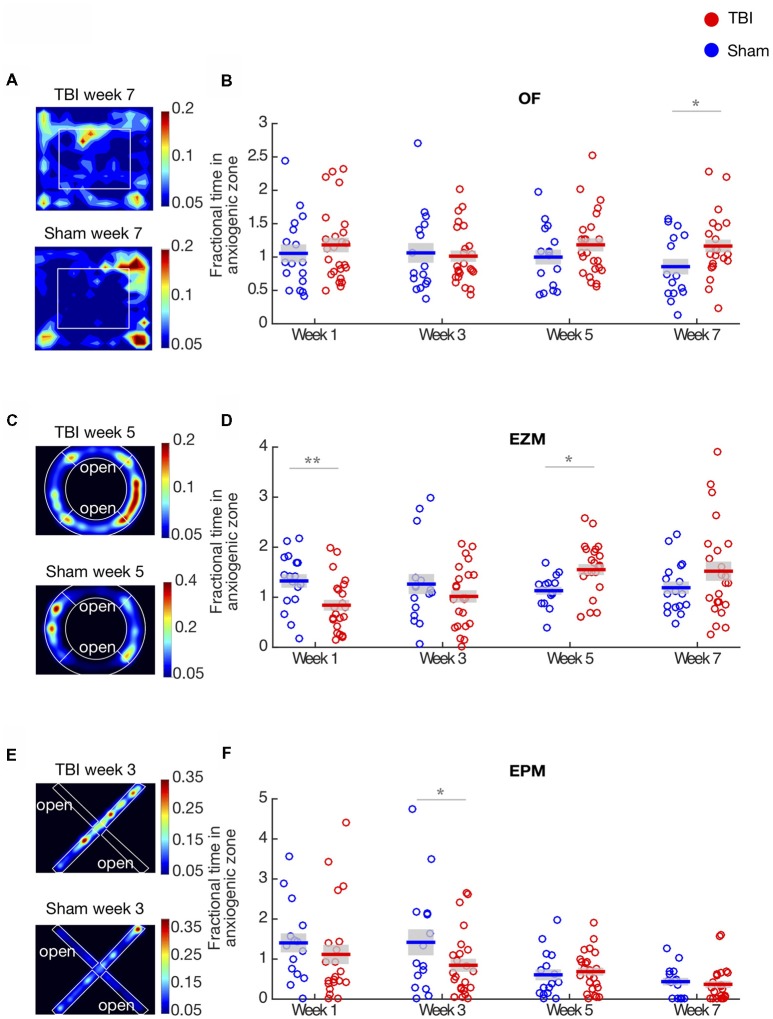
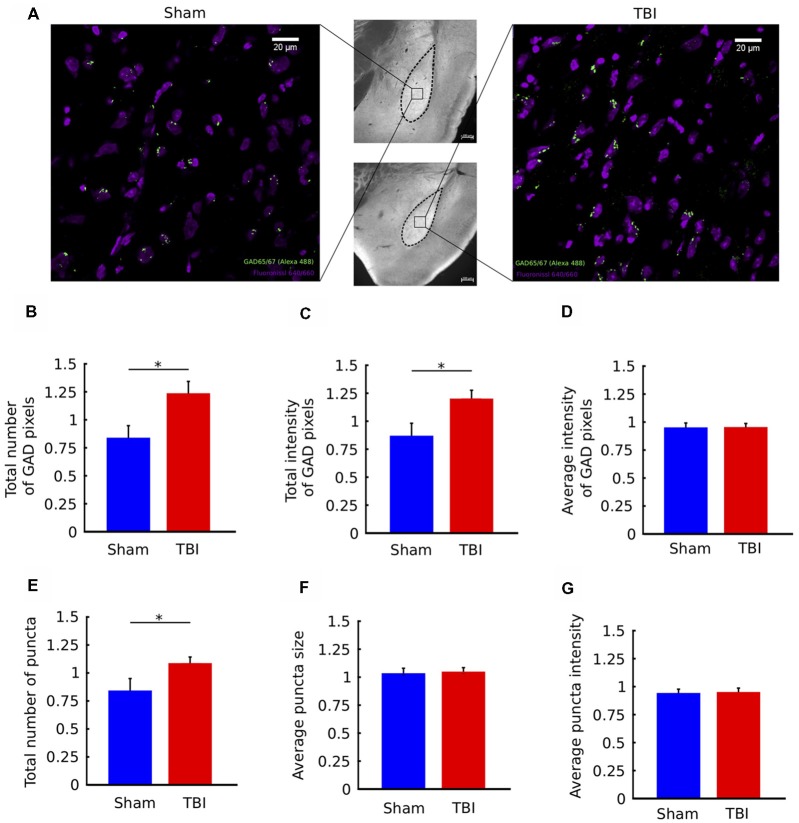
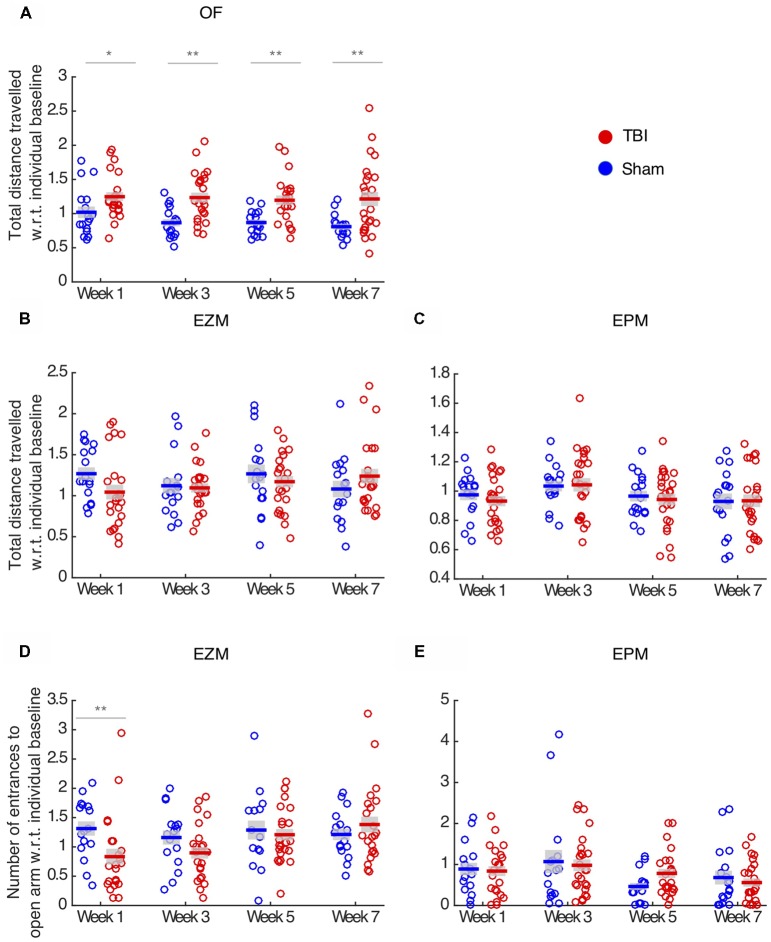
Traumatic brain injury (TBI) has been frequently linked to affective disorders such as anxiety and depression. However, much remains to be understood about the underlying molecular and signaling mechanisms that mediate affective dysfunctions following injury. A lack of consensus in animal studies regarding what the affective sequelae of TBI are has been a major hurdle that has slowed progress, with studies reporting the full range of effects: increase, decrease, and no change in anxiety following injury. Here, we addressed this issue directly by investigating long-term anxiety outcomes in mice following a moderate to severe controlled cortical impact (CCI) injury using a battery of standard behavioral tests-the open field (OF), elevated zero maze (EZM), and elevated plus maze (EPM). Mice were tested on weeks 1, 3, 5 and 7 post-injury. Our results show that the effect of injury is time- and task-dependent. Early on-up to 3 weeks post-injury, there is an increase in anxiety-like behaviors in the elevated plus and zero mazes. However, after 5 weeks post-injury, anxiety-like behavior decreases, as measured in the OF and EZM. Immunostaining in the basolateral amygdala (BLA) for GAD, a marker for GABA, at the end of the behavioral testing showed the late decrease in anxiety behavior was correlated with upregulation of inhibition. The approach adopted in this study reveals a complex trajectory of affective outcomes following injury, and highlights the importance of comparing outcomes in different assays and time-points, to ensure that the affective consequences of injury are adequately assessed.
创伤性脑损伤(TBI)常与焦虑和抑郁等情感障碍相关联。然而,对于损伤后介导情感功能障碍的潜在分子和信号机制,仍有许多有待了解之处。动物研究中关于TBI的情感后遗症尚无共识,这一直是阻碍进展的主要障碍,研究报告了各种不同的影响:损伤后焦虑增加、减少以及无变化。在此,我们通过使用一系列标准行为测试——旷场试验(OF)、高架零迷宫(EZM)和高架十字迷宫(EPM),研究中度至重度控制性皮质撞击(CCI)损伤后小鼠的长期焦虑结果,直接解决了这个问题。在损伤后的第1、3、5和7周对小鼠进行测试。我们的结果表明,损伤的影响具有时间和任务依赖性。在损伤后的早期,即损伤后3周内,高架十字迷宫和零迷宫中的焦虑样行为增加。然而,在损伤后5周,如在旷场试验和高架零迷宫中所测量的,焦虑样行为减少。行为测试结束时,对基底外侧杏仁核(BLA)中GABA标记物GAD进行免疫染色,结果显示焦虑行为的后期减少与抑制作用的上调相关。本研究采用的方法揭示了损伤后情感结果的复杂轨迹,并强调了在不同检测方法和时间点比较结果的重要性,以确保对损伤的情感后果进行充分评估。