Soares Hugo R, Castro Rute, Tomás Hélio A, Carrondo Manuel J T, Alves Paula M, Coroadinha Ana S
iBET, Instituto de Biologia Experimental e Tecnológica, Apartado 12, 2780-901, Oeiras, Portugal.
Instituto de Tecnologia Química e Biológica António Xavier, Universidade Nova de Lisboa, Av. da República, 2780-157, Oeiras, Portugal.
AMB Express. 2019 Feb 7;9(1):22. doi: 10.1186/s13568-019-0741-5.
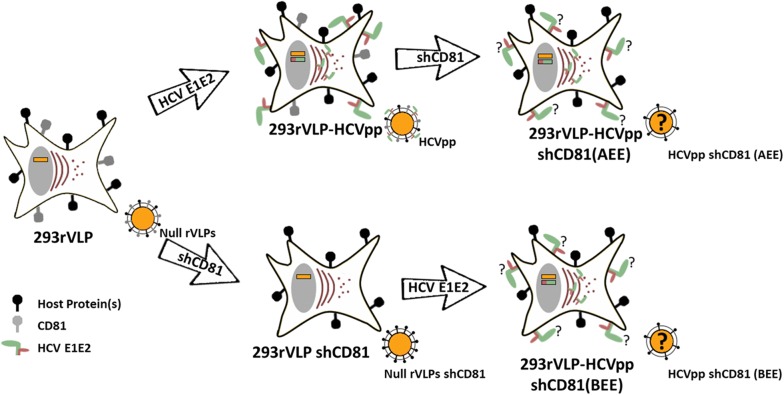
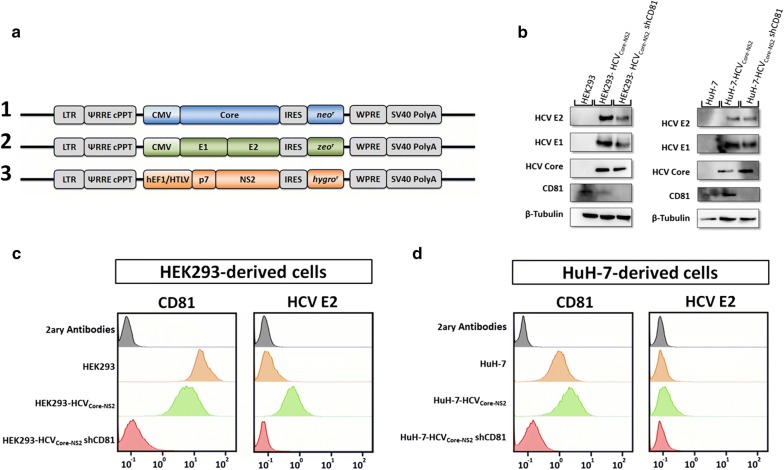
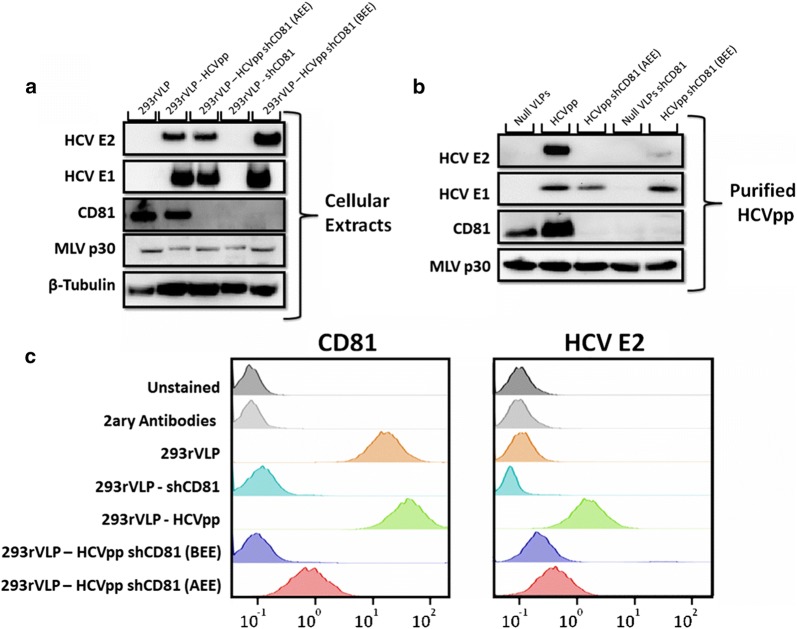
Hepatitis C virus (HCV) infects 3% of world population being responsible for nearly half a million deaths annually urging the need for a prophylactic vaccine. Retrovirus like particles are commonly used scaffolds for antigens presentation being the core of diverse vaccine candidates. The immunogenicity of host proteins naturally incorporated in retrovirus was hypothesized to impact the performance of retrovirus based vaccines. In this work, the capacity of engineered retrovirus like particles devoided of host protein CD81 to display HCV envelope antigens was compared to non-engineered particles. A persistent inability of CD81 negative VLPs to incorporate HCV E2 protein as a result from the inefficient transport of HCV E2 to the plasma membrane, was observed. This work enabled the identification of a CD81-mediated transport of HCV E2 while stressing the importance of host proteins for the development of recombinant vaccines.
丙型肝炎病毒(HCV)感染了全球3%的人口,每年导致近50万人死亡,这促使人们需要一种预防性疫苗。逆转录病毒样颗粒是常用的抗原呈递支架,是多种候选疫苗的核心。据推测,天然整合到逆转录病毒中的宿主蛋白的免疫原性会影响基于逆转录病毒的疫苗的性能。在这项工作中,将缺乏宿主蛋白CD81的工程化逆转录病毒样颗粒展示HCV包膜抗原的能力与非工程化颗粒进行了比较。观察到由于HCV E2向质膜的运输效率低下,CD81阴性病毒样颗粒持续无法整合HCV E2蛋白。这项工作有助于识别CD81介导的HCV E2运输,同时强调宿主蛋白在重组疫苗开发中的重要性。