Center for Information and Neural Networks (CiNet), National Institute of Information and Communications Technology (NICT), 1-4 Yamadaoka, Suita, Osaka, 565-0871, Japan.
Graduate School of Engineering, Osaka University, 2-1 Yamadaoka, Suita, Osaka, 565-0871, Japan.
Brain Struct Funct. 2019 Apr;224(3):1359-1375. doi: 10.1007/s00429-018-01821-5. Epub 2019 Feb 7.
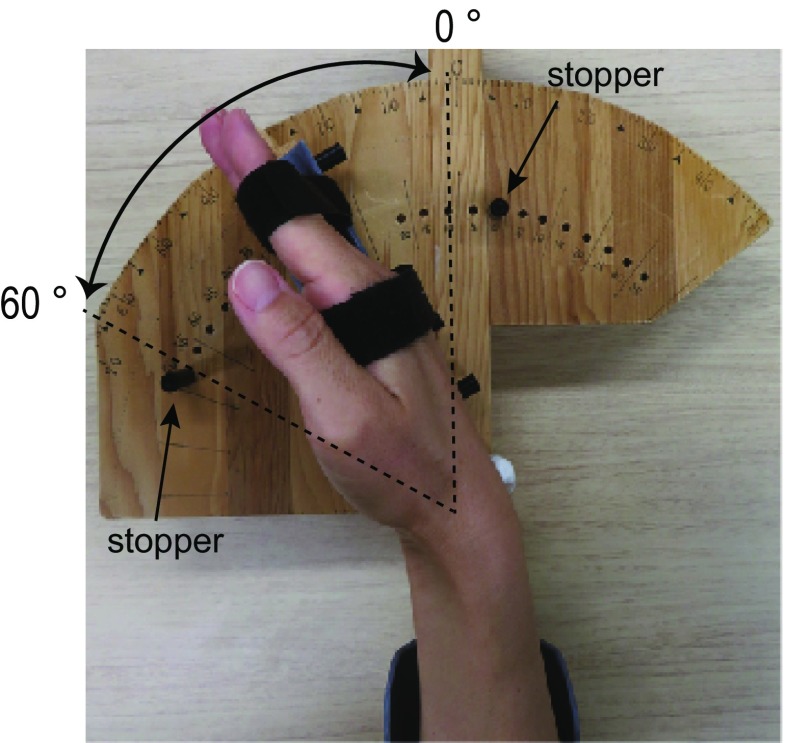
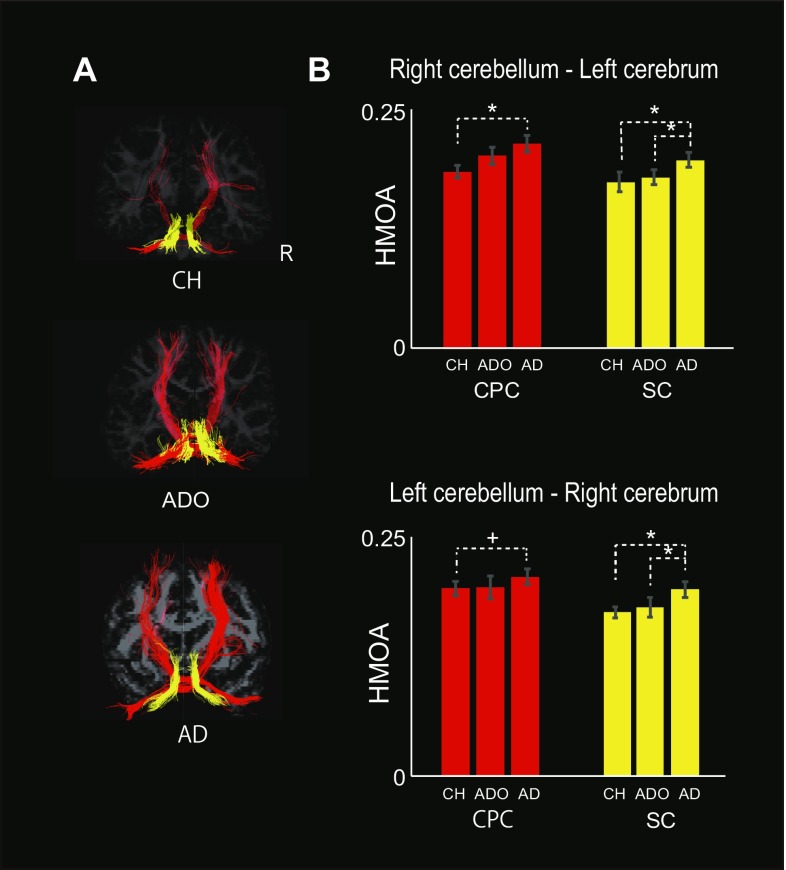
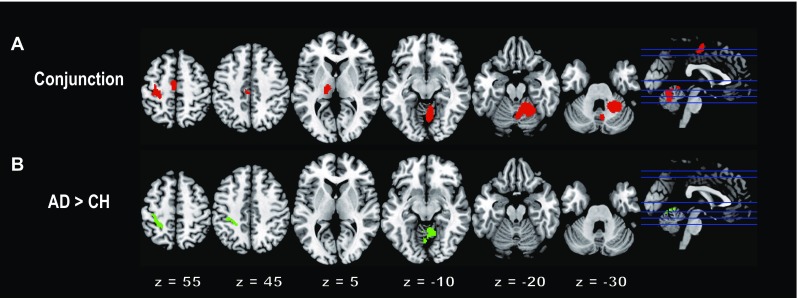
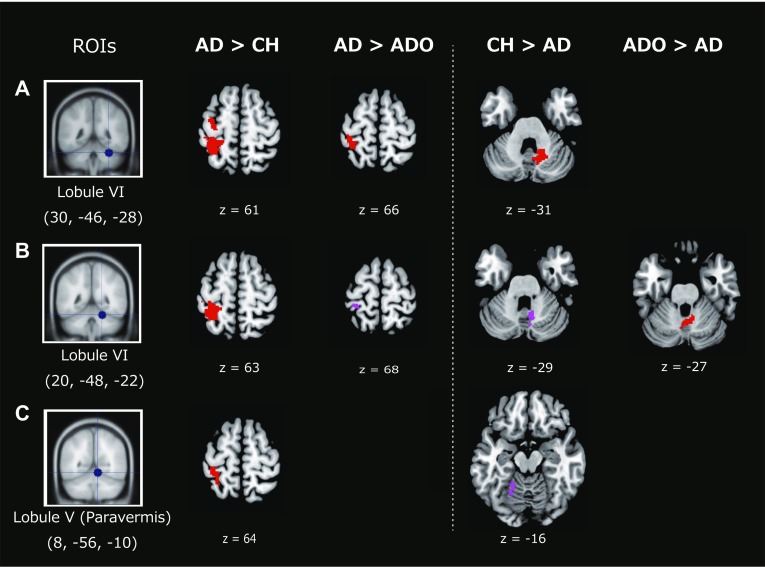
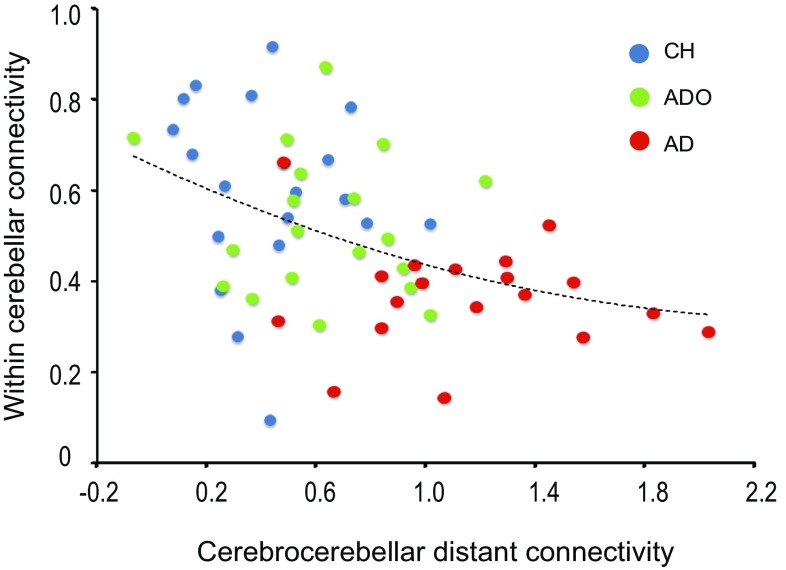
Sensorimotor function is a fundamental brain function in humans, and the cerebrocerebellar circuit is essential to this function. In this study, we demonstrate how the cerebrocerebellar circuit develops both functionally and anatomically from childhood to adulthood in the typically developing human brain. We measured brain activity using functional magnetic resonance imaging while a total of 57 right-handed, blindfolded, healthy children (aged 8-11 years), adolescents (aged 12-15 years), and young adults (aged 18-23 years) (n = 19 per group) performed alternating extension-flexion movements of their right wrists in precise synchronization with 1-Hz audio tones. We also collected their diffusion MR images to examine the extent of fiber maturity in cerebrocerebellar afferent and efferent tracts by evaluating the anisotropy-sensitive index of hindrance modulated orientational anisotropy (HMOA). During the motor task, although the ipsilateral cerebellum and the contralateral primary sensorimotor cortices were consistently activated across all age groups, the functional connectivity between these two distant regions was stronger in adults than in children and adolescents, whereas connectivity within the local cerebellum was stronger in children and adolescents than in adults. The HMOA values in cerebrocerebellar afferent and efferent tracts were higher in adults than in children (some were also higher than in adolescents). The results indicate that adult-like cerebrocerebellar functional coupling is not completely achieved during childhood and adolescence, even for fundamental sensorimotor brain function, probably due to anatomical immaturity of cerebrocerebellar tracts. This study clearly demonstrated the principle of "local-to-distant" development of functional brain networks in the human cerebrocerebellar sensorimotor network.
感觉运动功能是人类的基本大脑功能,而大脑小脑回路对该功能至关重要。在这项研究中,我们展示了在正常发育的人类大脑中,大脑小脑回路如何在从儿童到成年的过程中在功能和解剖学上都得到发展。我们使用功能磁共振成像来测量大脑活动,共有 57 名右利手、蒙住眼睛的健康儿童(8-11 岁)、青少年(12-15 岁)和年轻成年人(18-23 岁)(每组 19 人)进行交替的右手腕屈伸运动,与 1-Hz 音频音调精确同步。我们还收集了他们的弥散磁共振图像,通过评估受阻调制各向异性(HMOA)的各向异性敏感指数来检查大脑小脑传入和传出束纤维成熟的程度。在运动任务中,尽管同侧小脑和对侧初级感觉运动皮层在所有年龄组中都持续被激活,但成年组中这两个遥远区域之间的功能连接比儿童和青少年组更强,而小脑内的连接在儿童和青少年组中比成年组更强。大脑小脑传入和传出束的 HMOA 值在成年组中高于儿童组(有些也高于青少年组)。结果表明,即使对于基本的感觉运动大脑功能,在儿童和青少年时期,成人样的大脑小脑功能耦合也未完全实现,这可能是由于大脑小脑束的解剖不成熟所致。这项研究清楚地表明了人类大脑小脑感觉运动网络中功能脑网络“局部到远程”发展的原则。