a Division of Nephrology, Zhujiang Hospital , Southern Medical University , Guangzhou , China.
b Division of Nephrology, Huadu District people's Hospital , Southern Medical University , Guangzhou , China.
J Enzyme Inhib Med Chem. 2019 Dec;34(1):394-404. doi: 10.1080/14756366.2018.1488697.
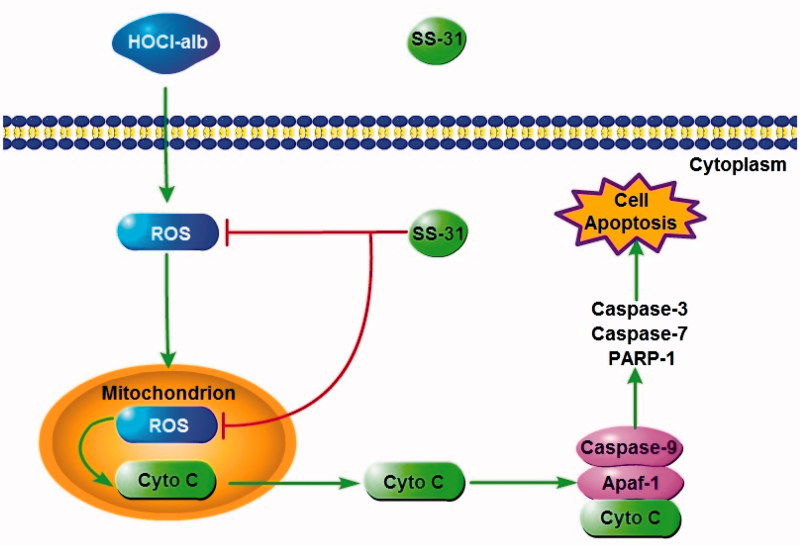
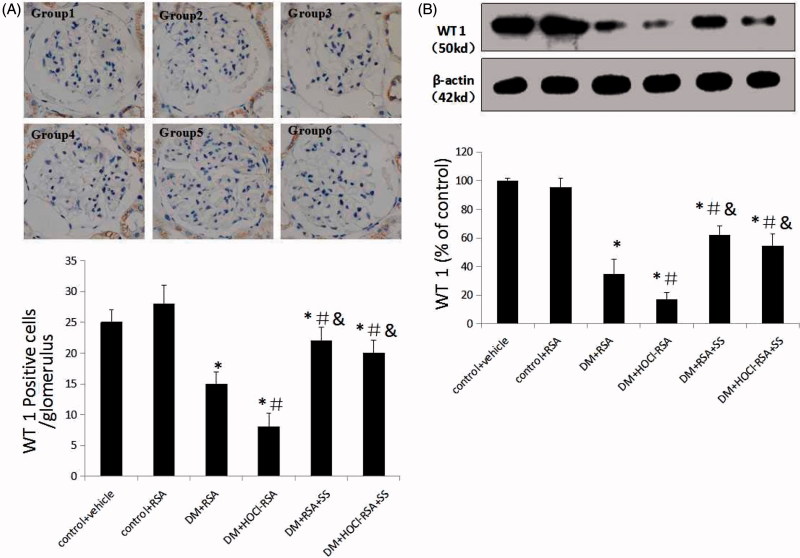
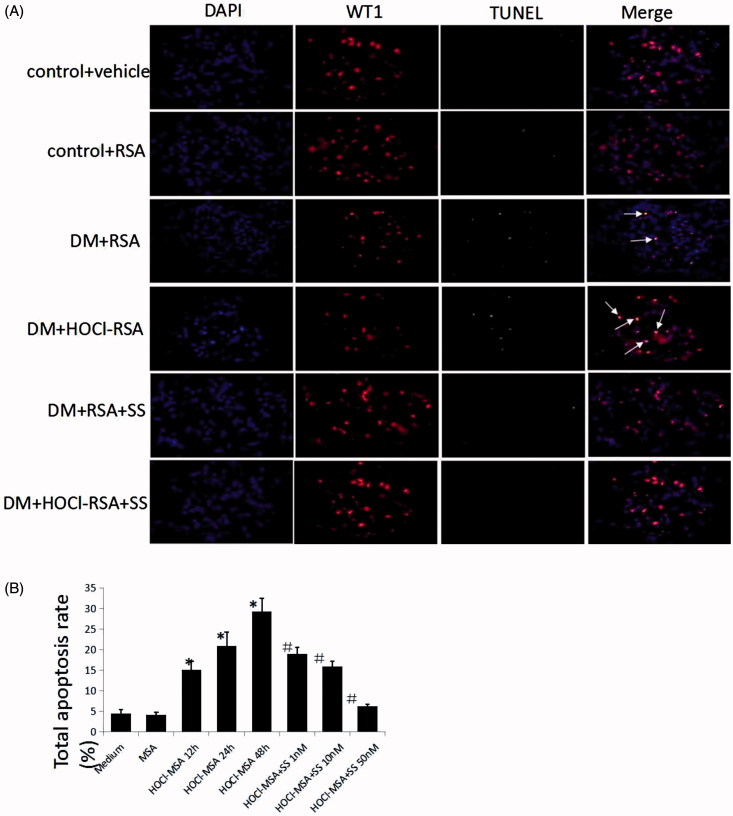
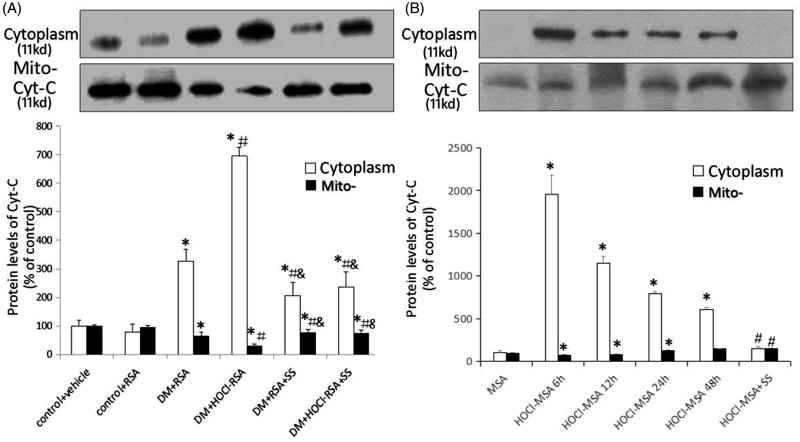
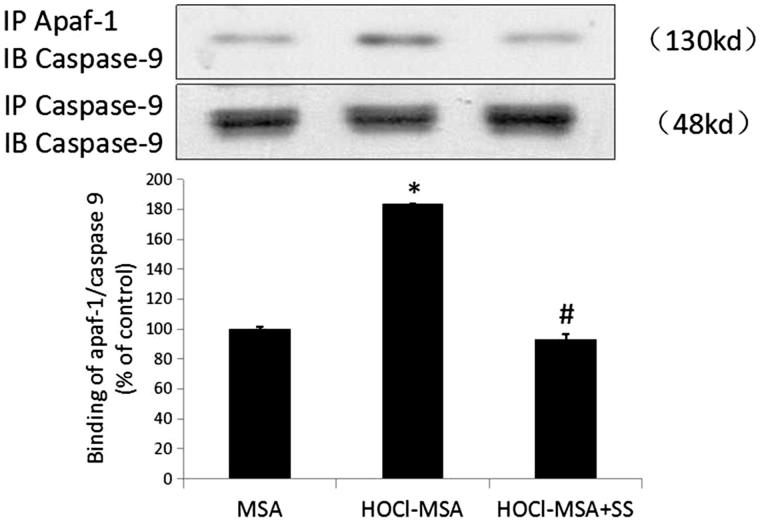
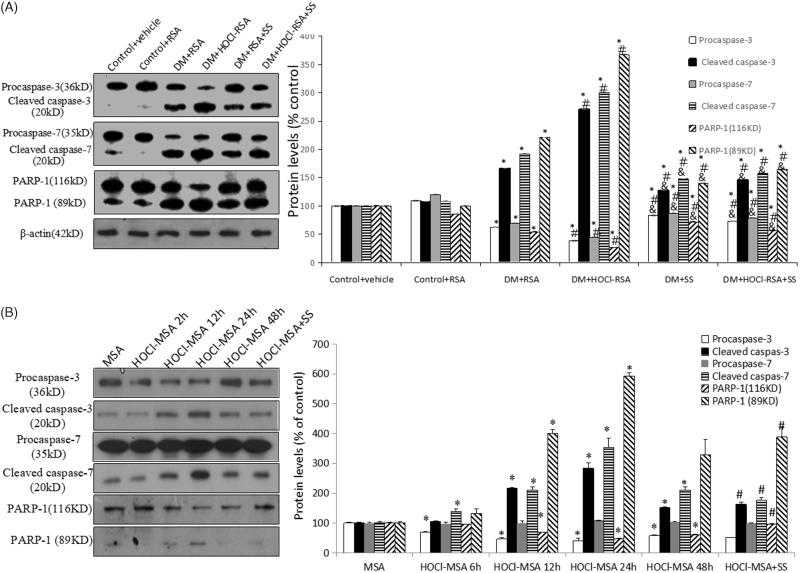
Mitochondria play important roles in the development of diabetic kidney disease (DKD). The SS peptide is a tetrapeptide that is located and accumulated in the inner mitochondrial membrane; it reduces reactive oxygen species (ROS) and prevents mitochondrial dysfunction. Podocytes are key cellular components in DKD progression. However, whether the SS peptide can exert renal protection through podocytes and the mechanism involved are unknown. In the present study, we explored the mechanisms of the SS peptide on podocyte injury in vivo and in vitro. Compared with the control group, the glomerular podocyte number and expression of WT1 were significantly reduced and TUNEL-positive podocytes were significantly increased in renal tissues in the diabetic rat. These effects were further exacerbated by hypochlorite-modified albumin (HOCl-alb) challenge but prevented by SS-31. In vitro, SS-31 blocked apoptosis in podocyte cell line induced by HOCl-alb. SS-31 prevented oxidative stress and mitochondria-dependent apoptosis signalling by HOCl-alb in vivo and in vitro, as evidenced by the release of cytochrome c (cyt c), binding of apoptosis activated factor-1 (Apaf-1) and caspase-9, and activation of caspases. These data suggest that SS-31 may prevent podocyte apoptosis, exerting renal protection in diabetes mellitus, probably through an apoptosis-related signalling pathway involving oxidative stress and culminating in mitochondria.
线粒体在糖尿病肾病(DKD)的发展中起着重要作用。SS 肽是一种位于并积聚在线粒体内部膜的四肽,它可减少活性氧(ROS)并防止线粒体功能障碍。足细胞是 DKD 进展的关键细胞成分。然而,SS 肽是否可以通过足细胞发挥肾脏保护作用以及涉及的机制尚不清楚。在本研究中,我们探讨了 SS 肽在体内和体外对足细胞损伤的作用机制。与对照组相比,糖尿病大鼠肾组织中肾小球足细胞数量和 WT1 表达明显减少,TUNEL 阳性足细胞明显增加。次氯酸盐修饰白蛋白(HOCl-alb)的挑战进一步加剧了这些影响,但 SS-31 可预防。在体外,SS-31 阻断了 HOCl-alb 诱导的足细胞系凋亡。SS-31 可防止 HOCl-alb 在体内和体外引起的氧化应激和线粒体依赖性细胞凋亡信号,这表现在细胞色素 c(cyt c)的释放、凋亡激活因子-1(Apaf-1)和半胱天冬酶-9 的结合以及半胱天冬酶的激活。这些数据表明,SS-31 可能通过涉及氧化应激并最终导致线粒体的凋亡相关信号通路来预防足细胞凋亡,从而在糖尿病中发挥肾脏保护作用。