• 文献检索
  • 文档翻译
  • 深度研究
  • 学术资讯
  • Suppr Zotero 插件Zotero 插件
  • 邀请有礼
  • 套餐&价格
  • 历史记录
应用&插件
Suppr Zotero 插件Zotero 插件浏览器插件Mac 客户端Windows 客户端微信小程序
定价
高级版会员购买积分包购买API积分包
服务
文献检索文档翻译深度研究API 文档MCP 服务
关于我们
关于 Suppr公司介绍联系我们用户协议隐私条款
关注我们

Suppr 超能文献

核心技术专利:CN118964589B侵权必究
粤ICP备2023148730 号-1Suppr @ 2026

文献检索

告别复杂PubMed语法,用中文像聊天一样搜索,搜遍4000万医学文献。AI智能推荐,让科研检索更轻松。

立即免费搜索

文件翻译

保留排版,准确专业,支持PDF/Word/PPT等文件格式,支持 12+语言互译。

免费翻译文档

深度研究

AI帮你快速写综述,25分钟生成高质量综述,智能提取关键信息,辅助科研写作。

立即免费体验

利用张量分解预测具有临床应用前景的治疗假说。

Predicting clinically promising therapeutic hypotheses using tensor factorization.

机构信息

Computational Biology, GSK R&D, 1250 S. Collegeville Road, UP12-200, Collegeville, PA, USA.

Genetics, GSK R&D, 1250 S. Collegeville Road, UP12-200, Collegeville, PA, USA.

出版信息

BMC Bioinformatics. 2019 Feb 8;20(1):69. doi: 10.1186/s12859-019-2664-1.

DOI:10.1186/s12859-019-2664-1
PMID:30736745
原文链接:https://pmc.ncbi.nlm.nih.gov/articles/PMC6368709/
Abstract

BACKGROUND

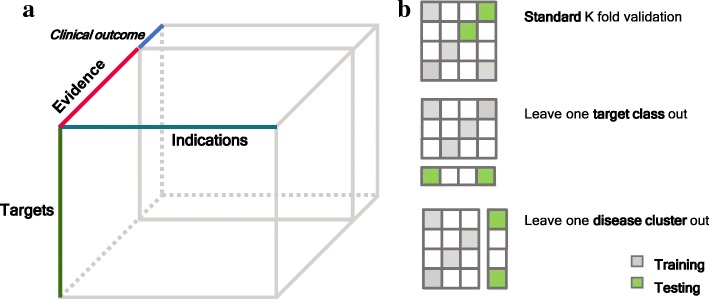
Determining which target to pursue is a challenging and error-prone first step in developing a therapeutic treatment for a disease, where missteps are potentially very costly given the long-time frames and high expenses of drug development. With current informatics technology and machine learning algorithms, it is now possible to computationally discover therapeutic hypotheses by predicting clinically promising drug targets based on the evidence associating drug targets with disease indications. We have collected this evidence from Open Targets and additional databases that covers 17 sources of evidence for target-indication association and represented the data as a tensor of 21,437 × 2211 × 17.

RESULTS

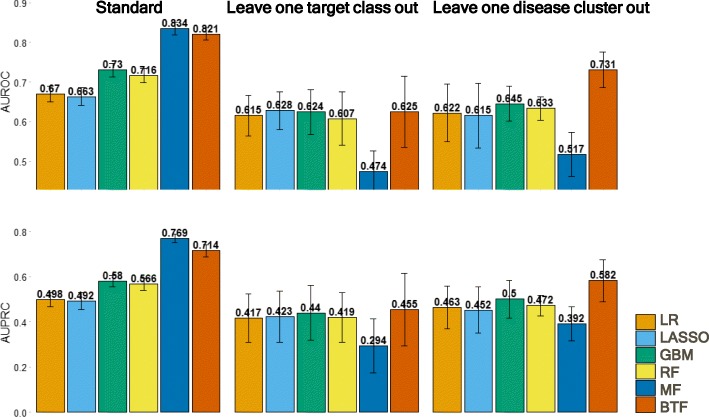
As a proof-of-concept, we identified examples of successes and failures of target-indication pairs in clinical trials across 875 targets and 574 disease indications to build a gold-standard data set of 6140 known clinical outcomes. We designed and executed three benchmarking strategies to examine the performance of multiple machine learning models: Logistic Regression, LASSO, Random Forest, Tensor Factorization and Gradient Boosting Machine. With 10-fold cross-validation, tensor factorization achieved AUROC = 0.82 ± 0.02 and AUPRC = 0.71 ± 0.03. Across multiple validation schemes, this was comparable or better than other methods.

CONCLUSION

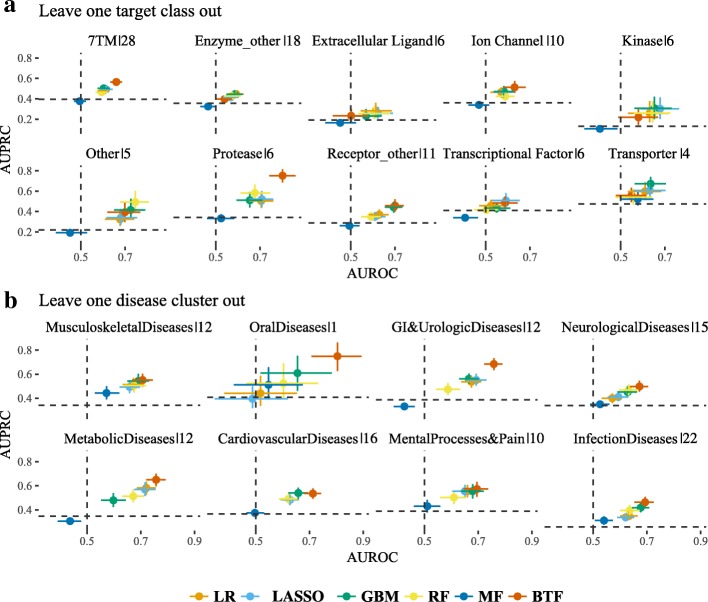
In this work, we benchmarked a machine learning technique called tensor factorization for the problem of predicting clinical outcomes of therapeutic hypotheses. Results have shown that this method can achieve equal or better prediction performance compared with a variety of baseline models. We demonstrate one application of the method to predict outcomes of trials on novel indications of approved drug targets. This work can be expanded to targets and indications that have never been clinically tested and proposing novel target-indication hypotheses. Our proposed biologically-motivated cross-validation schemes provide insight into the robustness of the prediction performance. This has significant implications for all future methods that try to address this seminal problem in drug discovery.

摘要

背景

在开发治疗疾病的治疗方法时,确定目标是一个具有挑战性且容易出错的第一步,因为药物开发的时间框架长且费用高,所以错误的决策代价可能非常高。借助当前的信息学技术和机器学习算法,现在可以通过预测基于将药物靶点与疾病适应症相关联的证据在临床上有前途的药物靶点,计算发现治疗假说。我们已经从 Open Targets 和其他涵盖 17 种药物靶点适应症关联证据来源的数据库中收集了这些证据,并将数据表示为 21437×2211×17 的张量。

结果

作为概念验证,我们在 875 个靶点和 574 种疾病适应症的临床试验中确定了靶点-适应症对成功和失败的例子,以建立一个包含 6140 个已知临床结果的黄金标准数据集。我们设计并执行了三种基准测试策略来检查多种机器学习模型的性能:逻辑回归、LASSO、随机森林、张量分解和梯度提升机。通过 10 折交叉验证,张量分解的 AUROC=0.82±0.02,AUPRC=0.71±0.03。在多种验证方案中,这与其他方法相当或更好。

结论

在这项工作中,我们对一种称为张量分解的机器学习技术进行了基准测试,以解决预测治疗假说临床结果的问题。结果表明,与各种基线模型相比,该方法可以实现相等或更好的预测性能。我们展示了该方法在预测已批准药物靶点新适应症试验结果中的一种应用。这项工作可以扩展到从未进行过临床测试的靶点和适应症,并提出新的靶点-适应症假说。我们提出的基于生物学的交叉验证方案为预测性能的稳健性提供了深入了解。这对所有试图解决药物发现中这一重要问题的未来方法都具有重要意义。
https://cdn.ncbi.nlm.nih.gov/pmc/blobs/e1f1/6368709/cff37ca4a61b/12859_2019_2664_Fig4_HTML.jpg
https://cdn.ncbi.nlm.nih.gov/pmc/blobs/e1f1/6368709/48075c0c889d/12859_2019_2664_Fig1_HTML.jpg
https://cdn.ncbi.nlm.nih.gov/pmc/blobs/e1f1/6368709/6187d93fb314/12859_2019_2664_Fig2_HTML.jpg
https://cdn.ncbi.nlm.nih.gov/pmc/blobs/e1f1/6368709/193e0d9a13ac/12859_2019_2664_Fig3_HTML.jpg
https://cdn.ncbi.nlm.nih.gov/pmc/blobs/e1f1/6368709/cff37ca4a61b/12859_2019_2664_Fig4_HTML.jpg
https://cdn.ncbi.nlm.nih.gov/pmc/blobs/e1f1/6368709/48075c0c889d/12859_2019_2664_Fig1_HTML.jpg
https://cdn.ncbi.nlm.nih.gov/pmc/blobs/e1f1/6368709/6187d93fb314/12859_2019_2664_Fig2_HTML.jpg
https://cdn.ncbi.nlm.nih.gov/pmc/blobs/e1f1/6368709/193e0d9a13ac/12859_2019_2664_Fig3_HTML.jpg
https://cdn.ncbi.nlm.nih.gov/pmc/blobs/e1f1/6368709/cff37ca4a61b/12859_2019_2664_Fig4_HTML.jpg

相似文献

1
Predicting clinically promising therapeutic hypotheses using tensor factorization.利用张量分解预测具有临床应用前景的治疗假说。
BMC Bioinformatics. 2019 Feb 8;20(1):69. doi: 10.1186/s12859-019-2664-1.
2
Tensor learning of pointwise mutual information from EHR data for early prediction of sepsis.基于电子健康记录数据的点互信息张量学习用于脓毒症的早期预测。
Comput Biol Med. 2021 Jul;134:104430. doi: 10.1016/j.compbiomed.2021.104430. Epub 2021 May 7.
3
A Knowledge Graph-Enhanced Tensor Factorisation Model for Discovering Drug Targets.一种用于发现药物靶点的知识图谱增强张量分解模型。
IEEE/ACM Trans Comput Biol Bioinform. 2022 Nov-Dec;19(6):3070-3080. doi: 10.1109/TCBB.2022.3197320. Epub 2022 Dec 8.
4
A comparative analysis of computational drug repurposing approaches: proposing a novel tensor-matrix-tensor factorization method.计算药物再利用方法的比较分析:提出一种新的张量-矩阵-张量分解方法。
Mol Divers. 2024 Aug;28(4):2177-2196. doi: 10.1007/s11030-024-10851-7. Epub 2024 Apr 29.
5
Empowering the discovery of novel target-disease associations via machine learning approaches in the open targets platform.通过开放靶点平台中的机器学习方法赋予发现新的靶-疾病关联的能力。
BMC Bioinformatics. 2022 Jun 16;23(1):232. doi: 10.1186/s12859-022-04753-4.
6
Preclinical validation of therapeutic targets predicted by tensor factorization on heterogeneous graphs.基于异质图张量分解预测的治疗靶点的临床前验证。
Sci Rep. 2020 Oct 26;10(1):18250. doi: 10.1038/s41598-020-74922-z.
7
Targeting HIV/HCV Coinfection Using a Machine Learning-Based Multiple Quantitative Structure-Activity Relationships (Multiple QSAR) Method.基于机器学习的多重定量构效关系(多重 QSAR)方法靶向 HIV/HCV 共感染。
Int J Mol Sci. 2019 Jul 22;20(14):3572. doi: 10.3390/ijms20143572.
8
In silico prediction of novel therapeutic targets using gene-disease association data.利用基因-疾病关联数据进行新型治疗靶点的计算机预测。
J Transl Med. 2017 Aug 29;15(1):182. doi: 10.1186/s12967-017-1285-6.
9
Can Predictive Modeling Tools Identify Patients at High Risk of Prolonged Opioid Use After ACL Reconstruction?预测模型工具能否识别 ACL 重建术后阿片类药物使用时间延长的高风险患者?
Clin Orthop Relat Res. 2020 Jul;478(7):0-1618. doi: 10.1097/CORR.0000000000001251.
10
Error Tolerance of Machine Learning Algorithms across Contemporary Biological Targets.机器学习算法在当代生物靶标中的容错性。
Molecules. 2019 Jun 4;24(11):2115. doi: 10.3390/molecules24112115.

引用本文的文献

1
Development of a human genetics-guided priority score for 19,365 genes and 399 drug indications.开发一种基于人类遗传学的优先级评分系统,用于评估 19365 个基因和 399 种药物适应证。
Nat Genet. 2024 Jan;56(1):51-59. doi: 10.1038/s41588-023-01609-2. Epub 2024 Jan 3.
2
DDIT: An Online Predictor for Multiple Clinical Phenotypic Drug-Disease Associations.DDIT:一种用于多种临床表型药物-疾病关联的在线预测工具。
Front Pharmacol. 2022 Jan 19;12:772026. doi: 10.3389/fphar.2021.772026. eCollection 2021.
3
Preclinical validation of therapeutic targets predicted by tensor factorization on heterogeneous graphs.

本文引用的文献

1
Systematic interrogation of diverse Omic data reveals interpretable, robust, and generalizable transcriptomic features of clinically successful therapeutic targets.系统分析多样化的组学数据揭示了临床上成功的治疗靶点具有可解释、稳健和可推广的转录组特征。
PLoS Comput Biol. 2018 May 21;14(5):e1006142. doi: 10.1371/journal.pcbi.1006142. eCollection 2018 May.
2
Open Targets: a platform for therapeutic target identification and validation.开放靶点:一个用于治疗靶点识别与验证的平台。
Nucleic Acids Res. 2017 Jan 4;45(D1):D985-D994. doi: 10.1093/nar/gkw1055. Epub 2016 Nov 29.
3
Phase II and phase III failures: 2013-2015.
基于异质图张量分解预测的治疗靶点的临床前验证。
Sci Rep. 2020 Oct 26;10(1):18250. doi: 10.1038/s41598-020-74922-z.
4
Are drug targets with genetic support twice as likely to be approved? Revised estimates of the impact of genetic support for drug mechanisms on the probability of drug approval.具有遗传支持的药物靶点获批的可能性是否增加一倍?药物机制的遗传支持对药物获批可能性影响的重新评估。
PLoS Genet. 2019 Dec 12;15(12):e1008489. doi: 10.1371/journal.pgen.1008489. eCollection 2019 Dec.
II期和III期试验失败情况:2013 - 2015年
Nat Rev Drug Discov. 2016 Dec;15(12):817-818. doi: 10.1038/nrd.2016.184. Epub 2016 Nov 4.
4
Analysis of protein-coding genetic variation in 60,706 humans.对60706名人类的蛋白质编码基因变异进行分析。
Nature. 2016 Aug 18;536(7616):285-91. doi: 10.1038/nature19057.
5
Reflection of successful anticancer drug development processes in the literature.文献中成功抗癌药物研发过程的反思。
Drug Discov Today. 2016 Nov;21(11):1740-1744. doi: 10.1016/j.drudis.2016.07.008. Epub 2016 Jul 18.
6
Serum interleukin-6 levels in response to biologic treatment in patients with psoriasis.银屑病患者接受生物治疗后血清白细胞介素-6水平
Mod Rheumatol. 2017 Jan;27(1):137-141. doi: 10.3109/14397595.2016.1174328. Epub 2016 May 19.
7
Association of IL1Β (-511 A/C) and IL6 (-174 G > C) polymorphisms with higher disease activity and clinical pattern of psoriatic arthritis.白细胞介素1β(-511 A/C)和白细胞介素6(-174 G>C)基因多态性与银屑病关节炎较高的疾病活动度及临床模式的关联
Clin Rheumatol. 2016 Jul;35(7):1789-94. doi: 10.1007/s10067-016-3301-2. Epub 2016 May 17.
8
The Efficacy and Safety of Clazakizumab, an Anti-Interleukin-6 Monoclonal Antibody, in a Phase IIb Study of Adults With Active Psoriatic Arthritis.克拉屈滨,一种抗白细胞介素-6 单克隆抗体,在一项评估其治疗成人活动性银屑病关节炎的 IIb 期研究中的疗效和安全性。
Arthritis Rheumatol. 2016 Sep;68(9):2163-73. doi: 10.1002/art.39700.
9
Tensor factorization toward precision medicine.面向精准医学的张量分解
Brief Bioinform. 2017 May 1;18(3):511-514. doi: 10.1093/bib/bbw026.
10
Distinctive Behaviors of Druggable Proteins in Cellular Networks.细胞网络中可成药蛋白的独特行为。
PLoS Comput Biol. 2015 Dec 23;11(12):e1004597. doi: 10.1371/journal.pcbi.1004597. eCollection 2015 Dec.