Department of Oncology and Hemato-Oncology, University of Milan, 20133, Milan, Italy.
Department of Pharmacological and Biomolecular Sciences and Center of Excellence on Neurodegenerative Diseases, University of Milan, 20133, Milan, Italy.
Br J Cancer. 2019 Mar;120(5):537-546. doi: 10.1038/s41416-018-0372-7. Epub 2019 Feb 11.
Nonsteroidal anti-inflammatory drugs (NSAIDs) have been proposed as chemopreventive agents for many tumours; however, the mechanism responsible for their anti-neoplastic activity remains elusive and the side effects due to cyclooxygenase (COX) inhibition prevent this clinical application.
Molecular biology, in silico, cellular and in vivo tools, including innovative in vivo imaging and classical biochemical assays, were applied to identify and characterise the COX-independent anti-cancer mechanism of NSAIDs.
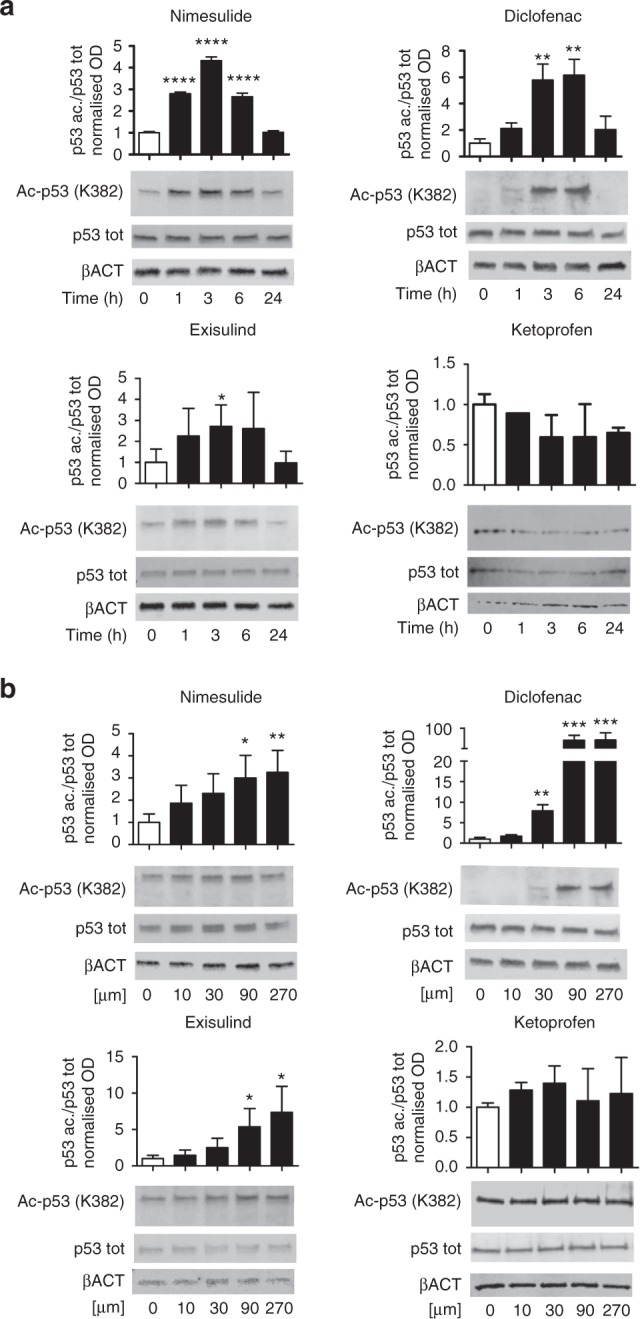
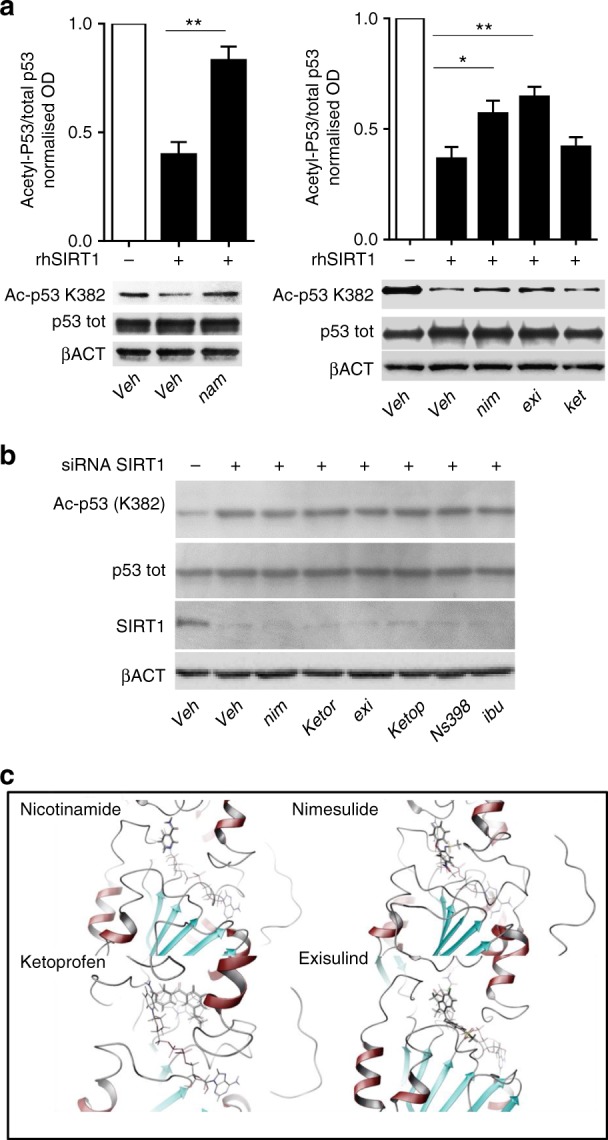
Here, we show that tumour-protective functions of NSAIDs and exisulind (a sulindac metabolite lacking anti-inflammatory activity) occur through a COX-independent mechanism. We demonstrate these NSAIDs counteract carcinogen-induced proliferation by inhibiting the sirtuin 1 (SIRT1) deacetylase activity, augmenting acetylation and activity of the tumour suppressor p53 and increasing the expression of the antiproliferative gene p21. These properties are shared by all NSAIDs except for ketoprofen lacking anti-cancer properties. The clinical interest of the mechanism identified is underlined by our finding that p53 is activated in mastectomy patients undergoing intraoperative ketorolac, a treatment associated with decreased relapse risk and increased survival.
Our study, for the first-time, links NSAID chemopreventive activity with direct SIRT1 inhibition and activation of the p53/p21 anti-oncogenic pathway, suggesting a novel strategy for the design of tumour-protective drugs.
非甾体抗炎药(NSAIDs)已被提议作为许多肿瘤的化学预防剂;然而,导致其抗肿瘤活性的机制仍然难以捉摸,并且由于环氧化酶(COX)抑制引起的副作用阻止了这种临床应用。
分子生物学、计算机模拟、细胞和体内工具,包括创新的体内成像和经典的生化测定,被应用于鉴定和表征 NSAIDs 的 COX 非依赖性抗癌机制。
在这里,我们表明 NSAIDs 和 exisulind(一种缺乏抗炎活性的舒林酸代谢物)的肿瘤保护功能通过 COX 非依赖性机制发生。我们证明这些 NSAIDs 通过抑制组蛋白去乙酰化酶 1(SIRT1)的去乙酰化酶活性、增加肿瘤抑制因子 p53 的乙酰化和活性以及增加抗增殖基因 p21 的表达来对抗致癌剂诱导的增殖。除了缺乏抗癌特性的酮洛芬外,所有 NSAIDs 都具有这些特性。我们的发现强调了所确定的机制的临床意义,即 p53 在接受术中酮咯酸治疗的乳腺癌患者中被激活,这种治疗与降低复发风险和提高生存率相关。
我们的研究首次将 NSAID 化学预防活性与直接的 SIRT1 抑制和 p53/p21 抗肿瘤途径的激活联系起来,这为设计肿瘤保护药物提供了一种新策略。