Division of Nephrology, Renmin Hospital of Wuhan University, Wuhan, Hubei, China.
Int J Biol Sci. 2019 Jan 24;15(3):701-713. doi: 10.7150/ijbs.29323. eCollection 2019.
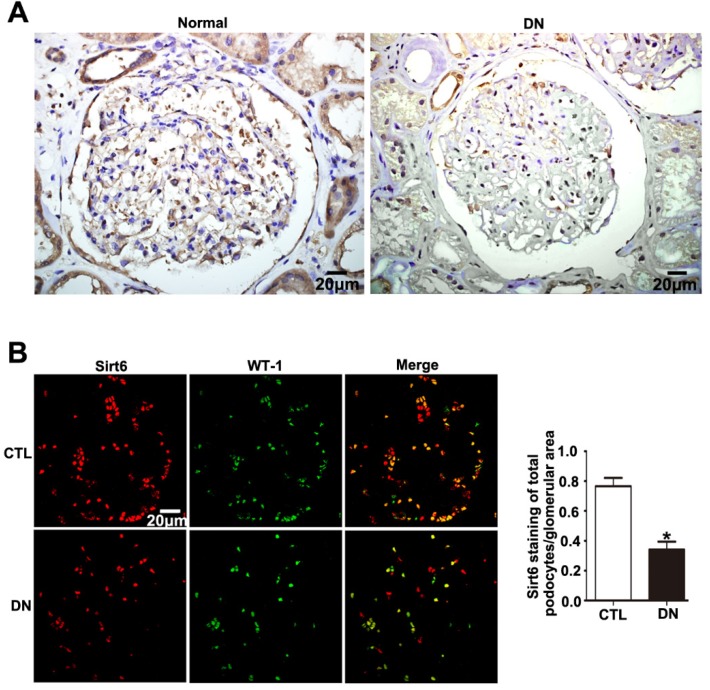
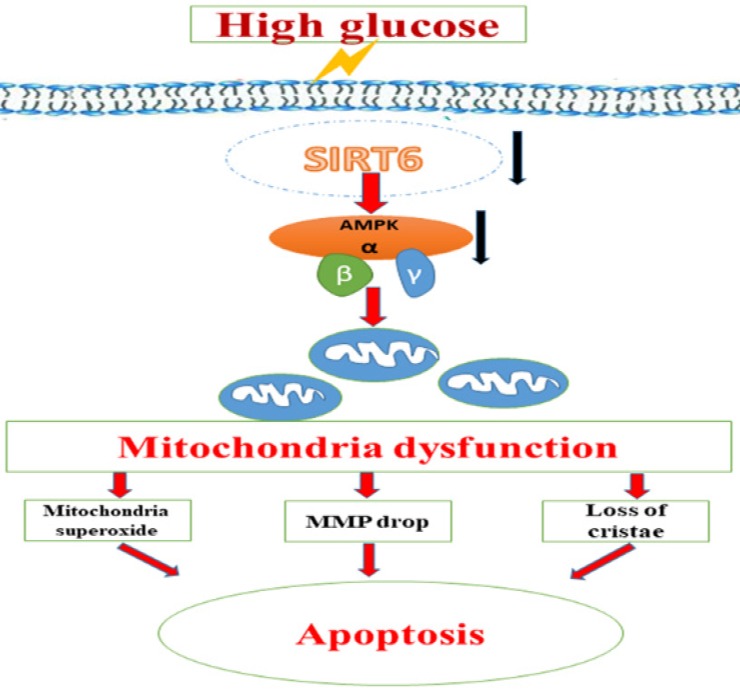
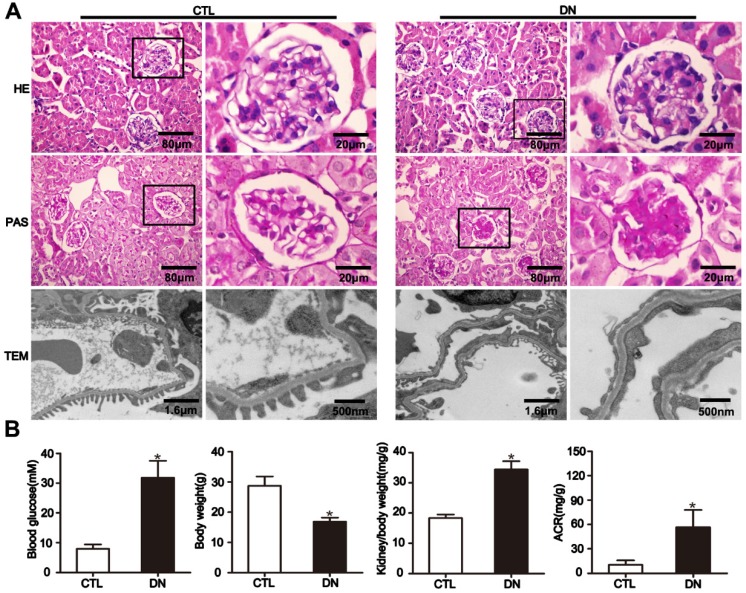
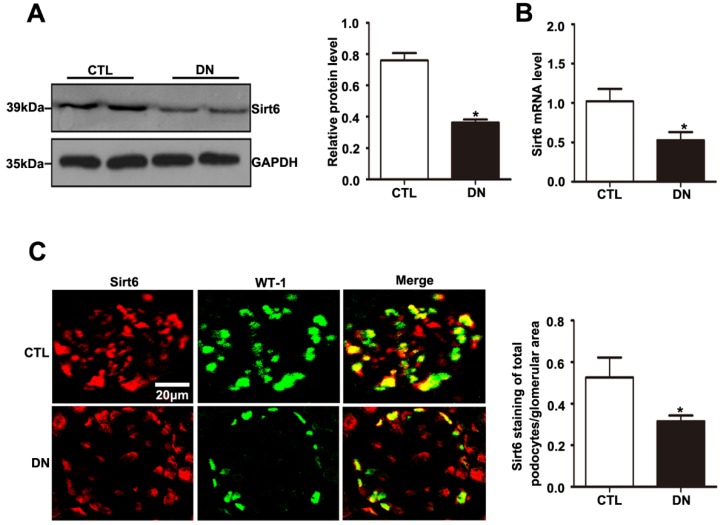
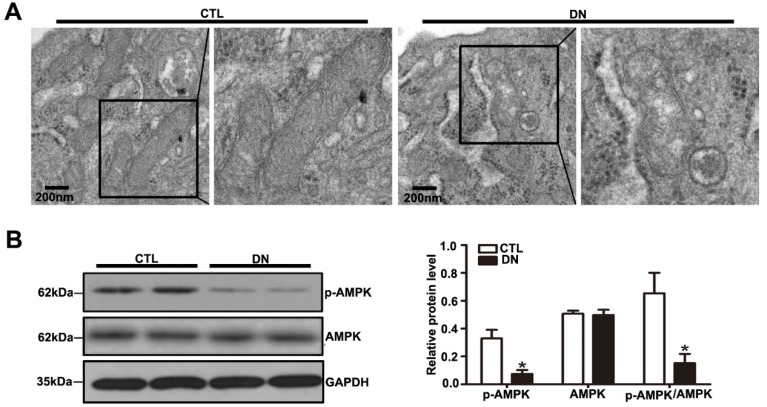
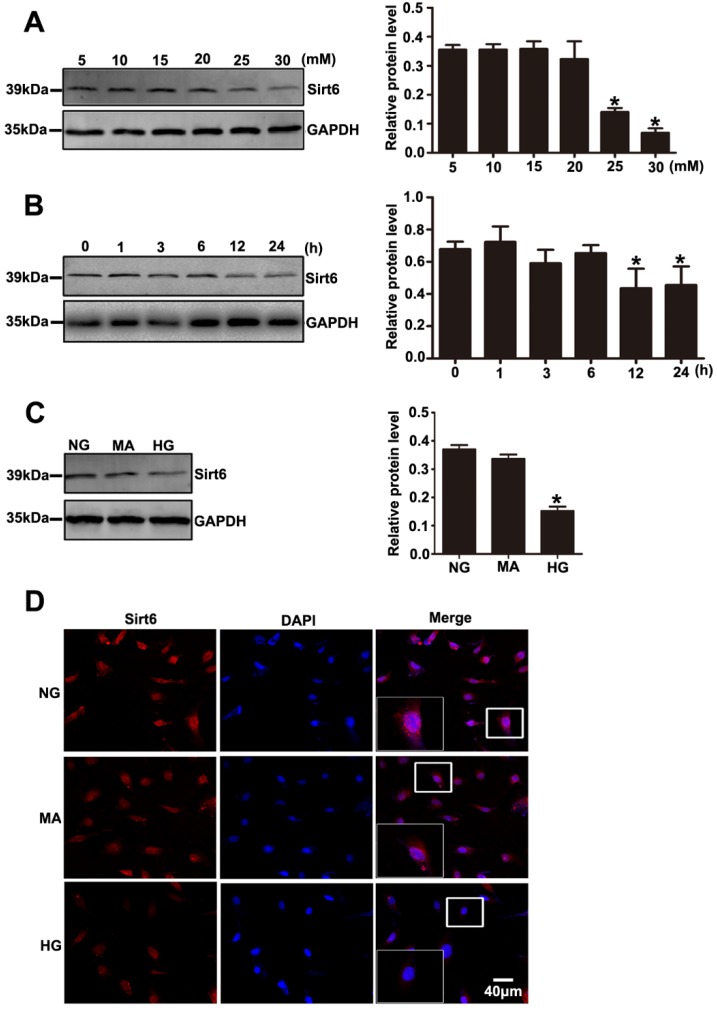
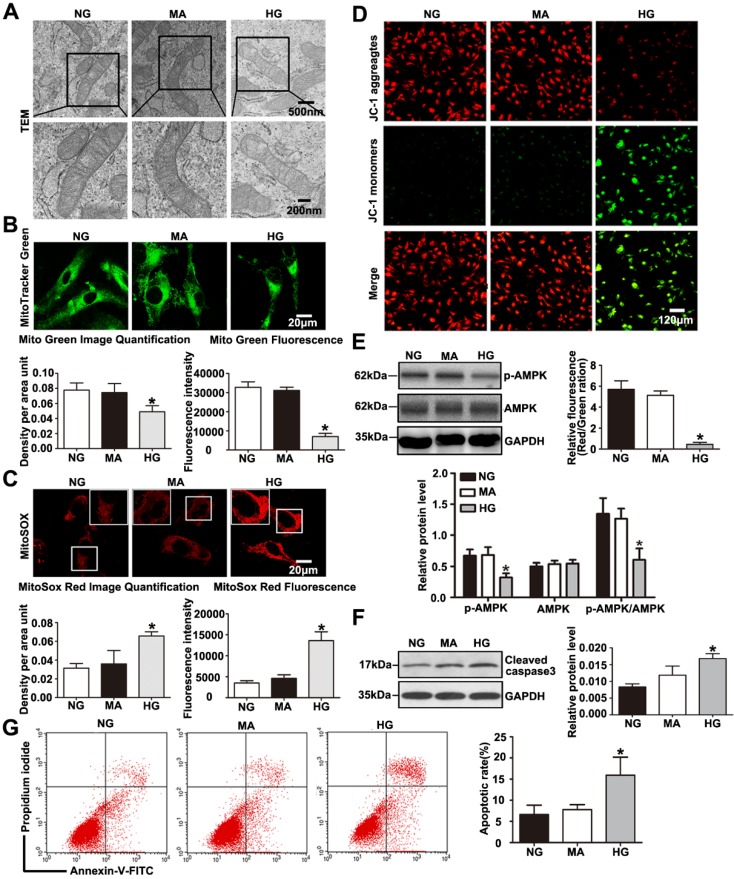
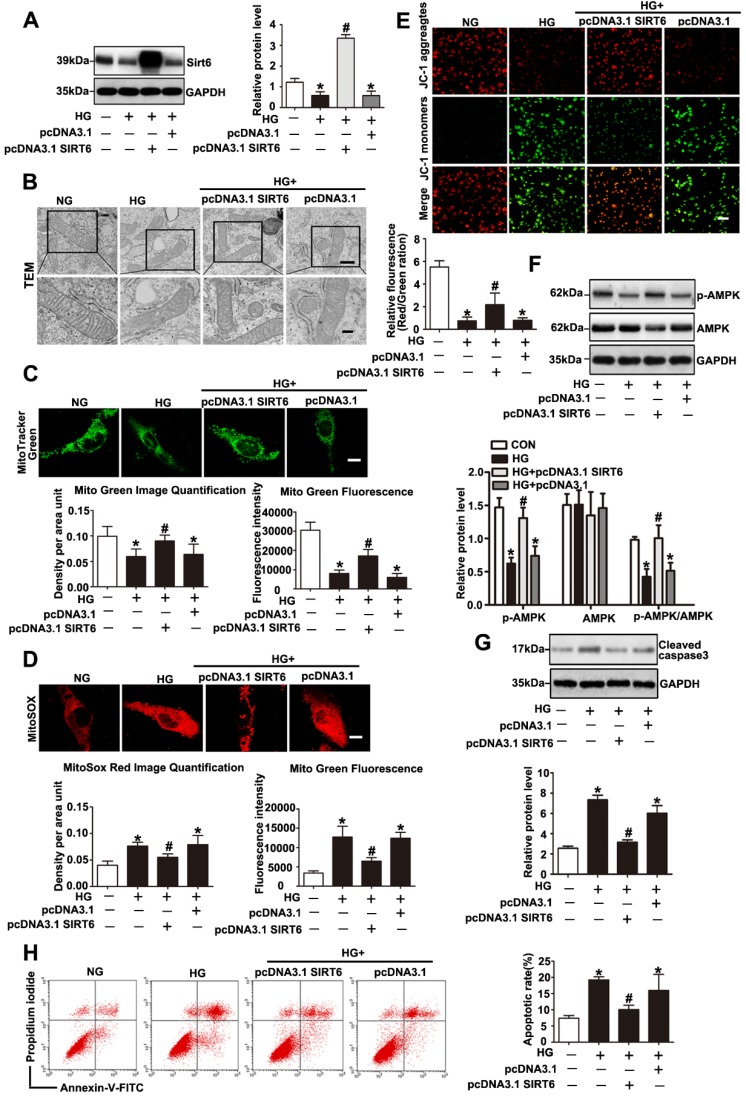
Previous studies have shown that mitochondrial dysfunction plays an important role in high- glucose(HG)-induced podocyte injury and thus contributes to the progression of diabetic nephropathy(DN). The histone deacetylase Sirtuin6 (Sirt6) has been revealed to have an essential role in the regulation of mitochondrial function in skeletal muscle and cardiomyocytes. However, its specific role in mitochondrial homeostasis in podocytes is undetermined. Here, we aimeds to explore the physiological function of Sirt6 in podocyte mitochondria and apoptosis under HG conditions and explore the possible mechanism. Herein, we observed that Sirt6-WT-1 colocalization was suppressed in the glomeruli of patients with DN. In addition, diabetic mice exhibited reduced Sirt6 expression and AMP kinase (AMPK) dephosphorylation accompanied by mitochondrial morphological abnormalities. , podocytes exposed to HG presented with mitochondrial morphological alterations and podocyte apoptosis accompanied by Sirt6 and p-AMPK downregulation. In addition, HG promoted a decrease in mitochondrial number and an increase in mitochondrial superoxide production as well as a decreased mitochondrial membrane potential. ROS production was also increased in HG-treated podocytes. Conversely, all these mitochondrial defects induced by HG were significantly alleviated by Sirt6 plasmid transfection. Sirt6 overexpression simultaneously alleviated HG-induced podocyte apoptosis and oxidative stress, as well as increased AMPK phosphorylation. Increased levels of H3K9ac and H3K56ac induced by HG were attenuated in podocytes transfected with Sirt6 plasmids. Therefore, these results elucidated that Sirt6 protects mitochondria of podocytes and exerts anti-apoptotic effects via activating AMPK pathway. The present findings provide key insights into the pivotal role of mitochondria regulation by SIRT6 in its protective effects on podocytes.
先前的研究表明,线粒体功能障碍在高糖(HG)诱导的足细胞损伤中发挥重要作用,从而促进糖尿病肾病(DN)的进展。组蛋白去乙酰化酶 Sirtuin6(Sirt6)已被证明在调节骨骼肌和心肌细胞中线粒体功能方面具有重要作用。然而,其在足细胞中线粒体动态平衡中的特定作用尚不确定。在这里,我们旨在探讨 Sirt6 在 HG 条件下足细胞线粒体和细胞凋亡中的生理功能,并探讨可能的机制。在此,我们观察到 DN 患者肾小球中 Sirt6-WT-1 共定位受到抑制。此外,糖尿病小鼠表现出 Sirt6 表达减少和 AMP 激酶(AMPK)去磷酸化,同时伴有线粒体形态异常。在 HG 作用下,足细胞出现线粒体形态改变和足细胞凋亡,同时 Sirt6 和 p-AMPK 下调。此外,HG 促进线粒体数量减少、线粒体超氧化物产生增加以及线粒体膜电位降低。HG 处理的足细胞中 ROS 产生也增加。相反,HG 诱导的所有这些线粒体缺陷均通过 Sirt6 质粒转染得到显著缓解。Sirt6 过表达同时缓解 HG 诱导的足细胞凋亡和氧化应激,并增加 AMPK 磷酸化。HG 诱导的 H3K9ac 和 H3K56ac 水平增加在转染 Sirt6 质粒的足细胞中减弱。因此,这些结果表明 Sirt6 通过激活 AMPK 通路来保护足细胞的线粒体并发挥抗凋亡作用。本研究结果为 SIRT6 通过调节线粒体在保护足细胞中的关键作用提供了重要依据。