Rehman Zaira, Fahim Ammad, Bhatti Attya, Sadia Hajra, John Peter
Atta-ur-Rahman School of Applied Biosciences (ASAB), National University of Sciences and Technology (NUST), Islamabad, Pakistan.
PeerJ. 2019 Feb 7;7:e6309. doi: 10.7717/peerj.6309. eCollection 2019.
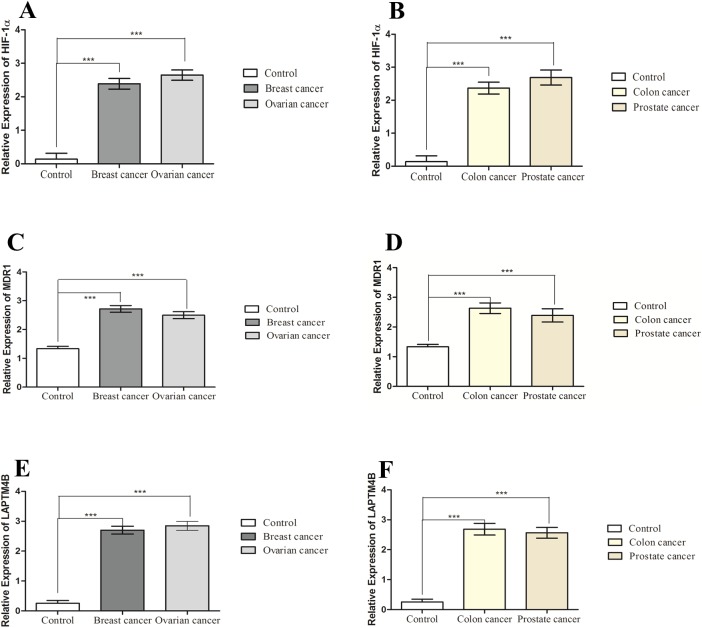
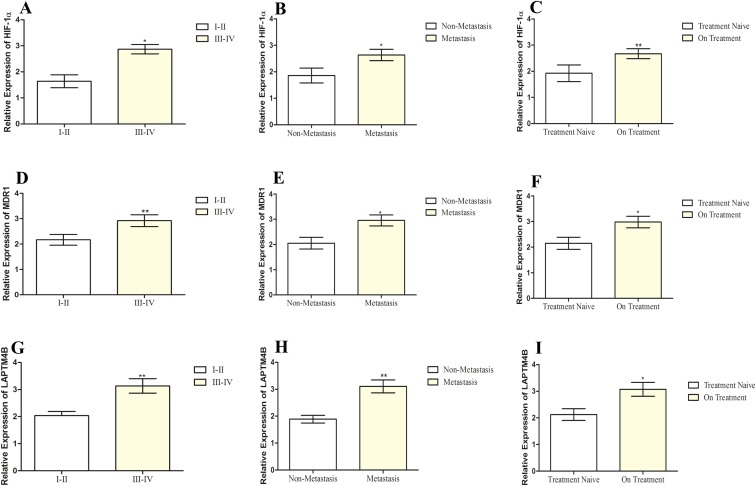
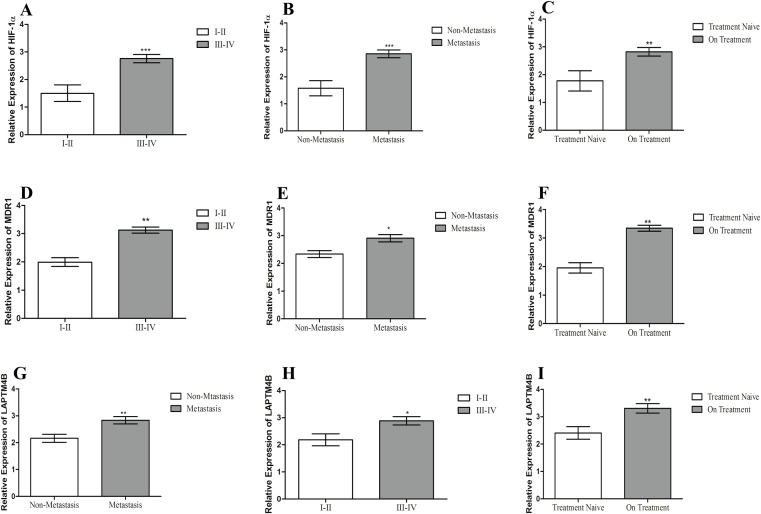
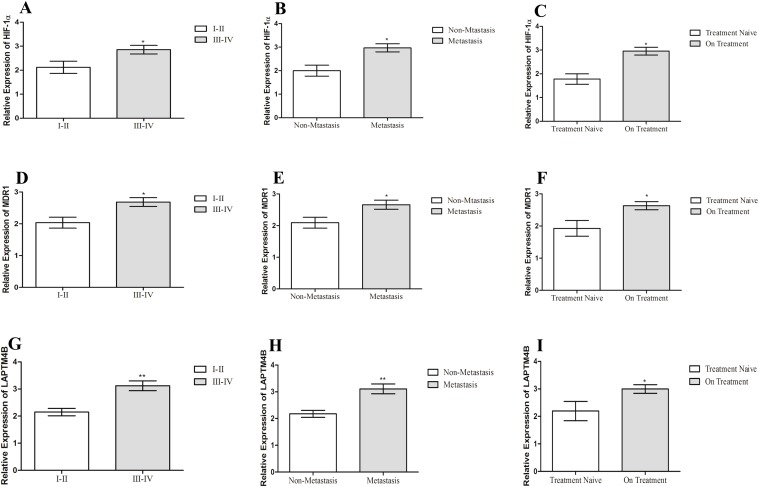
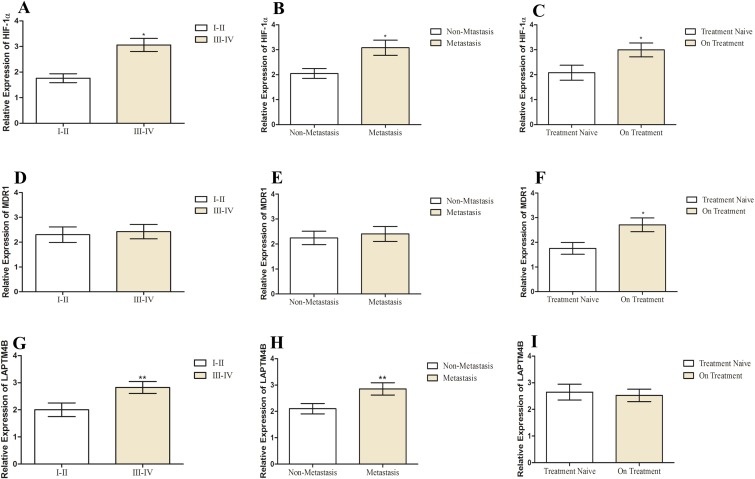
The hypoxic tumor microenvironment is the major contributor of chemotherapy resistance in solid tumors. One of the key regulators of hypoxic responses within the cell is the hypoxia inducible factor-1α (HIF-1α) that is involved in transcription of genes promoting cell survival and chemotherapy resistance. Multidrug resistance gene-1 (MDR1) and Lysosome-associated protein transmembrane 4B-35 (LAPTM4B-35) are among those notable players which augment their responses to cellular hypoxia. MDR1 is the hypoxia responsive gene involved in multidrug resistance phenotype while LAPTM4B-35 is involved in chemotherapy resistance by stabilizing HIF-1α and overexpressing MDR1. Overexpression of HIF-1α, MDR1 and LAPTM4B has been associated with poor disease outcome in many cancers when studied individually at tissue level. However, accessibility of the tissues following the course of chemotherapy for ascertaining chemotherapy resistance is difficult and sometimes not clinically feasible. Therefore, indication of hypoxic biomarkers in patient's blood can significantly alter the clinical outcome. Hence there is a need to identify a blood based marker to understand the disease progression. In the current study the expression of hypoxia associated chemotherapy resistance genes were studied in the peripheral blood lymphocytes of solid tumor patients and any potential correlation with disease progression were explored. The expression of HIF-1α, MDR1 and LAPTM4B was studied in blood of 72 breast, 42 ovarian, 32 colon and 21 prostate cancer patients through real time PCR analysis using delta cycle threshold method. The statistical scrutiny was executed through Fisher's Exact test and the Spearman correlation method. There was 12-13 fold increased in expression of HIF-1α, two fold increased in MDR1 and 13-14 fold increased in LAPTM4B mRNA level in peripheral blood of breast, ovarian, prostate and colon cancer patients. In the current study there was an association of HIF-1α, MDR1 and LAPTM4B expression with advanced tumor stage, metastasis and chemotherapy treated group in breast, ovarian, prostate and colon cancer patients. The Spearman analysis also revealed a positive linear association among HIF-1α, MDR1 and LAPTM4B in all the studied cancer patients. The elevated expression of HIF-1α, MDR1 and LAPTM4B in peripheral blood of solid tumor patients can be a predictor of metastasis, disease progression and treatment response in these cancers. However, larger studies are needed to further strengthen their role as a potential biomarker for cancer prognosis.
缺氧肿瘤微环境是实体瘤化疗耐药的主要原因。细胞内缺氧反应的关键调节因子之一是缺氧诱导因子-1α(HIF-1α),它参与促进细胞存活和化疗耐药的基因转录。多药耐药基因-1(MDR1)和溶酶体相关蛋白跨膜4B-35(LAPTM4B-35)是增强细胞对缺氧反应的重要因子。MDR1是参与多药耐药表型的缺氧反应基因,而LAPTM4B-35通过稳定HIF-1α和过表达MDR1参与化疗耐药。在组织水平单独研究时,HIF-1α、MDR1和LAPTM4B的过表达与许多癌症的不良疾病预后相关。然而,化疗后获取组织以确定化疗耐药性很困难,有时在临床上也不可行。因此,患者血液中缺氧生物标志物的指示可以显著改变临床结果。因此,需要确定一种基于血液的标志物来了解疾病进展。在本研究中,研究了实体瘤患者外周血淋巴细胞中与缺氧相关的化疗耐药基因的表达,并探讨了其与疾病进展的潜在相关性。通过使用δ循环阈值法的实时PCR分析,研究了72例乳腺癌、42例卵巢癌、32例结肠癌和21例前列腺癌患者血液中HIF-1α、MDR1和LAPTM4B的表达。通过Fisher精确检验和Spearman相关方法进行统计分析。乳腺癌、卵巢癌、前列腺癌和结肠癌患者外周血中HIF-1α的表达增加了12-13倍,MDR1增加了2倍,LAPTM4B mRNA水平增加了13-14倍。在本研究中,乳腺癌、卵巢癌、前列腺癌和结肠癌患者中HIF-1α、MDR1和LAPTM4B的表达与晚期肿瘤分期、转移和化疗治疗组相关。Spearman分析还显示,在所有研究的癌症患者中,HIF-1α、MDR1和LAPTM4B之间存在正线性关联。实体瘤患者外周血中HIF-1α、MDR1和LAPTM4B的表达升高可能是这些癌症转移、疾病进展和治疗反应的预测指标。然而,需要更大规模的研究来进一步加强它们作为癌症预后潜在生物标志物的作用。