Department of Cognitive Neuroscience, Centre for Neuroscience, Donders Institute for Brain, Cognition and Behaviour, Radboudumc, Nijmegen, The Netherlands.
Biomedical MR Imaging and Spectroscopy Group, Center for Image Sciences, University Medical Center Utrecht and Utrecht University, Utrecht, The Netherlands.
Addict Biol. 2020 Jan;25(1):e12722. doi: 10.1111/adb.12722. Epub 2019 Feb 12.
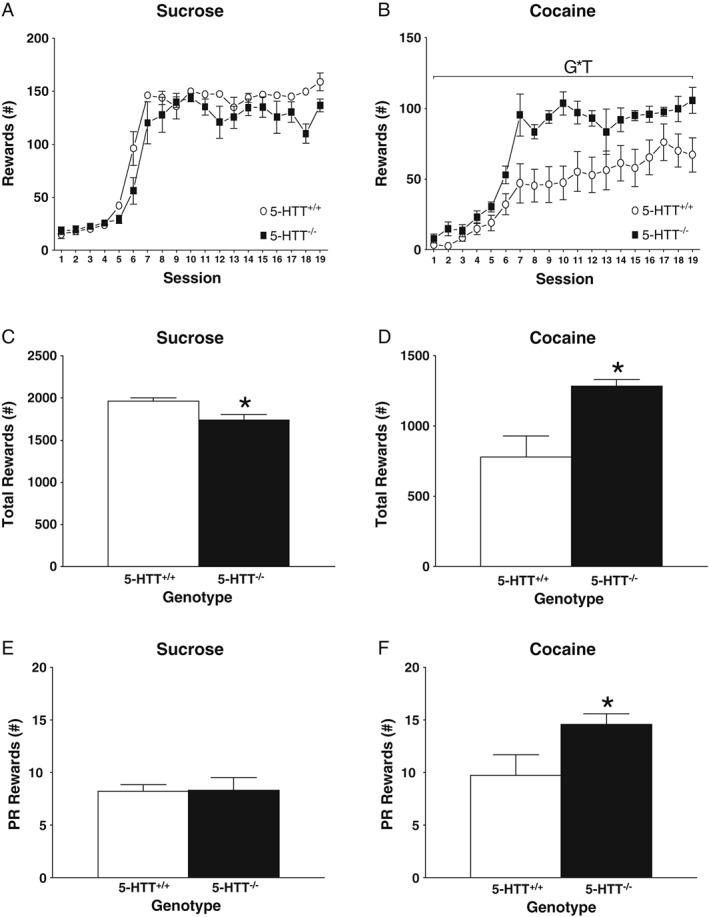
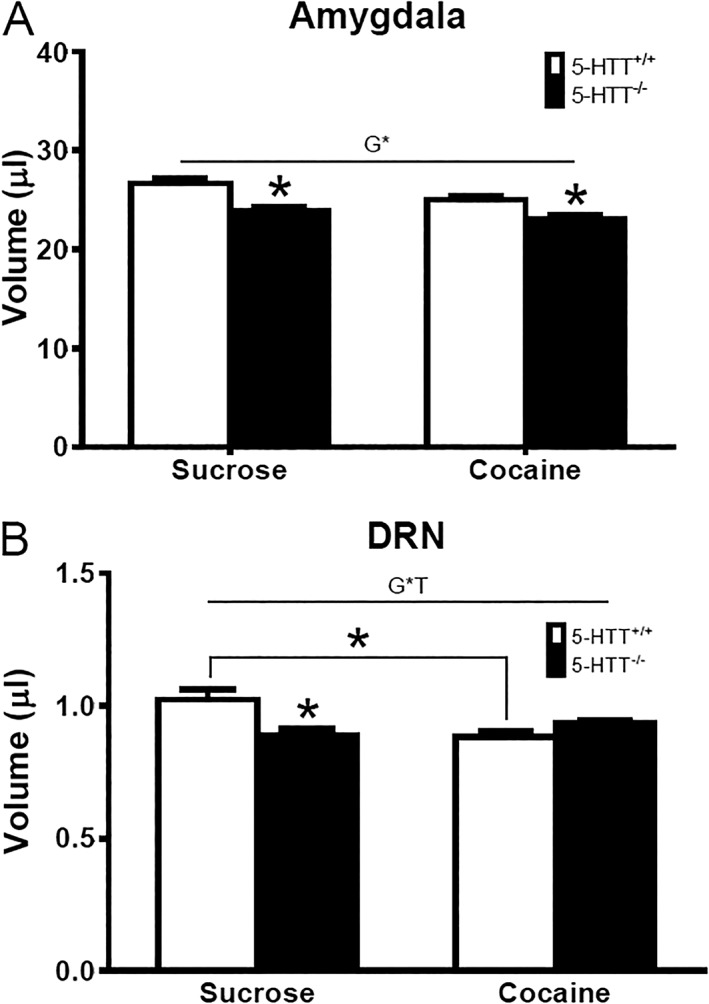
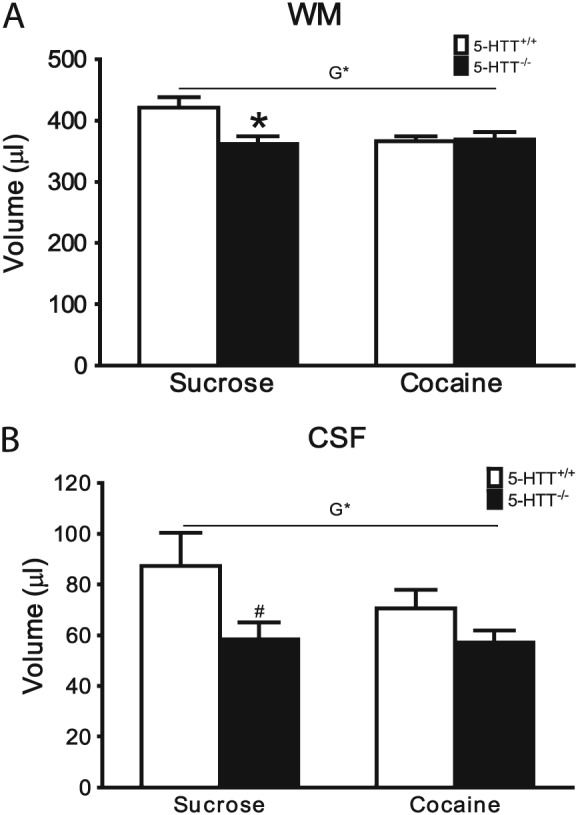
Excessive use of cocaine is known to induce changes in brain white and gray matter. It is unknown whether the extent of these changes is related to individual differences in vulnerability to cocaine addiction. One factor increasing vulnerability involves reduced expression of the serotonin transporter (5-HTT). Human studies have shown that inherited 5-HTT downregulation is associated with structural changes in the brain. These genotype-related structural changes may contribute to risk for cocaine addiction. Here, we tested this idea by using ultrahigh-resolution structural magnetic resonance imaging (MRI) on postmortem tissue of 5-HTT and wild-type (5-HTT ) rats with a history of long access to cocaine or sucrose (control) self-administration. We found that 5-HTT rats, compared with wild-type control animals, self-administered more cocaine, but not sucrose, under long-access conditions. Ultrahigh-resolution structural MRI subsequently revealed that, independent of sucrose or cocaine self-administration, 5-HTT rats had a smaller amygdala. Moreover, we found an interaction between genotype and type of reward for dorsal raphe nucleus volume. The data point to an important but differential role of the amygdala and dorsal raphe nucleus in 5-HTT genotype-dependent vulnerability to cocaine addiction.
可卡因的过度使用已知会导致大脑白质和灰质发生变化。目前尚不清楚这些变化的程度是否与对可卡因成瘾的个体易感性差异有关。一个增加易感性的因素涉及到 5-羟色胺转运体 (5-HTT) 的表达减少。人类研究表明,遗传 5-HTT 下调与大脑的结构变化有关。这些与基因型相关的结构变化可能导致可卡因成瘾的风险增加。在这里,我们通过对有长期可卡因或蔗糖(对照)自我给药史的 5-HTT 和野生型 (5-HTT) 大鼠的死后组织进行超高分辨率结构磁共振成像 (MRI) 来检验这一观点。我们发现,与野生型对照动物相比,5-HTT 大鼠在长期接触条件下自我给予了更多的可卡因,但不是蔗糖。超高分辨率结构 MRI 随后显示,5-HTT 大鼠的杏仁核较小,与蔗糖或可卡因的自我给药无关。此外,我们还发现基因型和奖励类型对中缝背核体积的相互作用。这些数据表明,杏仁核和中缝背核在 5-HTT 基因型依赖的可卡因成瘾易感性中起着重要但不同的作用。