Centre for Inflammation Research, University of Edinburgh, 47 Little France Crescent, Edinburgh, EH16 4TJ, UK.
Centre for Cardiovascular Science, University of Edinburgh, 47 Little France Crescent, Edinburgh, EH16 4TJ, UK.
Exp Mol Med. 2019 Feb 13;51(2):1-14. doi: 10.1038/s12276-019-0210-x.
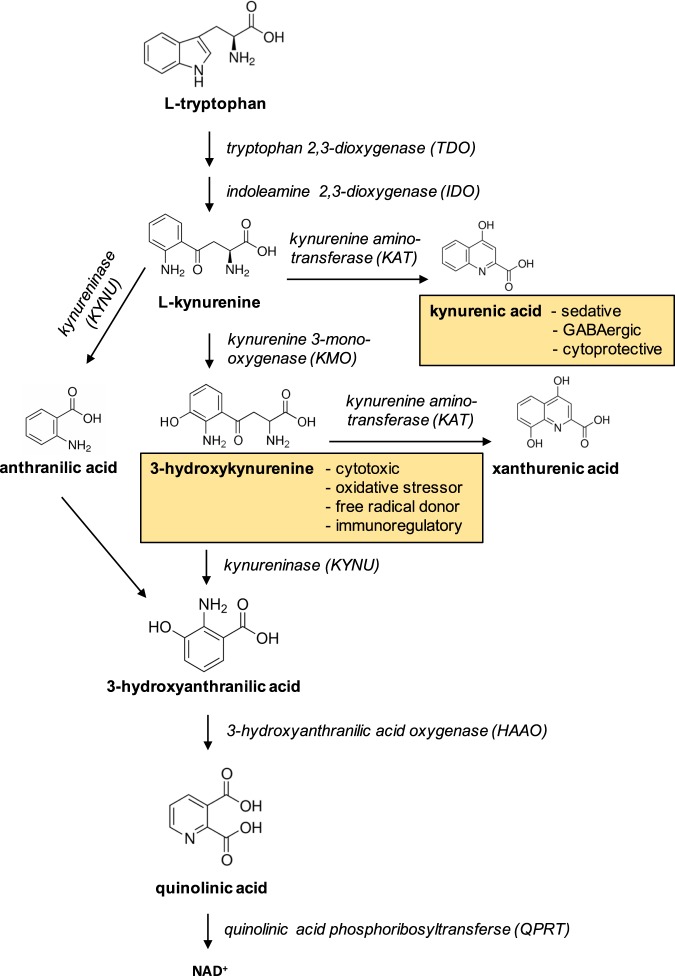
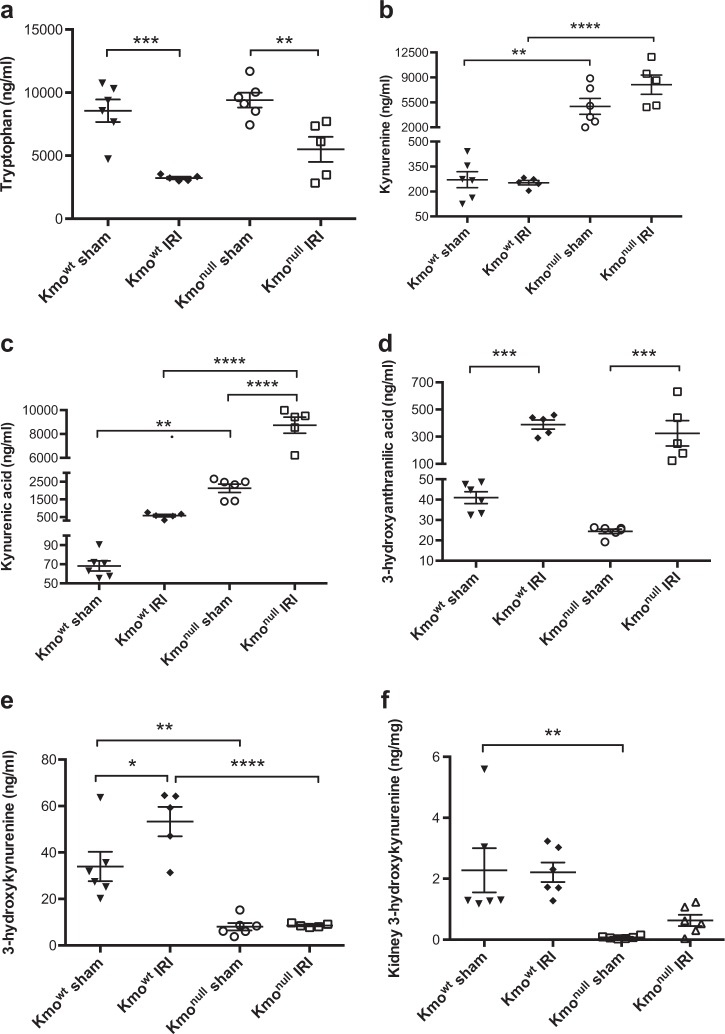
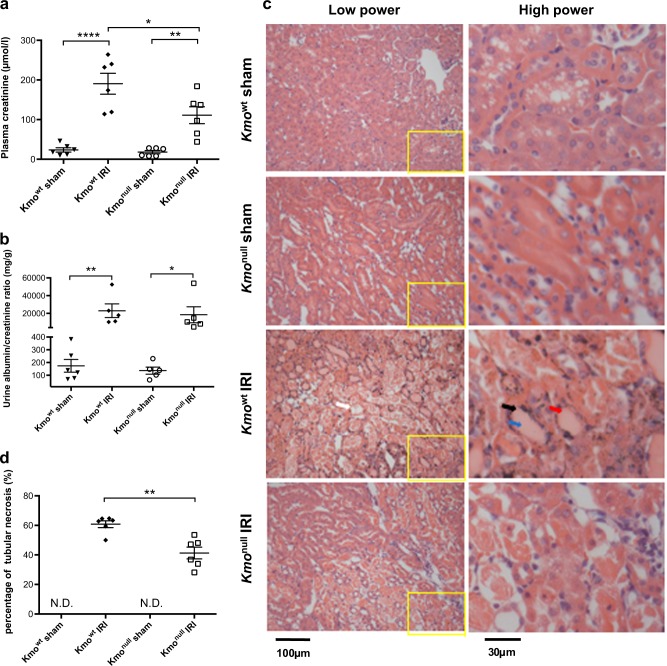
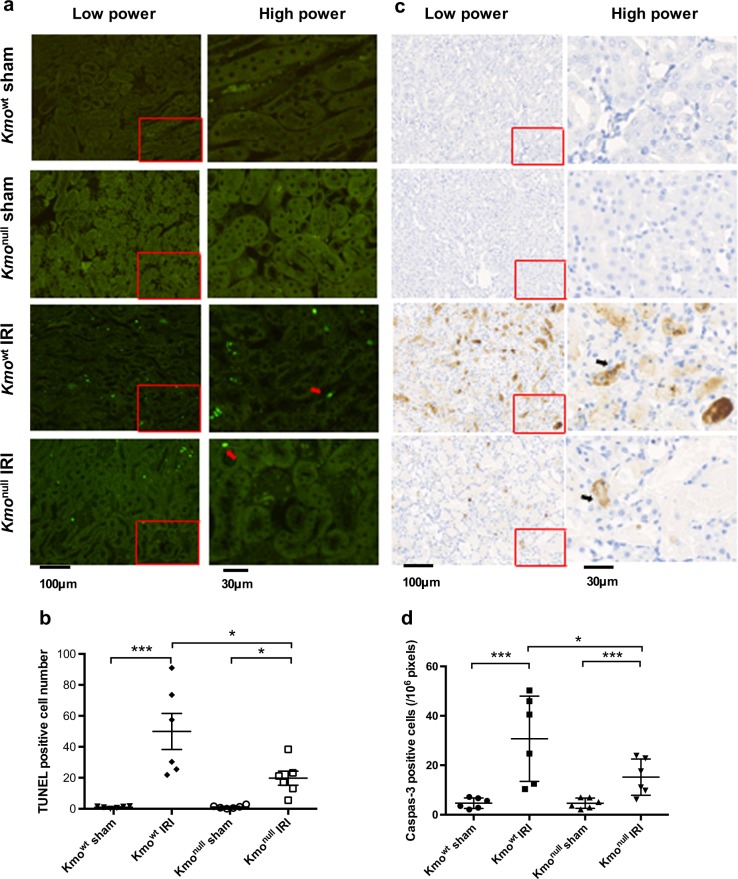
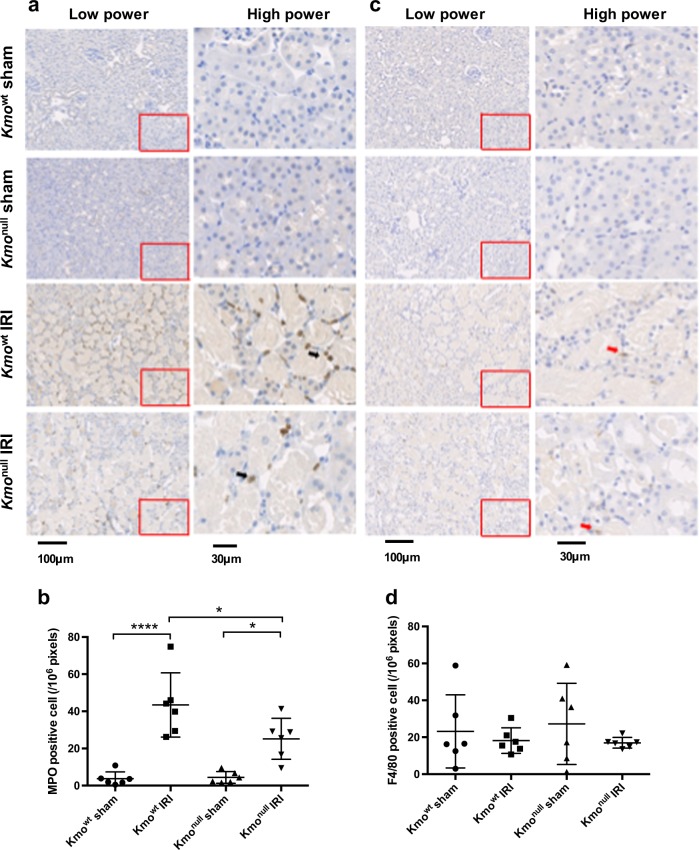
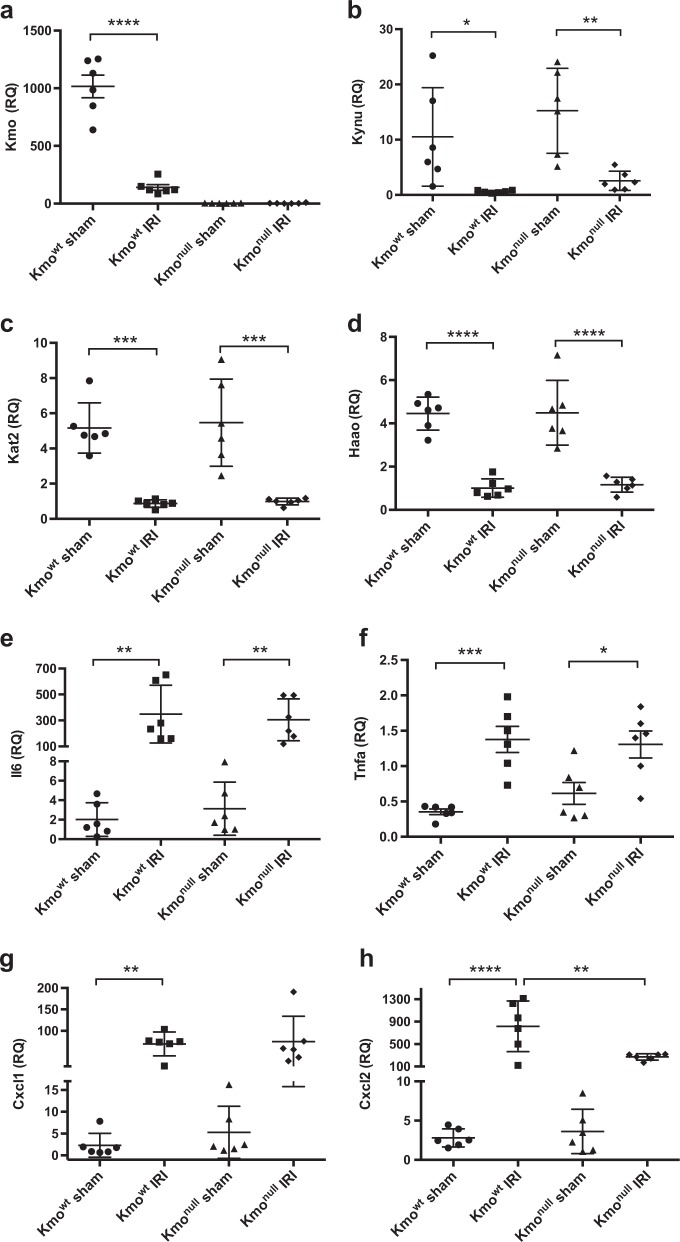
Acute kidney injury (AKI) following ischemia-reperfusion injury (IRI) has a high mortality and lacks specific therapies. Here, we report that mice lacking kynurenine 3-monooxygenase (KMO) activity (Kmo mice) are protected against AKI after renal IRI. We show that KMO is highly expressed in the kidney and exerts major metabolic control over the biologically active kynurenine metabolites 3-hydroxykynurenine, kynurenic acid, and downstream metabolites. In experimental AKI induced by kidney IRI, Kmo mice had preserved renal function, reduced renal tubular cell injury, and fewer infiltrating neutrophils compared with wild-type (Kmo) control mice. Together, these data confirm that flux through KMO contributes to AKI after IRI, and supports the rationale for KMO inhibition as a therapeutic strategy to protect against AKI during critical illness.
缺血再灌注损伤(IRI)引起的急性肾损伤(AKI)死亡率高,且缺乏特异性治疗方法。本研究报道,缺乏犬尿氨酸 3-单加氧酶(KMO)活性(Kmo 小鼠)可防止肾脏 IRI 后的 AKI。研究表明,KMO 在肾脏中高度表达,对生物活性犬尿氨酸代谢物 3-羟基犬尿氨酸、犬尿氨酸酸和下游代谢物发挥主要的代谢控制作用。在由肾脏 IRI 诱导的实验性 AKI 中,与野生型(Kmo)对照小鼠相比,Kmo 小鼠的肾功能得到保留,肾小管细胞损伤减少,浸润的中性粒细胞减少。综上所述,这些数据证实了 KMO 通量的增加会导致 IRI 后的 AKI,支持了 KMO 抑制作为一种治疗策略的合理性,可在危重病期间保护 AKI。