OuYang Qiuli, Duan Xiaofang, Li Lu, Tao Nengguo
School of Chemical Engineering, Xiangtan University, Xiangtan, China.
Front Microbiol. 2019 Jan 30;10:55. doi: 10.3389/fmicb.2019.00055. eCollection 2019.
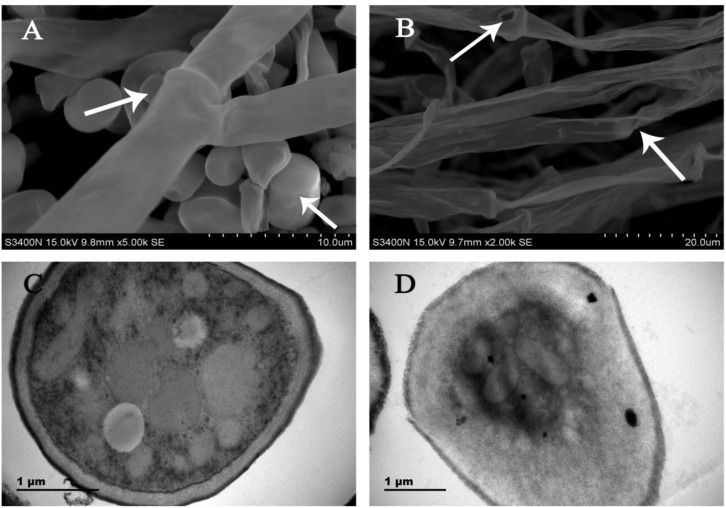
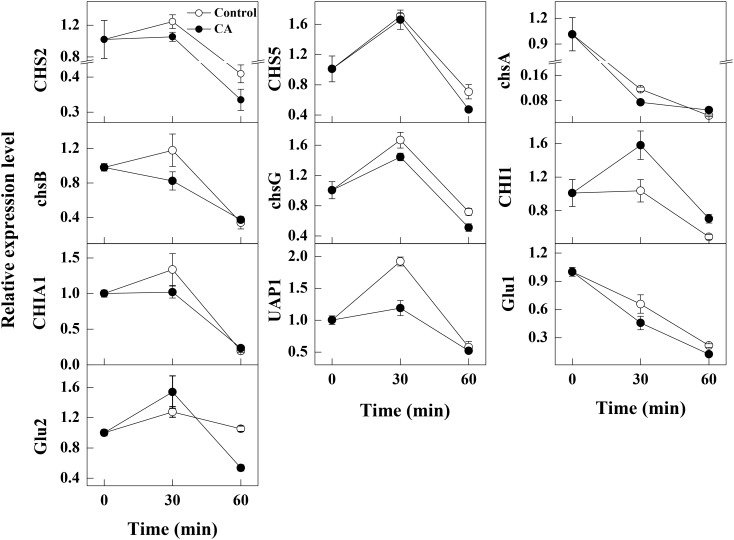
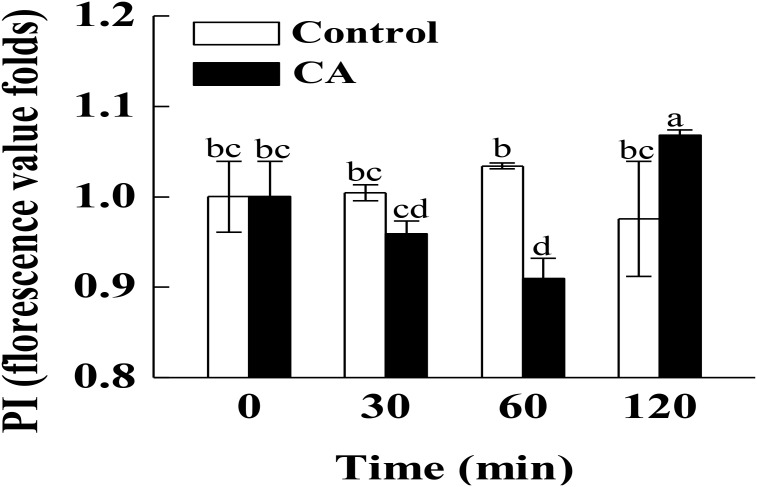
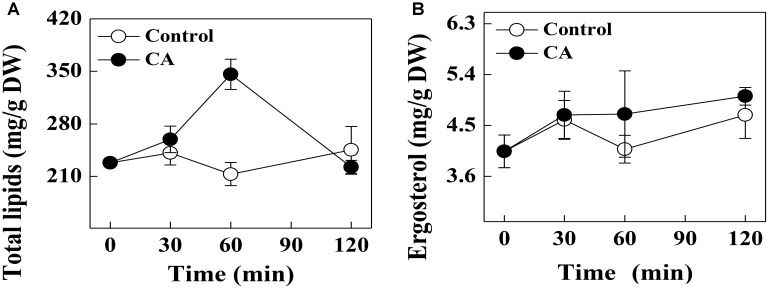
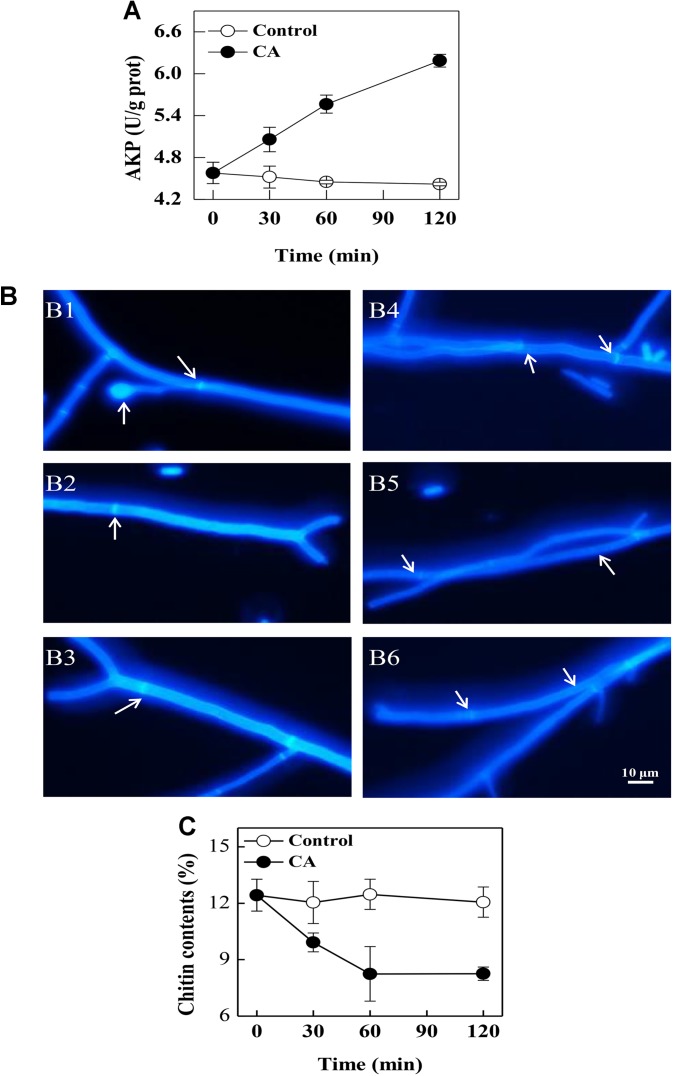
Our previous study showed that cinnamaldehyde (CA) significantly inhibited the mycelial growth of , one of the main postharvest pathogens in citrus fruits. This study investigated the antifungal mechanism of CA against . Scanning electron microscopy (SEM) and transmission electron microscopy (TEM) images showed that CA treatment led to clear morphological changes in the cell walls and membranes of . However, the membrane integrity, total lipids and ergosterol contents were not apparently affected by CA treatment. Notably, the extracellular alkaline phosphatase (AKP) activity was increased after CA treatment, suggesting impairment in cell wall permeability. A weakened fluorescence in the cell wall, a decrease in the chitin contents, and changes of ten genes involved in cell wall integrity were also observed. These results suggested that CA may exhibit its antifungal activity against by interfering the build of cell wall and therefore lead to the damage of cell wall permeability and integrity.
我们之前的研究表明,肉桂醛(CA)能显著抑制柑橘类水果主要采后病原菌之一的[病原菌名称未给出]的菌丝生长。本研究调查了CA对[病原菌名称未给出]的抗真菌机制。扫描电子显微镜(SEM)和透射电子显微镜(TEM)图像显示,CA处理导致[病原菌名称未给出]的细胞壁和细胞膜出现明显的形态变化。然而,膜完整性、总脂质和麦角固醇含量并未受到CA处理的明显影响。值得注意的是,CA处理后细胞外碱性磷酸酶(AKP)活性增加,表明细胞壁通透性受损。还观察到细胞壁荧光减弱、几丁质含量降低以及参与细胞壁完整性的十个基因发生变化。这些结果表明,CA可能通过干扰细胞壁的构建来发挥其对[病原菌名称未给出]的抗真菌活性,从而导致细胞壁通透性和完整性受损。