Egan Jan B, Marks David L, Hogenson Tara L, Vrabel Anne M, Sigafoos Ashley N, Tolosa Ezequiel J, Carr Ryan M, Safgren Stephanie L, Hesles Elisa Enriquez, Almada Luciana L, Romecin-Duran Paola A, Iguchi Eriko, Ala'Aldeen Aryan, Kocher Jean-Pierre A, Oliver Gavin R, Prodduturi Naresh, Mead David W, Hossain Asif, Huneke Norine E, Tagtow Colleen M, Ailawadhi Sikander, Ansell Stephen M, Banck Michaela S, Bryce Alan H, Carballido Estrella M, Chanan-Khan Asher A, Curtis Kelly K, Resnik Ernesto, Gawryletz Chelsea D, Go Ronald S, Halfdanarson Thorvardur R, Ho Thai H, Joseph Richard W, Kapoor Prashant, Mansfield Aaron S, Meurice Nathalie, Nageswara Rao Amulya A, Nowakowski Grzegorz S, Pardanani Animesh, Parikh Sameer A, Cheville John C, Feldman Andrew L, Ramanathan Ramesh K, Robinson Steven I, Tibes Raoul, Finnes Heidi D, McCormick Jennifer B, McWilliams Robert R, Jatoi Aminah, Patnaik Mrinal M, Silva Alvin C, Wieben Eric D, McAllister Tammy M, Rumilla Kandelaria M, Kerr Sarah E, Lazaridis Konstantinos N, Farrugia Gianrico, Stewart A Keith, Clark Karl J, Kennedy Eileen J, Klee Eric W, Borad Mitesh J, Fernandez-Zapico Martin E
David L. Marks, Tara L. Hogenson, Anne M. Vrabel, Ashley N. Sigafoos, Ezequiel J. Tolosa, Ryan M. Carr, Stephanie L. Safgren, Elisa Enriquez Hesles, Luciana L. Almada, Paola A. Romecin-Duran, Eriko Iguchi, Aryan Ala'Aldeen, Jean-Pierre A. Kocher, Gavin R. Oliver, Naresh Prodduturi, David W. Mead, Asif Hossain, Norine E. Huneke, Colleen M. Tagtow, Sikander Ailawadhi, Stephen M. Ansell, Michaela S. Banck, Asher A. Chanan-Khan, Ronald S. Go, Thorvardur R. Halfdanarson, Richard W. Joseph, Prashant Kapoor, Aaron S. Mansfield, Amulya A. Nageswara Rao, Grzegorz S. Nowakowski, Animesh Pardanani, Sameer A. Parikh, John C. Cheville, Andrew L. Feldman, Ramesh K. Ramanathan, Steven I. Robinson, Heidi D. Finnes, Jennifer B. McCormick, Robert R. McWilliams, Aminah Jatoi, Mrinal M. Patnaik, Eric D. Wieben, Tammy M. McAllister, Kandelaria M. Rumilla, Sarah E. Kerr, Konstantinos N. Lazaridis, Gianrico Farrugia, Karl J. Clark, Eric W. Klee, and Martin E. Fernandez-Zapico, Mayo Clinic, Rochester; Ernesto Resnik, Bio-Techne, Minneapolis, MN; Sikander Ailawadhi, Asher A. Chanan-Khan, and Richard W. Joseph, Mayo Clinic, Jacksonville, FL; Jan B. Egan, Alan H. Bryce, Estrella M. Carballido, KellyK. Curtis, Chelsea D. Gawryletz, Thai H. Ho,Nathalie Meurice, Ramesh K. Ramanathan, Raoul Tibes, Alvin C. Silva, A. Keith Stewart, and Mitesh J. Borad, Mayo Clinic, Phoenix, AZ; and Eileen J. Kennedy, University of Georgia, Athens, GA.
JCO Precis Oncol. 2017;2017. doi: 10.1200/PO.17.00018. Epub 2017 Aug 1.
Genomic testing has increased the quantity of information available to oncologists. Unfortunately, many identified sequence alterations are variants of unknown significance (VUSs), which thus limit the clinician's ability to use these findings to inform treatment. We applied a combination of in silico prediction and molecular modeling tools and laboratory techniques to rapidly define actionable VUSs.
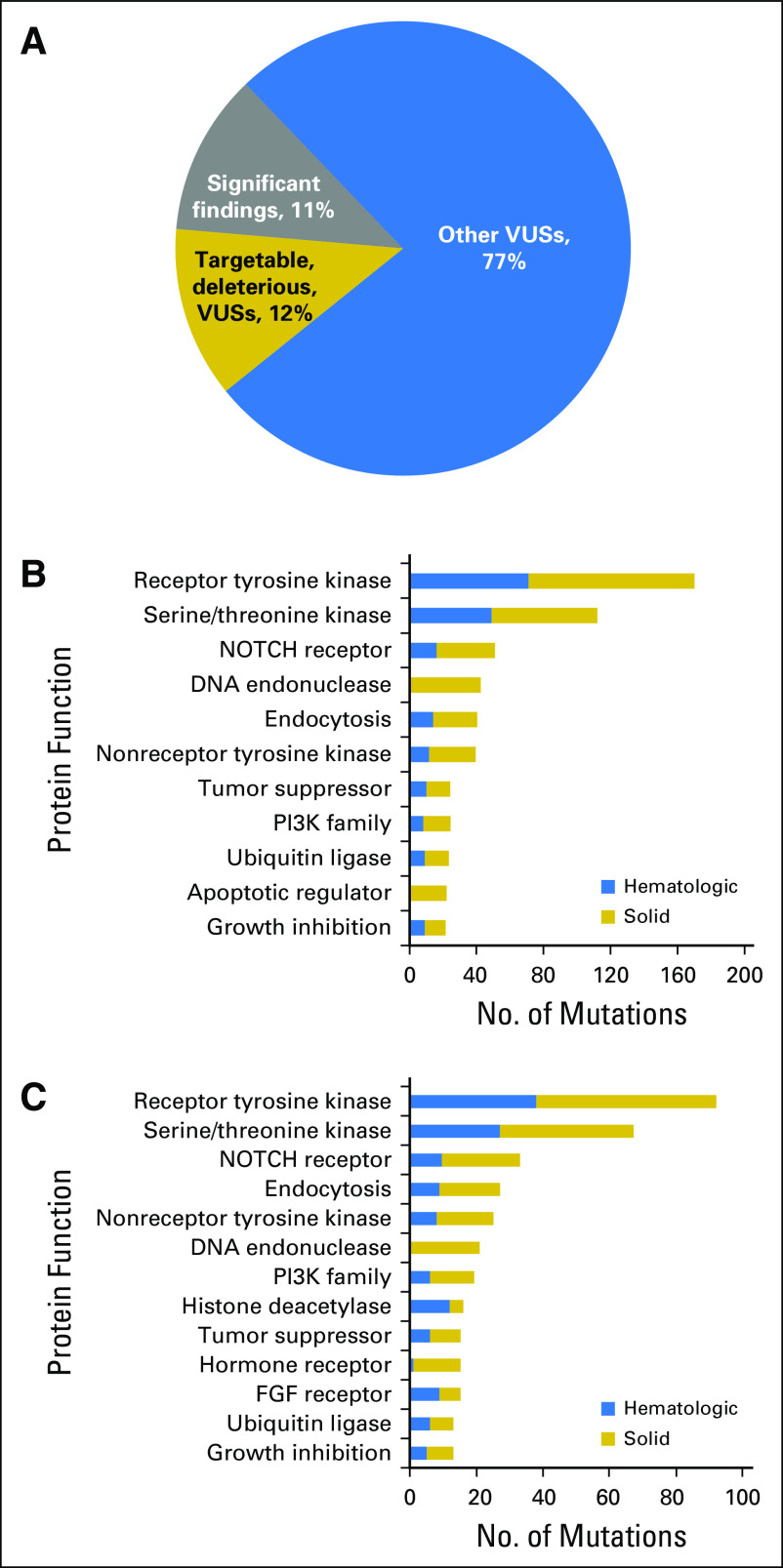
Exome sequencing was conducted on 308 tumors from various origins. Most single nucleotide alterations within gene coding regions were VUSs. These VUSs were filtered to identify a subset of therapeutically targetable genes that were predicted with in silico tools to be altered in function by their variant sequence. A subset of receptor tyrosine kinase VUSs was characterized by laboratory comparison of each VUS versus its wild-type counterpart in terms of expression and signaling activity.
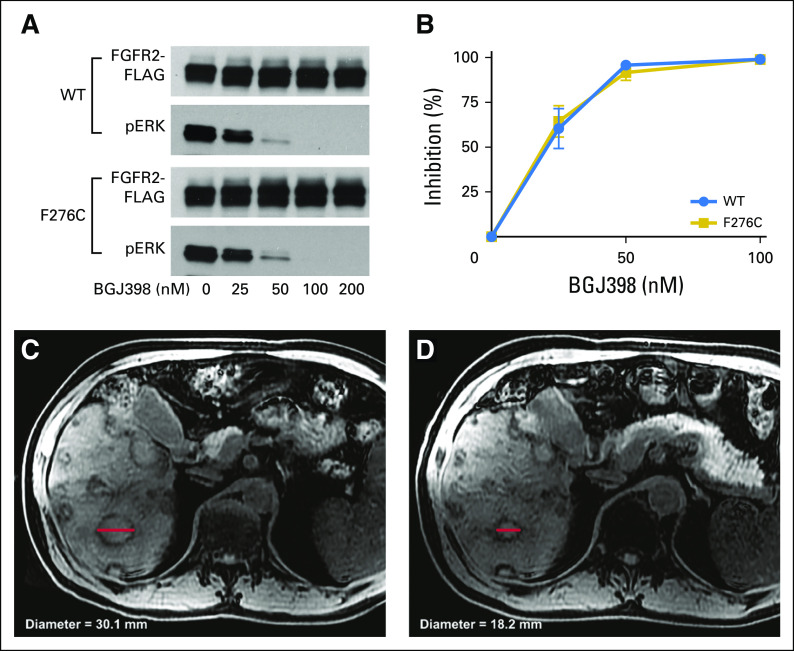
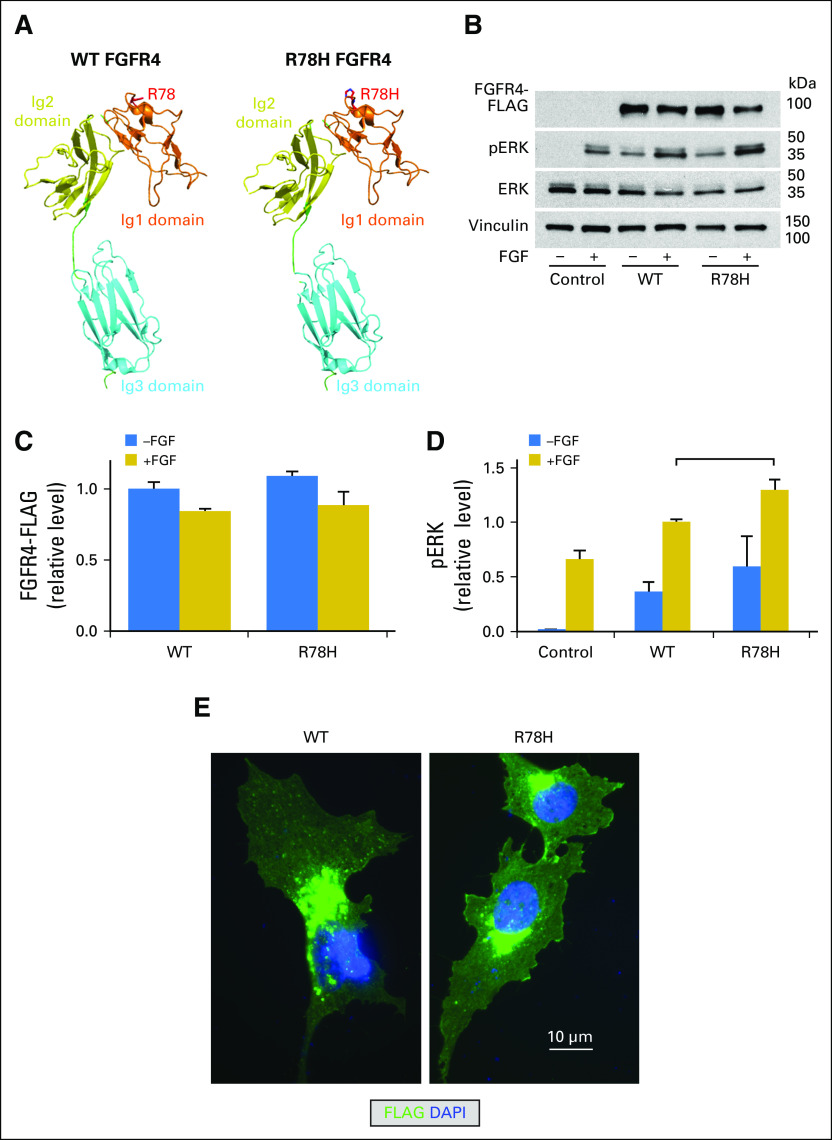
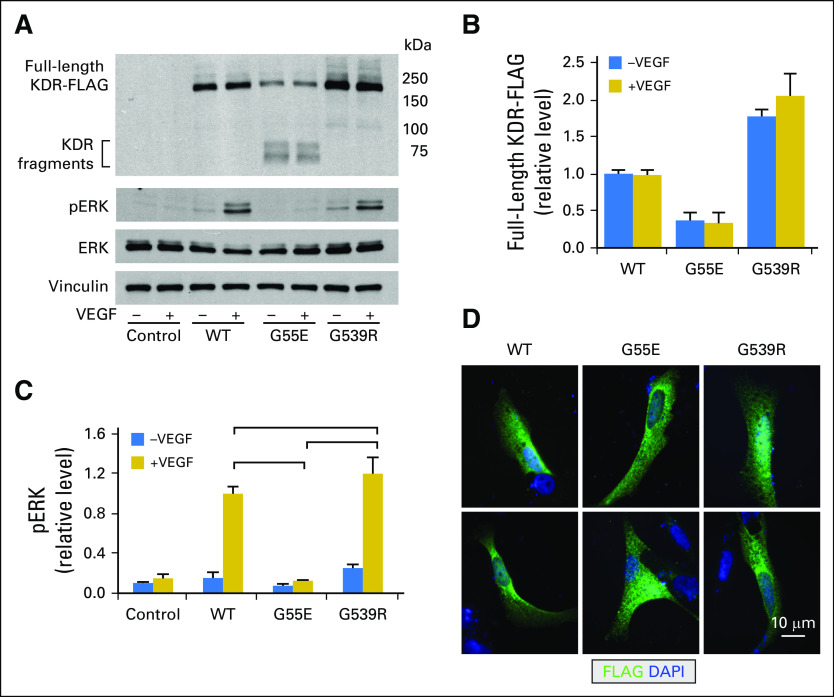
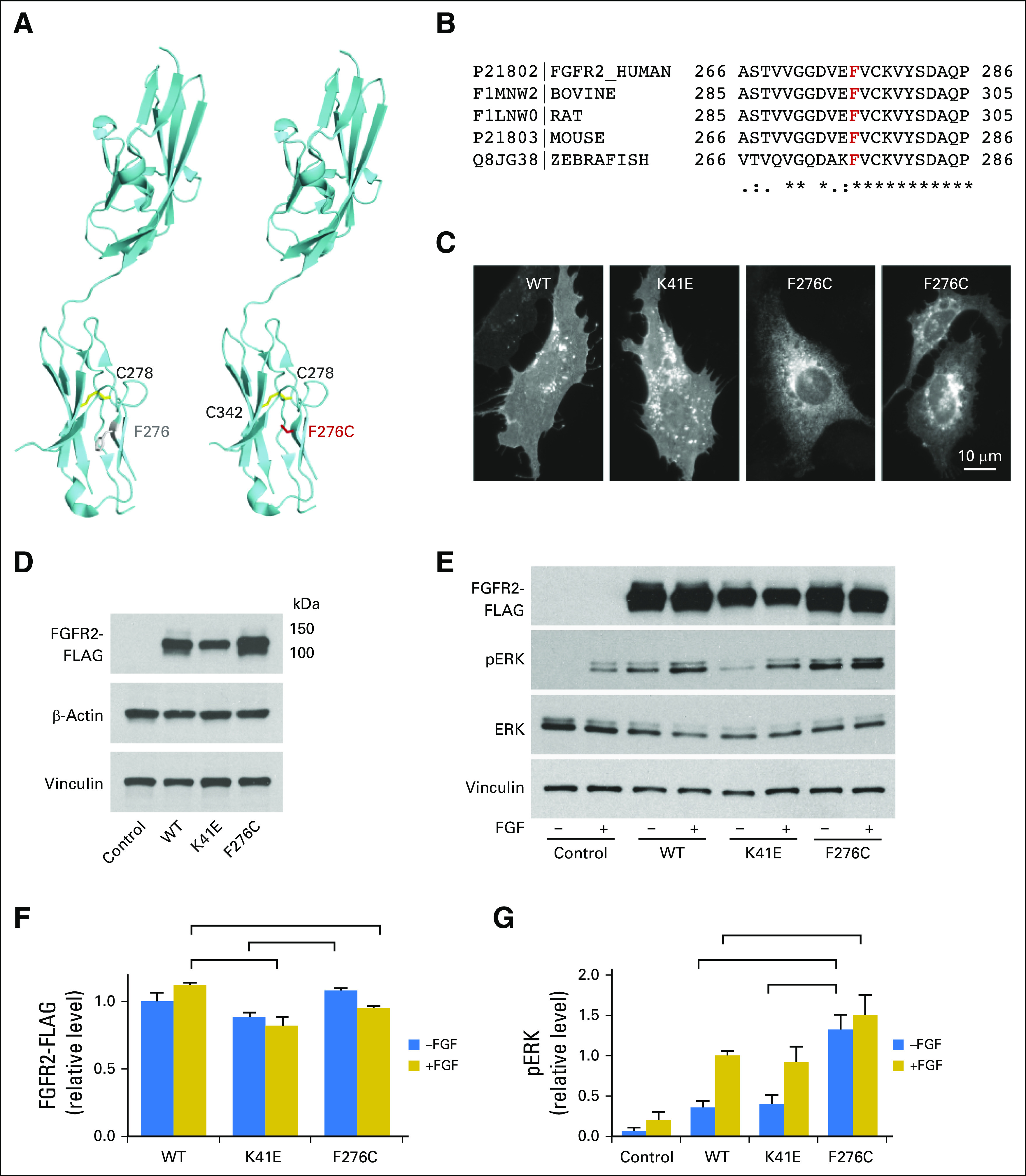
The study identified 4,327 point mutations of which 3,833 were VUSs. Filtering for mutations in genes that were therapeutically targetable and predicted to affect protein function reduced these to 522VUSs of interest, including a large number of kinases. Ten receptortyrosine kinase VUSs were selected to explore in the laboratory. Of these, seven were found to be functionally altered. Three VUSs (FGFR2 F276C, FGFR4 R78H, and KDR G539R) showed increased basal or ligand-stimulated ERK phosphorylation compared with their wild-type counterparts, which suggests that they support transformation. Treatment of a patient who carried FGFR2 F276C with an FGFR inhibitor resulted in significant and sustained tumor response with clinical benefit.
The findings demonstrate the feasibility of rapid identification of the biologic relevance of somatic mutations, which thus advances clinicians' ability to make informed treatment decisions.
基因组检测增加了肿瘤学家可获得的信息量。不幸的是,许多已识别的序列改变是意义未明的变异(VUS),这限制了临床医生利用这些发现指导治疗的能力。我们应用了计算机预测、分子建模工具和实验室技术的组合,以快速确定可采取行动的VUS。
对来自不同来源的308个肿瘤进行外显子组测序。基因编码区域内的大多数单核苷酸改变都是VUS。对这些VUS进行筛选,以识别一组可治疗靶向基因的子集,这些基因通过计算机工具预测其变异序列会导致功能改变。通过实验室比较每个受体酪氨酸激酶VUS与其野生型对应物在表达和信号活性方面的差异,对受体酪氨酸激酶VUS的一个子集进行了表征。
该研究识别出4327个点突变,其中3833个是VUS。筛选可治疗靶向且预测会影响蛋白质功能的基因突变后,这些VUS减少到522个感兴趣的VUS,包括大量激酶。选择了10个受体酪氨酸激酶VUS在实验室进行研究。其中,7个被发现功能发生改变。与野生型对应物相比,3个VUS(FGFR2 F276C、FGFR4 R78H和KDR G539R)显示基础或配体刺激的ERK磷酸化增加,这表明它们支持肿瘤转化。用FGFR抑制剂治疗携带FGFR2 F276C的患者,导致肿瘤显著且持续缓解,并具有临床益处。
这些发现证明了快速识别体细胞突变生物学相关性的可行性,从而提高了临床医生做出明智治疗决策的能力。