Lalonde Emilie, Ebrahimzadeh Jessica, Rafferty Keith, Richards-Yutz Jennifer, Grant Richard, Toorens Erik, Marie Rosado Jennifer, Schindewolf Erica, Ganguly Tapan, Kalish Jennifer M, Deardorff Matthew A, Ganguly Arupa
Genetic Diagnostic Laboratory, Department of Genetics, University of Pennsylvania, Philadelphia, Pennsylvania.
Penn Genomic Analysis Core, Perelman School of Medicine, University of Pennsylvania, Philadelphia, Pennsylvania.
Mol Genet Genomic Med. 2019 Mar;7(3):e536. doi: 10.1002/mgg3.536. Epub 2019 Feb 13.
Somatic overgrowth conditions, including Proteus syndrome, Sturge-Weber syndrome, and PIK3CA-related overgrowth spectrum, are caused by post-zygotic pathogenic variants, result in segmental mosaicism, and give rise to neural, cutaneous and/or lipomatous overgrowth. These variants occur in growth-promoting pathways leading to cellular proliferation and expansion of tissues that arise from the affected cellular lineage.
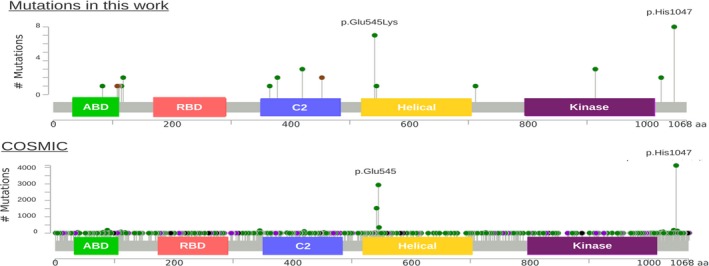
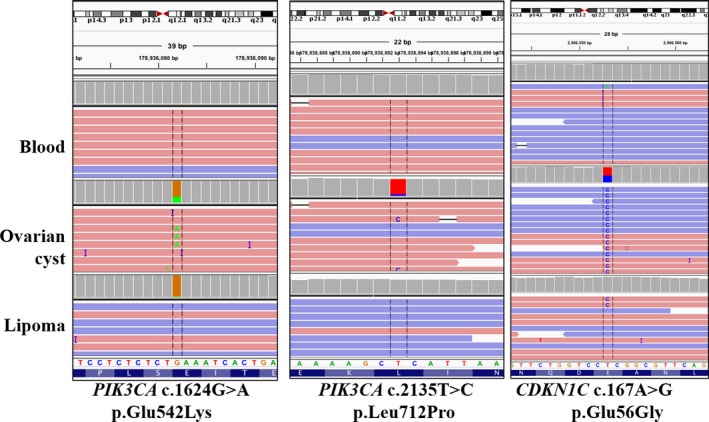
We report on 80 serial patients evaluated for somatic overgrowth conditions in a diagnostic laboratory setting, including three prenatal patients. In total, 166 tissues from these 80 patients were subjected to targeted sequencing of an 8-gene panel capturing 10.2 kb of sequence containing known pathogenic variants associated with somatic overgrowth conditions. Deep next-generation sequencing was performed with the IonTorrent PGM platform at an average depth typically >5,000×.
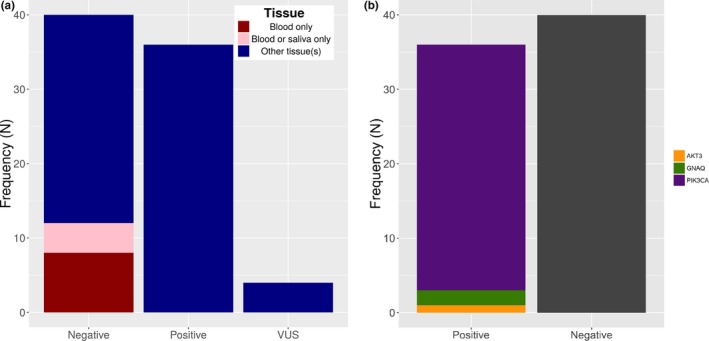
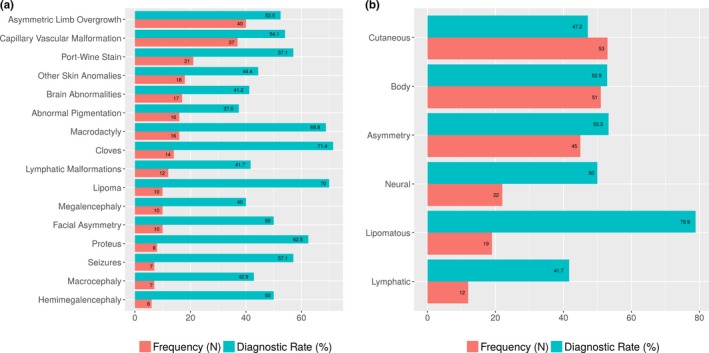
Likely pathogenic or pathogenic variants were identified in 36 individuals and variants of unknown significance in four. The overall molecular diagnostic yield was 45% but was highly influenced by both submitted tissue type and phenotype. In the prenatal setting, two patients had pathogenic variants identified in cultured amniocytes but in a third patient, the pathogenic variant was only present in post-natal tissues. Finally, expanding the test to include full gene sequencing of PIK3CA in contrast to targeted sequencing identified likely pathogenic variants in 3 of 7 patients that tested negative on the original panel.
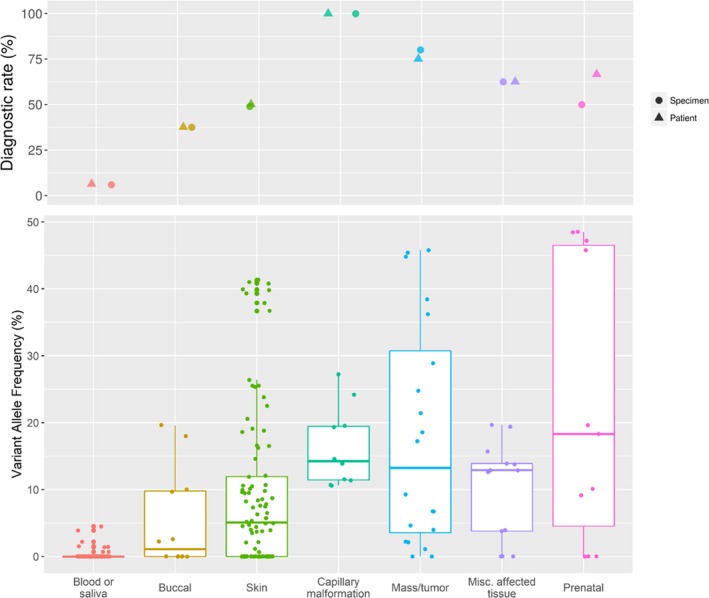
Next-generation sequencing has enabled sensitive detection of somatic pathogenic variants associated with overgrowth conditions. However, as the pathogenic variant allele frequency varies by tissue type within an individual, submission of affected tissue(s) greatly increases the chances of a molecular diagnosis.
体细胞过度生长疾病,包括Proteus综合征、Sturge-Weber综合征和PIK3CA相关过度生长谱系,由合子后致病性变异引起,导致节段性镶嵌现象,并引发神经、皮肤和/或脂肪瘤样过度生长。这些变异发生在促进生长的信号通路中,导致受影响细胞谱系来源的组织发生细胞增殖和扩张。
我们报告了在诊断实验室环境中对80例体细胞过度生长疾病患者进行评估的系列研究,其中包括3例产前患者。总共对这80例患者的166个组织进行了8基因panel的靶向测序,该panel捕获了10.2 kb包含与体细胞过度生长疾病相关的已知致病性变异的序列。使用IonTorrent PGM平台进行深度二代测序,平均深度通常>5000×。
在36例个体中鉴定出可能致病或致病的变异,4例为意义未明的变异。总体分子诊断率为45%,但受到送检组织类型和表型的高度影响。在产前检查中,2例患者在培养的羊水中鉴定出致病变异,但第3例患者的致病变异仅存在于产后组织中。最后,将检测扩展到包括PIK3CA的全基因测序,与靶向测序相比,在最初panel检测为阴性的7例患者中有3例鉴定出可能致病的变异。
二代测序能够灵敏地检测与过度生长疾病相关的体细胞致病变异。然而,由于个体内致病变异等位基因频率因组织类型而异,提交受影响的组织大大增加了分子诊断的机会。