Alkholief Musaed, Albasit Hammam, Alhowyan Adel, Alshehri Sultan, Raish Mohammad, Abul Kalam Mohd, Alshamsan Aws
Nanobiotechnology Unit, Department of Pharmaceutics, College of Pharmacy, King Saud University, Riyadh, Saudi Arabia.
Department of Pharmaceutics, College of Pharmacy, King Saud University, P.O. Box: 2457, Riyadh 11451, Saudi Arabia.
Saudi Pharm J. 2019 Feb;27(2):293-302. doi: 10.1016/j.jsps.2018.11.011. Epub 2018 Nov 23.
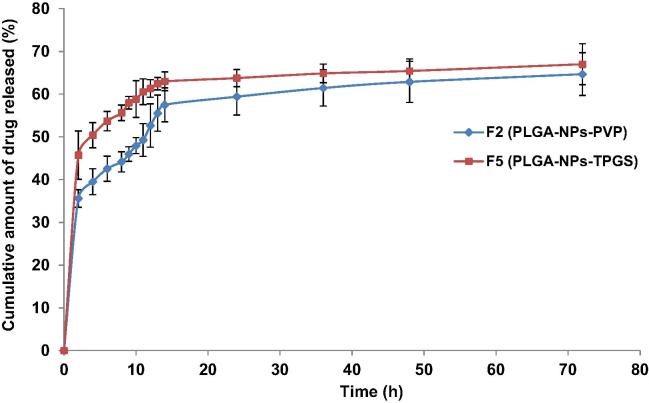
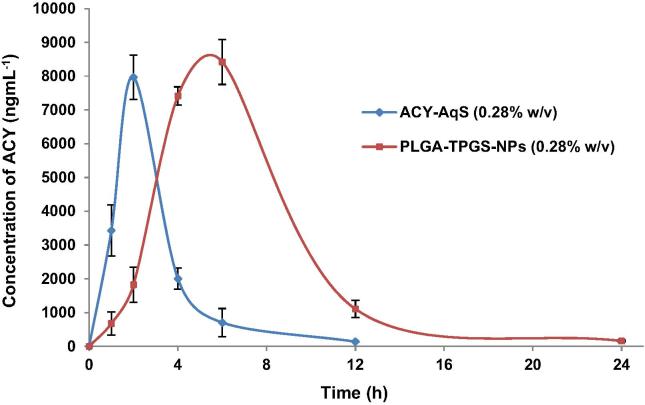
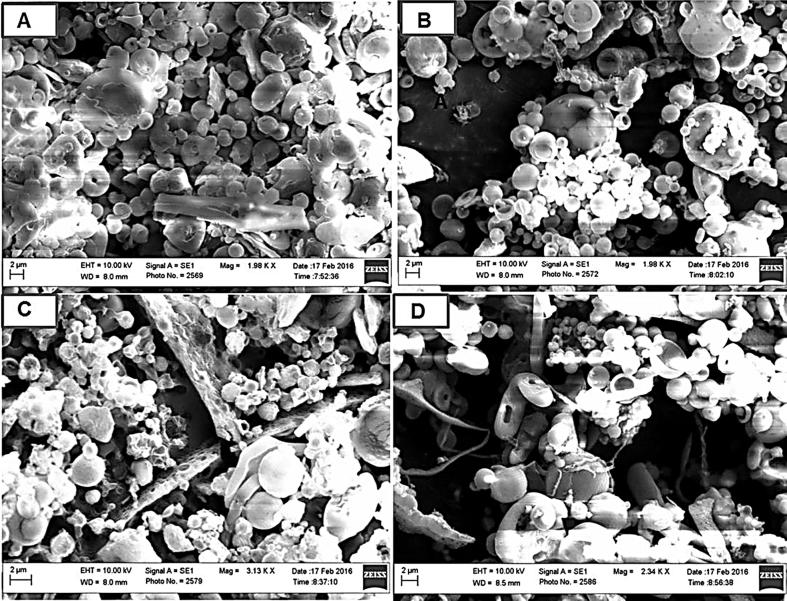
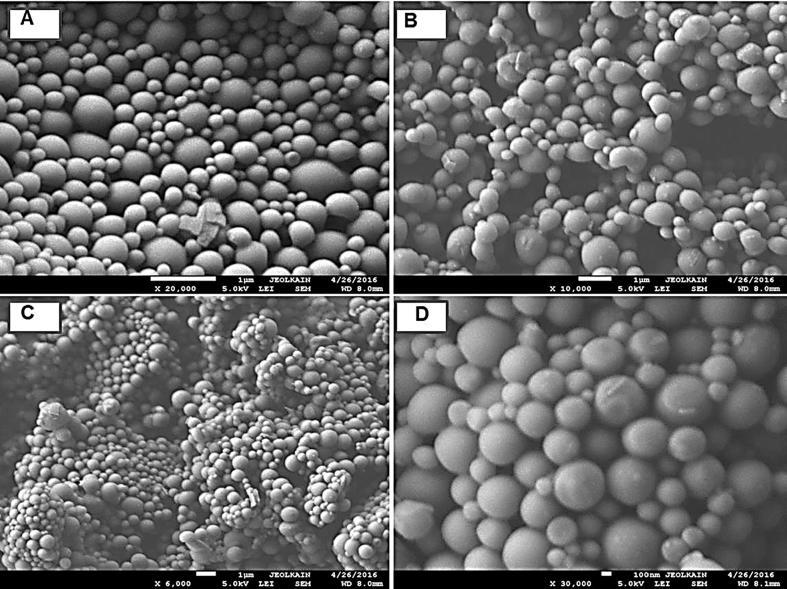
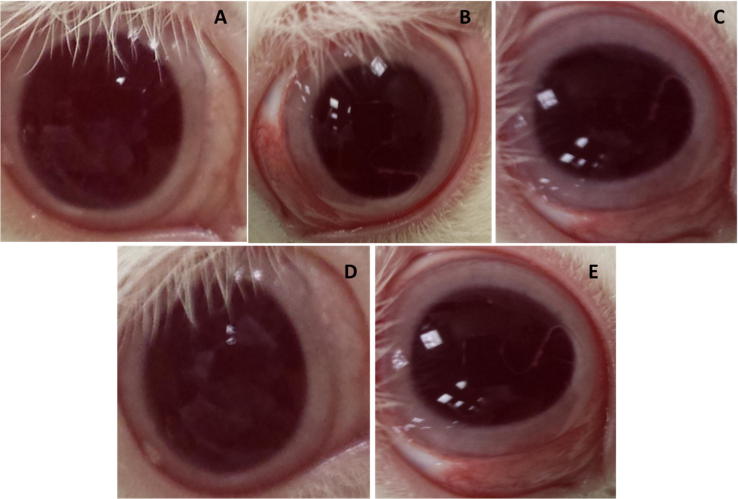
Delivering drugs via the ocular route has always been a challenge for poorly soluble drugs. The various anatomical and physiological barriers in the eye cavity hinder the residence of drugs within the corneal and precorneal regions. In this study, the nanosystem that could sufficiently deliver the poorly soluble Acyclovir topically via ocular route. Our nanosystem is composed of the biocompatible PLGA polymer stabilized with TPGS which possess a high emulsifying capacity and is also known as P-gp inhibitor. The optimized nanoparticles were prepared with 0.3% TPGS and had particle-size of 262.3 nm, zeta-potential of +15.14 mV. The physicochemical-characterization, transcorneal permeation, ocular-irritation and Acyclovir ocular-availability, following topical ocular application of PLGA-NPs in rabbit eyes, were performed. The tested parameters and irritation by Draize's test suggested the suitability and safety of PLGA-NPs for ocular use. An ultrahigh performance liquid chromatographic method was developed, validated, and applied to quantify Acyclovir in aqueous humor which was shown to be significantly higher ( < 0.05) using the developed nanoparticles as compared to Acyclovir-aqueous suspension following their single topical ocular administration. Noticeable 2.78-, 1.71- and 2.2-times increased values of AUC, t (h) and MRT were found, respectively, with the PLGA-TPGS-NPs as compared to ACY-AqS. These results demonstrate the superiority of delivering Acyclovir using a nanosystem compared to conventional methods.
对于难溶性药物而言,通过眼部途径给药一直是一项挑战。眼腔内存在的各种解剖学和生理学屏障阻碍了药物在角膜和角膜前区域的留存。在本研究中,该纳米系统能够通过眼部途径局部充分递送难溶性阿昔洛韦。我们的纳米系统由用TPGS稳定的生物相容性PLGA聚合物组成,TPGS具有高乳化能力,也是一种P-糖蛋白抑制剂。用0.3%的TPGS制备了优化的纳米颗粒,其粒径为262.3纳米,ζ电位为+15.14毫伏。在兔眼中局部应用PLGA纳米颗粒后,进行了理化特性、角膜透过性、眼部刺激性和阿昔洛韦眼部可用性的研究。通过Draize试验测试的参数和刺激性表明PLGA纳米颗粒适用于眼部且安全。建立、验证了一种超高效液相色谱法,并将其应用于定量房水中的阿昔洛韦,结果显示,与单次局部眼部给药后的阿昔洛韦水混悬液相比,使用所制备的纳米颗粒时房水中阿昔洛韦的含量显著更高(<0.05)。与ACY-AqS相比,PLGA-TPGS-NPs的AUC、t(h)和MRT值分别显著增加了2.78倍、1.71倍和2.2倍。这些结果证明了与传统方法相比,使用纳米系统递送阿昔洛韦具有优越性。