Department of Otorhinolaryngology-Head and Neck Surgery, Boramae Medical Center, Seoul National University College of Medicine, Seoul, Republic of Korea.
Department of Laboratory Medicine, Boramae Medical Center, Seoul National University College of Medicine, Seoul, Republic of Korea.
Mediators Inflamm. 2019 Jan 15;2019:7138643. doi: 10.1155/2019/7138643. eCollection 2019.
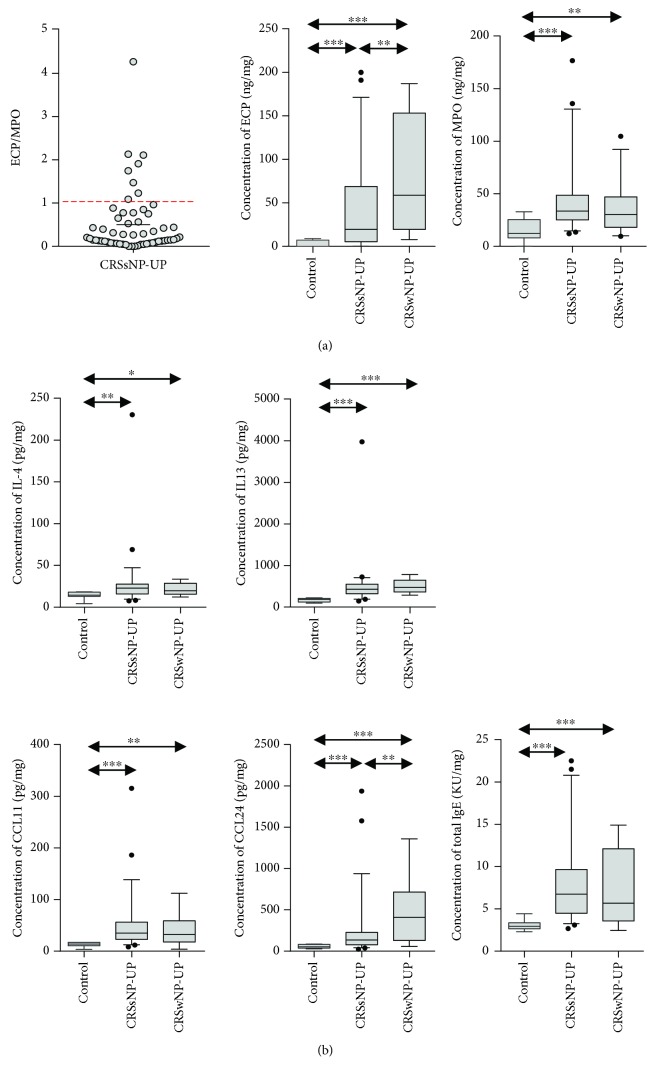
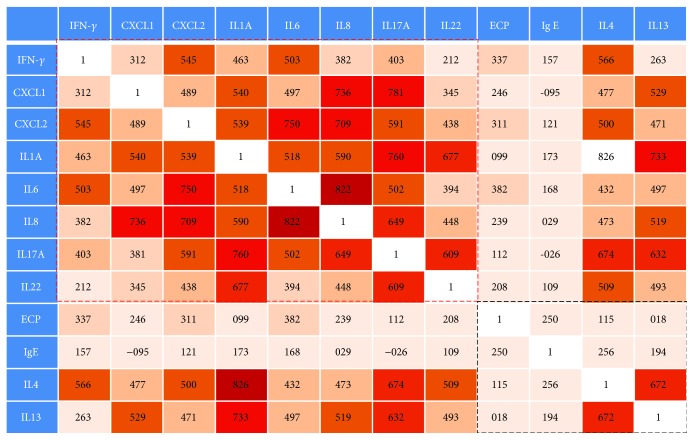
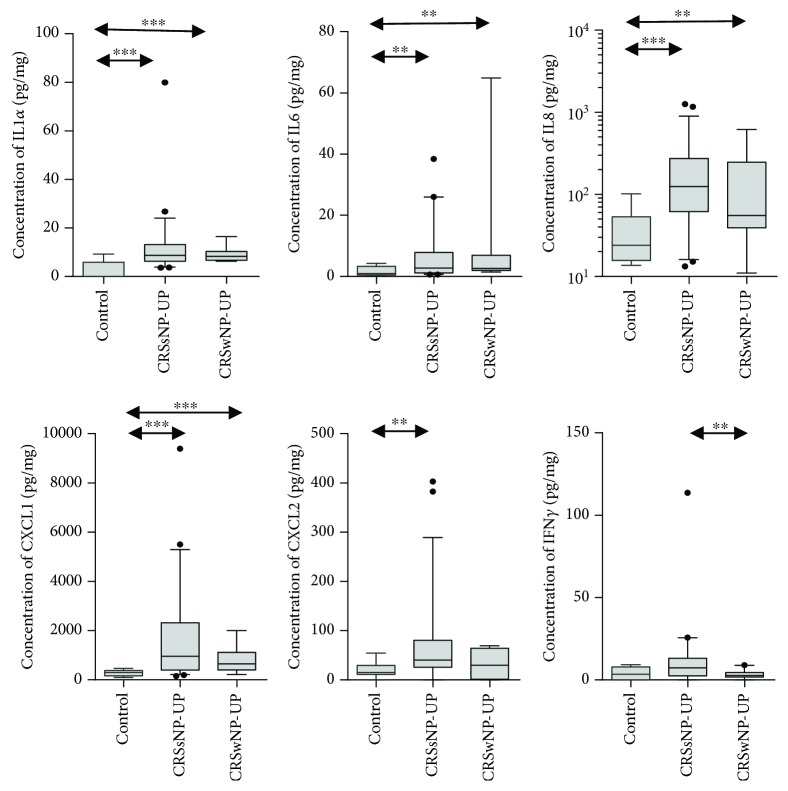
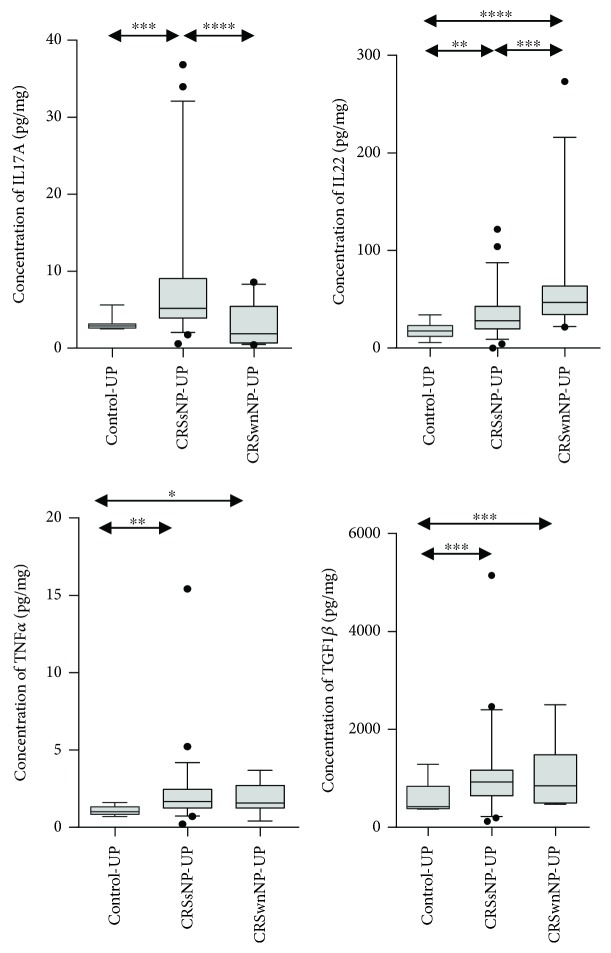
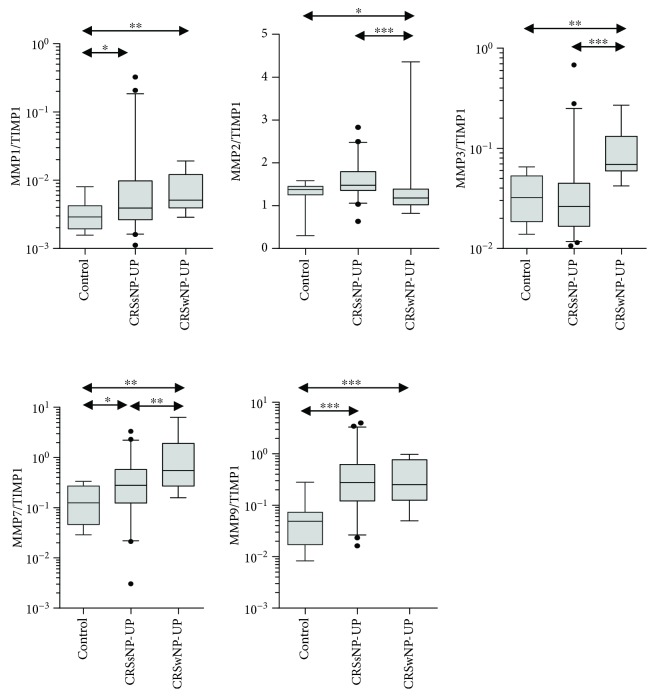
Chronic rhinosinusitis (CRS) shows heterogeneous immunologic features. Western studies revealed that CRS without nasal polyps (CRSsNP) showed a predominantly type 1 immune response and CRS with nasal polyps (CRSwNP) was characterized by type 2 immune response; however, the detailed immunologic profile of CRSsNP in Asian patients has not been thoroughly investigated. Therefore, we investigated the inflammatory endotypes of CRSsNP in Asian patients. Patients with CRSsNP ( = 57), patients with CRSwNP ( = 13), and a control group ( = 10), who underwent endoscopic sinus surgery, were enrolled; uncinate process (UP) tissues were harvested from all patients. Homogenates were prepared from the UP of each group, and immunologic profiles were analyzed, including major cytokines (32 inflammatory mediators). When comparing the UPs between groups, CRSsNP patients showed higher levels of Th2 cytokines (IL-4 and IL-13), eosinophilic chemokines (CCL-11 and CCL-24), ECP, and total IgE expression than control subjects. In addition, several neutrophilic markers (IL-1, IL-6, IL-8, CXCL-1, CXCL-2, and MPO), IL-17A, IL-22, and TNF- were dominant in CRSsNP patients. Among these inflammatory mediators, IL-17A showed higher expression levels in CRSsNP patients than in the control group and CRSwNP patients. However, IFN- expression was not significantly elevated in CRSsNP patients. The levels of neutrophil-associated cytokines were well correlated with each other; of which, CXCL2, IL-8, and MMP-9/TIMP-1 levels were significantly correlated with disease extent ( = 0.338, = 0.317, and = 0.424, respectively). However, the levels of eosinophil-associated cytokines showed little correlation with each other and were not correlated with disease extent. Our study revealed that Asian CRSsNP patients showed a mixed (types 2 and 17) immune response, but neutrophil-related markers were dominant and associated with disease extent. Knowledge of this immunologic feature may help clinicians make better individual treatment decisions for Asian CRSsNP patients.
慢性鼻-鼻窦炎(CRS)表现出异质性的免疫学特征。西方的研究表明,不伴鼻息肉的 CRS(CRSsNP)主要表现为 1 型免疫反应,而伴鼻息肉的 CRS(CRSwNP)则以 2 型免疫反应为特征;然而,亚洲患者的 CRSsNP 的详细免疫学特征尚未得到彻底研究。因此,我们研究了亚洲患者的 CRSsNP 的炎症表型。纳入了 57 例 CRSsNP 患者、13 例 CRSwNP 患者和 10 例对照组患者,所有患者均接受了内镜鼻窦手术;从每位患者的钩突组织中采集匀浆,并分析免疫谱,包括主要细胞因子(32 种炎症介质)。在比较各组的 UP 时,CRSsNP 患者的 Th2 细胞因子(IL-4 和 IL-13)、嗜酸性粒细胞趋化因子(CCL-11 和 CCL-24)、ECP 和总 IgE 表达水平均高于对照组。此外,几种中性粒细胞标志物(IL-1、IL-6、IL-8、CXCL-1、CXCL-2 和 MPO)、IL-17A、IL-22 和 TNF-在 CRSsNP 患者中占主导地位。在这些炎症介质中,IL-17A 在 CRSsNP 患者中的表达水平高于对照组和 CRSwNP 患者。然而,CRSsNP 患者的 IFN-表达并没有显著升高。中性粒细胞相关细胞因子之间的水平呈正相关;其中,CXCL2、IL-8 和 MMP-9/TIMP-1 水平与疾病程度显著相关(=0.338、=0.317 和=0.424)。然而,嗜酸性粒细胞相关细胞因子之间的相关性较小,与疾病程度无关。我们的研究表明,亚洲 CRSsNP 患者表现出混合(2 型和 17 型)免疫反应,但以中性粒细胞相关标志物为主,并与疾病程度相关。了解这种免疫学特征可能有助于临床医生为亚洲 CRSsNP 患者做出更好的个体化治疗决策。