Amaral Joana D, Silva Dário, Rodrigues Cecília M P, Solá Susana, Santos Maria M M
Research Institute for Medicines (iMed.ULisboa), Faculty of Pharmacy, Universidade de Lisboa, Lisbon, Portugal.
Front Chem. 2019 Jan 31;7:15. doi: 10.3389/fchem.2019.00015. eCollection 2019.
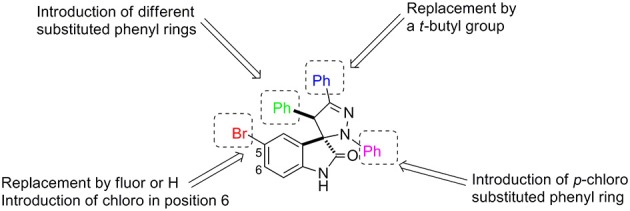
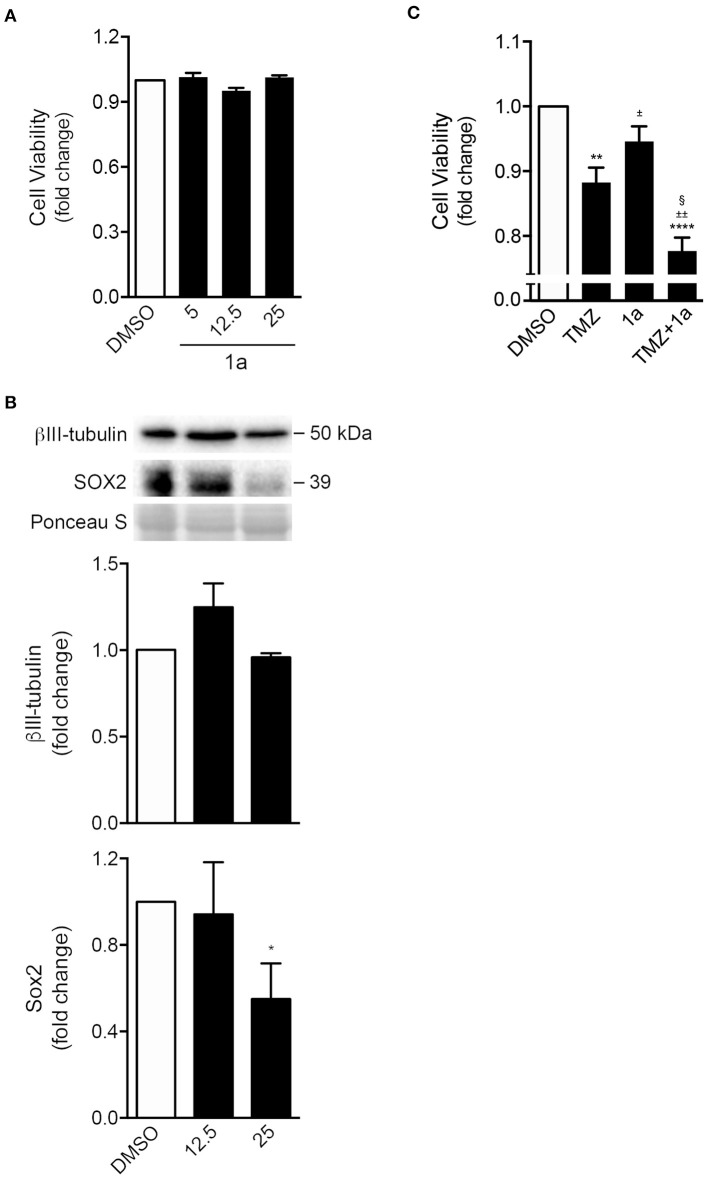
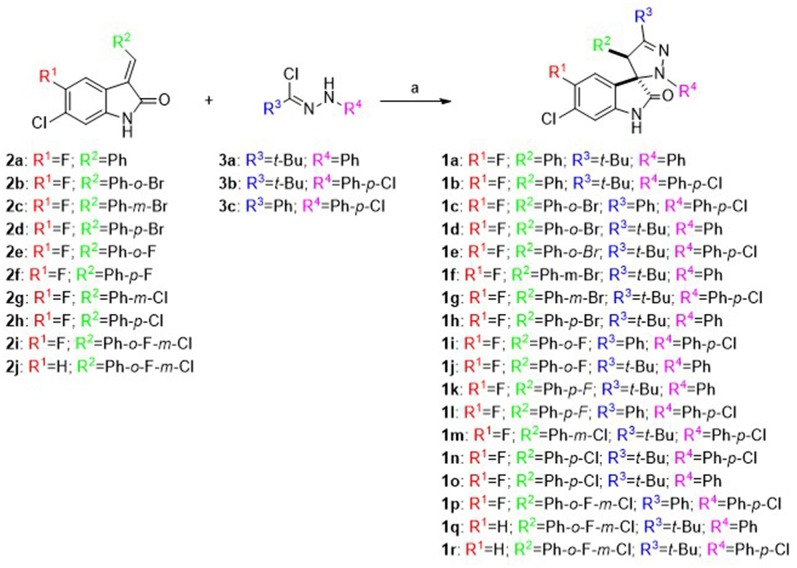
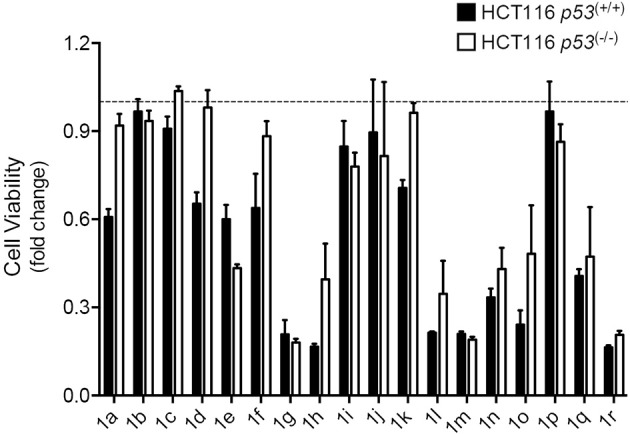
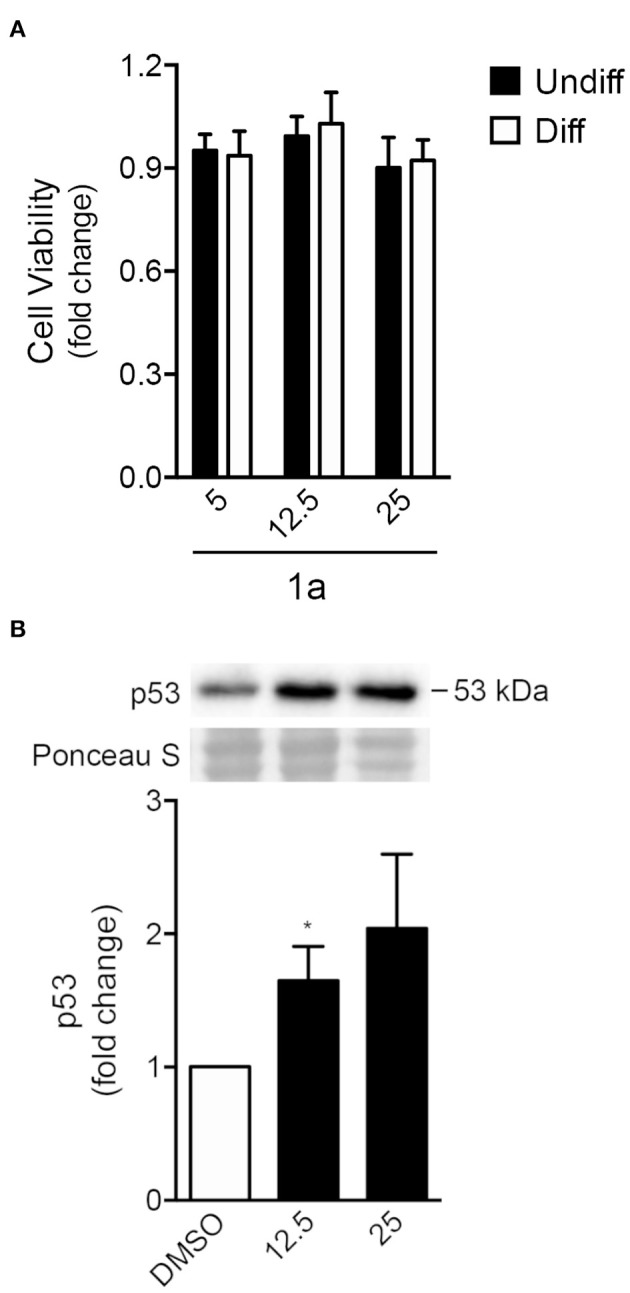
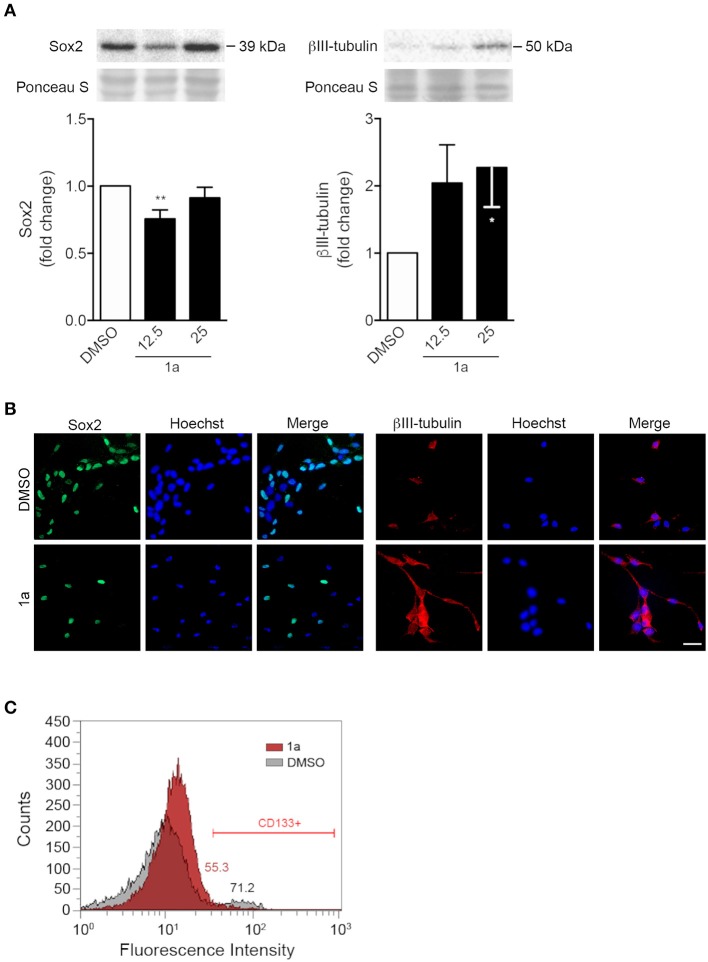
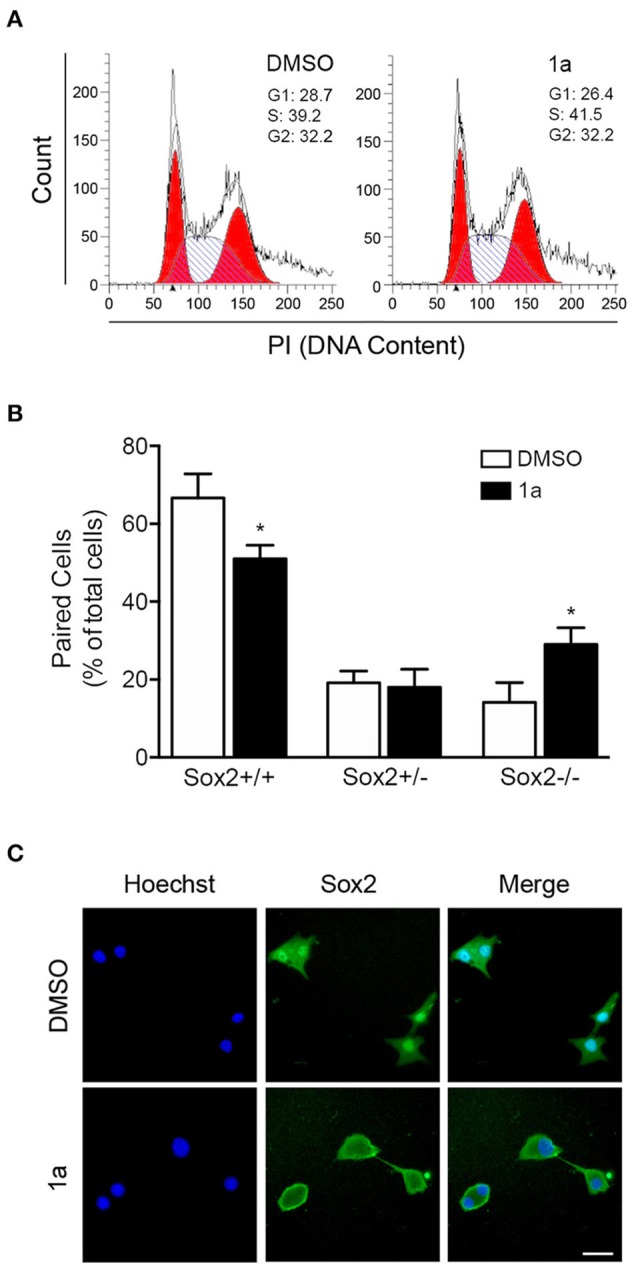
Brain tumor, as any type of cancer, is assumed to be sustained by a small subpopulation of stem-like cells with distinctive properties that allow them to survive conventional therapies and drive tumor recurrence. Thus, the identification of new molecules capable of controlling stemness properties may be key in developing effective therapeutic strategies for cancer by inducing stem-like cells differentiation. Spiropyrazoline oxindoles have previously been shown to induce apoptosis and cell cycle arrest, as well as upregulate p53 steady-state levels, while decreasing its main inhibitor MDM2 in the HCT116 human colorectal carcinoma cell line. In this study, we made modifications in this scaffold by including combinations of different substituents in the pyrazoline ring in order to obtain novel small molecules that could modulate p53 activity and act as differentiation inducer agents. The antiproliferative activity of the synthesized compounds was assessed using the isogenic pair of HCT116 cell lines differing in the presence or absence of the p53 gene. Among the tested spirooxindoles, spiropyrazoline oxindole was selective against the cancer cell line expressing wild-type p53 and presented low cytotoxicity. This small molecule induced neural stem cell (NSC) differentiation through reduced SOX2 (marker of multipotency) and increased βIII-tubulin (marker of neural differentiation) which suggests a great potential as a non-toxic inducer of cell differentiation. More importantly, in glioma cancer cells (GL-261), compound reduced stemness, by decreasing SOX2 protein levels, while also promoting chemotherapy sensitization. These results highlight the potential of p53 modulators for brain cell differentiation, with spirooxindole representing a promising lead molecule for the development of new brain antitumor drugs.
与任何类型的癌症一样,脑肿瘤被认为是由一小群具有独特特性的干细胞样细胞维持的,这些特性使它们能够在传统疗法中存活并驱动肿瘤复发。因此,鉴定能够控制干性特性的新分子可能是通过诱导干细胞样细胞分化来开发有效的癌症治疗策略的关键。以前已经证明,螺环吡唑啉氧化吲哚可诱导细胞凋亡和细胞周期停滞,并上调p53稳态水平,同时降低其在HCT116人结肠癌细胞系中的主要抑制剂MDM2。在本研究中,我们通过在吡唑啉环中引入不同取代基的组合对该支架进行了修饰,以获得能够调节p53活性并作为分化诱导剂的新型小分子。使用存在或不存在p53基因的HCT116细胞系的同基因对评估合成化合物的抗增殖活性。在测试的螺环氧化吲哚中,螺环吡唑啉氧化吲哚对表达野生型p53的癌细胞系具有选择性,并且细胞毒性较低。这种小分子通过降低SOX2(多能性标志物)和增加βIII-微管蛋白(神经分化标志物)诱导神经干细胞(NSC)分化,这表明其作为无毒细胞分化诱导剂具有巨大潜力。更重要的是,在胶质瘤癌细胞(GL-261)中,化合物通过降低SOX2蛋白水平降低干性,同时还促进化疗敏感性。这些结果突出了p53调节剂在脑细胞分化方面的潜力,螺环氧化吲哚代表了开发新型脑抗肿瘤药物的有前景的先导分子。