Wan Sereana, Kuipers Folkert, Havinga Rick, Ando Hiromi, Vance Dennis E, Jacobs René L, van der Veen Jelske N
Group on the Molecular and Cell Biology of Lipids and Department of Biochemistry University of Alberta Edmonton Canada.
Department of Pediatrics University of Groningen, University Medical Center Groningen Groningen the Netherlands.
Hepatol Commun. 2019 Jan 2;3(2):262-276. doi: 10.1002/hep4.1302. eCollection 2019 Feb.
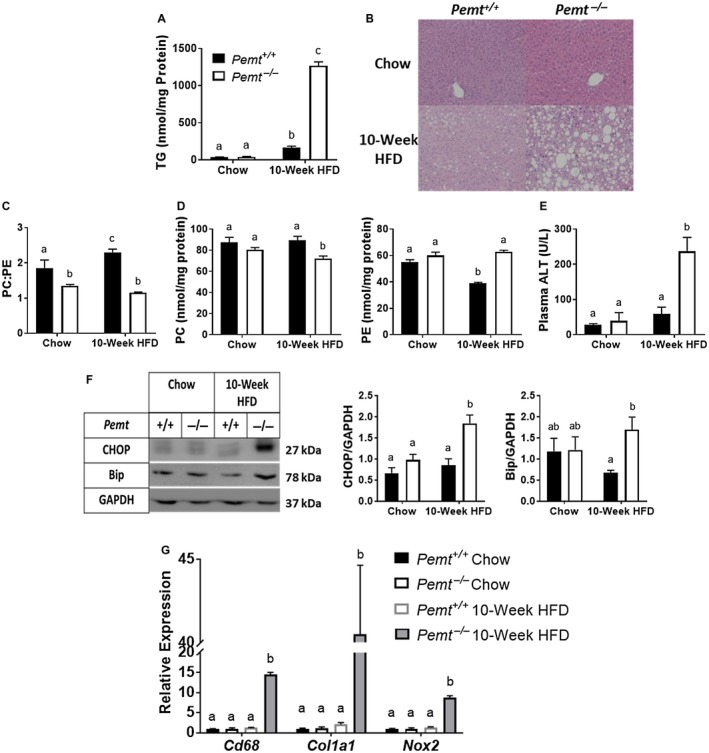
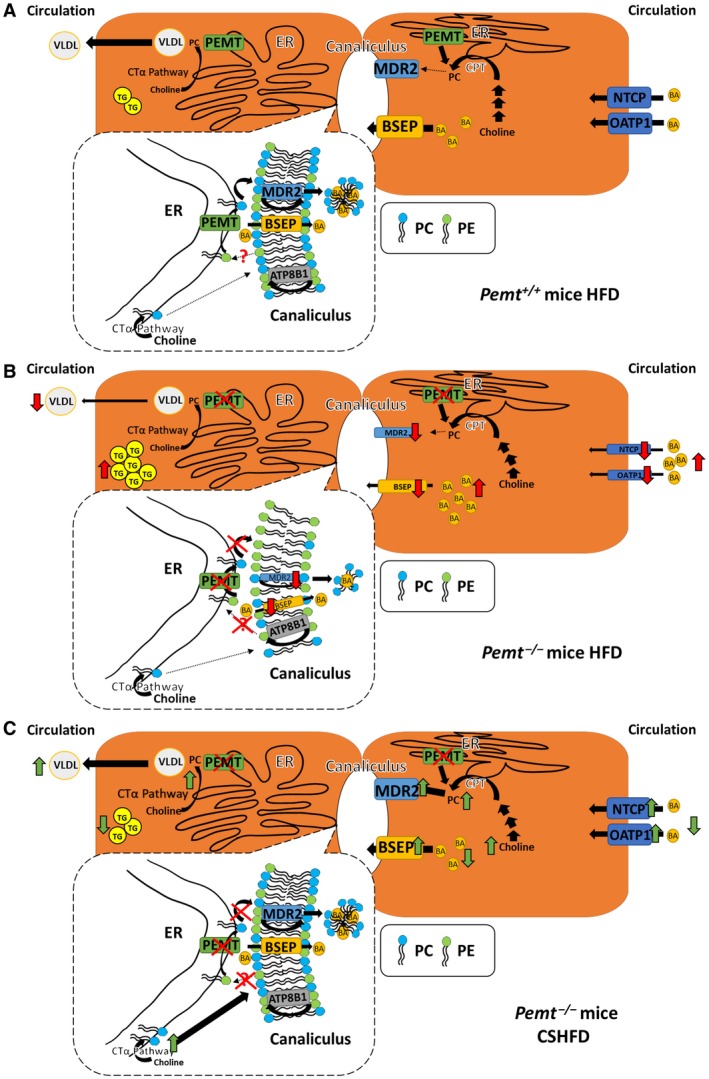
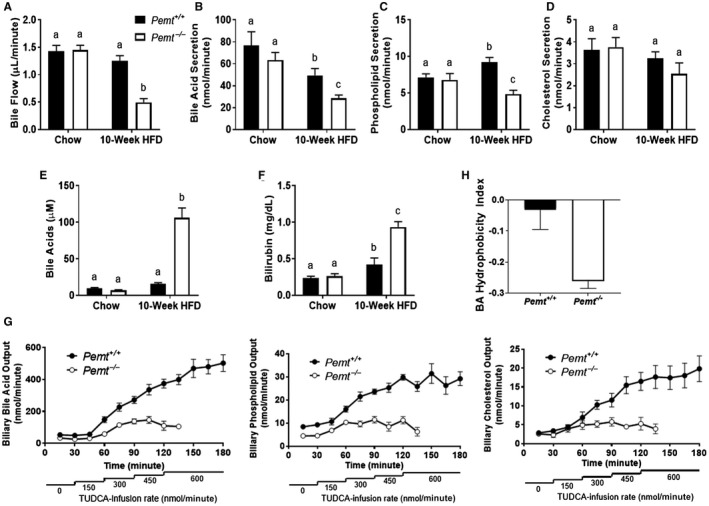
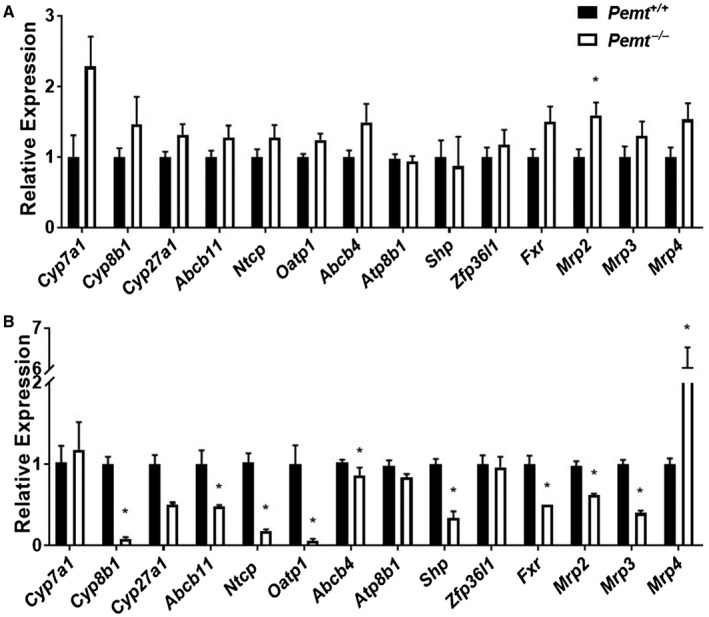
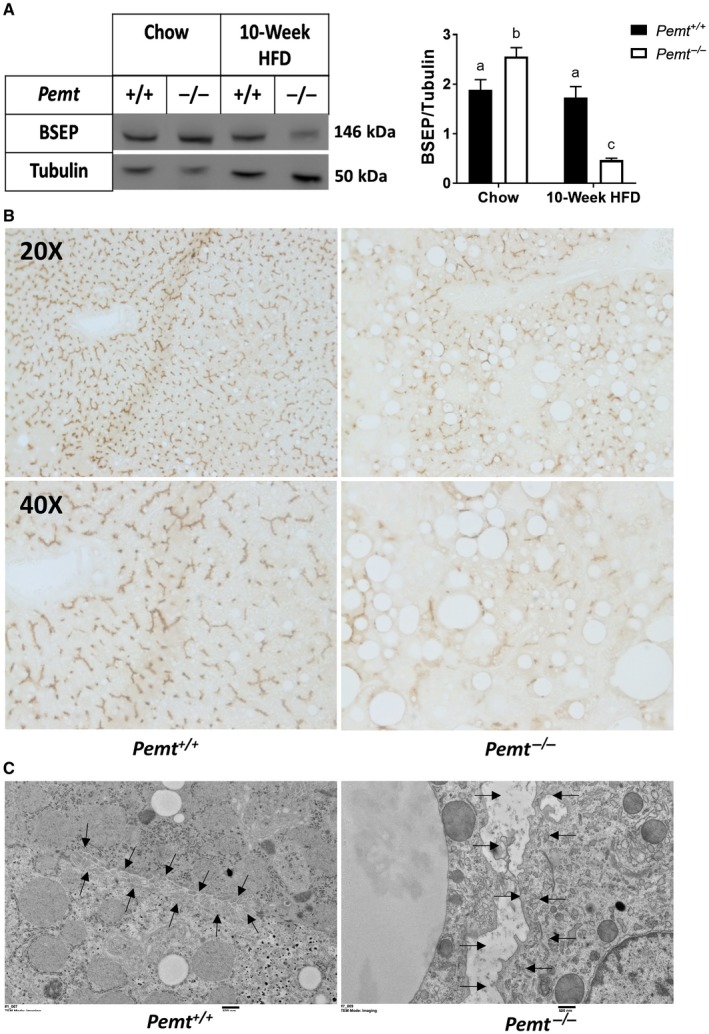
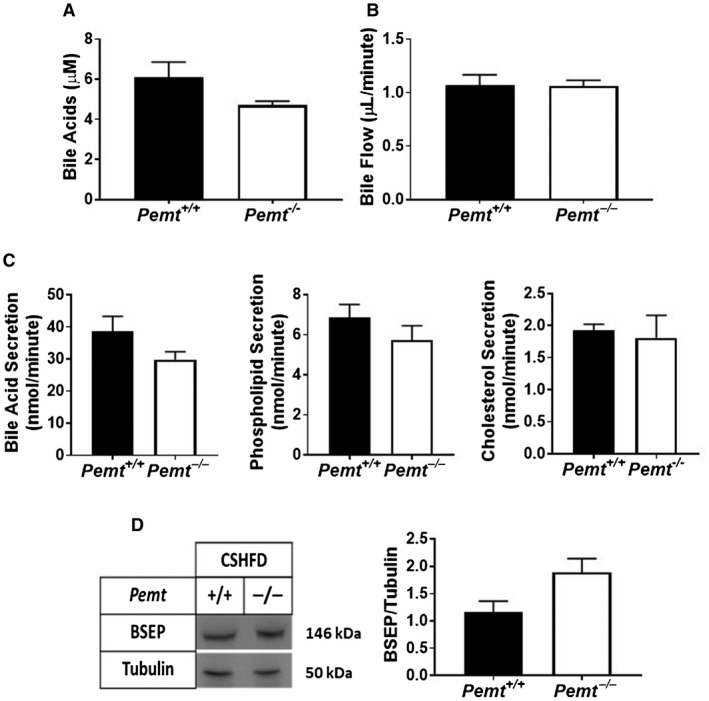
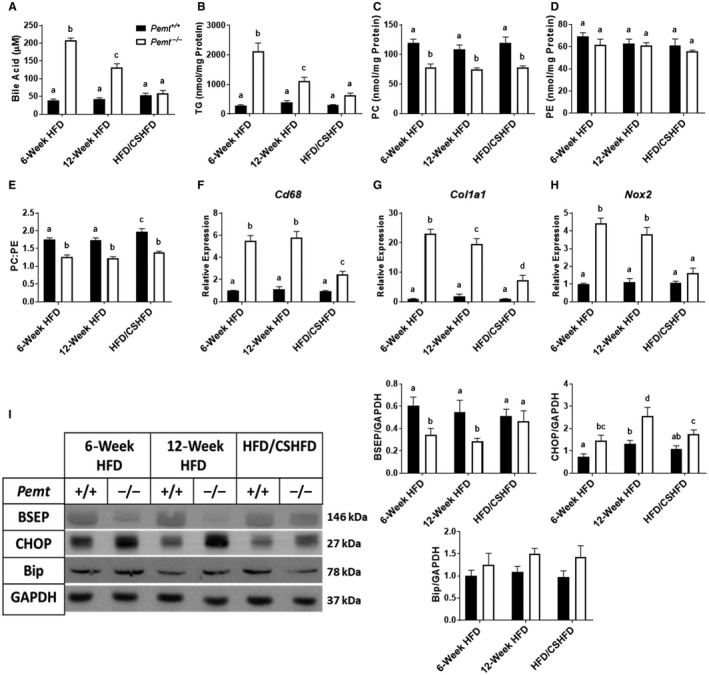
Phosphatidylethanolamine -methyltransferase (PEMT) is a hepatic integral membrane protein localized to the endoplasmic reticulum (ER). PEMT catalyzes approximately 30% of hepatic phosphatidylcholine (PC) biosynthesis. mice fed a high-fat diet (HFD) develop steatohepatitis. Interestingly, portions of the ER located close to the canaliculus are enriched in PEMT. Phospholipid balance and asymmetrical distribution by adenosine triphosphatase phospholipid transporting 8B1 (ATP8B1) on the canalicular membrane is required for membrane integrity and biliary processes. We hypothesized that PEMT is an important supplier of PC to the canaliculus and that PEMT activity is critical for the maintenance of canalicular membrane integrity and bile formation following HFD feeding when there is an increase in overall hepatic PC demand. and mice were fed a chow diet, an HFD, or a choline-supplemented HFD. Plasma and hepatic indices of liver function and parameters of bile formation were determined. mice developed cholestasis, i.e, elevated plasma bile acid (BA) concentrations and decreased biliary secretion rates of BAs and PC, during HFD feeding. The maximal BA secretory rate was reduced more than 70% in HFD-fed mice. Hepatic ABCB11/bile salt export protein, responsible for BA secretion, was decreased in mice and appeared to be retained intracellularly. Canalicular membranes of HFD-fed mice contained fewer invaginations and displayed a smaller surface area than mice. Choline supplementation (CS) prevented and reversed the development of HFD-induced cholestasis. We propose that hepatic PC availability is critical for bile formation. Dietary CS might be a potential noninvasive therapy for a specific subset of patients with cholestasis.
磷脂酰乙醇胺甲基转移酶(PEMT)是一种定位于内质网(ER)的肝脏整合膜蛋白。PEMT催化约30%的肝脏磷脂酰胆碱(PC)生物合成。喂食高脂饮食(HFD)的小鼠会发展为脂肪性肝炎。有趣的是,靠近胆小管的内质网部分富含PEMT。胆小管膜上的三磷酸腺苷磷脂转运蛋白8B1(ATP8B1)进行的磷脂平衡和不对称分布对于膜完整性和胆汁生成过程是必需的。我们推测PEMT是向胆小管供应PC的重要来源,并且当整体肝脏PC需求增加时,PEMT活性对于维持HFD喂养后胆小管膜完整性和胆汁形成至关重要。给野生型和PEMT基因敲除小鼠喂食普通饮食、HFD或补充胆碱的HFD。测定肝功能的血浆和肝脏指标以及胆汁形成参数。在HFD喂养期间,PEMT基因敲除小鼠出现胆汁淤积,即血浆胆汁酸(BA)浓度升高以及BA和PC的胆汁分泌率降低。在喂食HFD的PEMT基因敲除小鼠中,最大BA分泌率降低了70%以上。负责BA分泌的肝脏ABCB11/胆盐输出蛋白在PEMT基因敲除小鼠中减少,并且似乎被保留在细胞内。喂食HFD的PEMT基因敲除小鼠的胆小管膜内陷较少,表面积比野生型小鼠小。补充胆碱(CS)预防并逆转了HFD诱导的胆汁淤积的发展。我们提出肝脏PC的可利用性对于胆汁形成至关重要。饮食CS可能是特定胆汁淤积患者亚组的一种潜在非侵入性治疗方法。