Chen Lu, Yang Guobao, Chu Xiaoyang, Gao Chunhong, Wang Yuli, Gong Wei, Li Zhiping, Yang Yang, Yang Meiyan, Gao Chunsheng
State key Laboratory of Toxicology and Medical Countermeasures, Beijing Institute of Pharmacology and Toxicology, Beijing 100850, China.
Pharmaceutics. 2019 Feb 14;11(2):80. doi: 10.3390/pharmaceutics11020080.
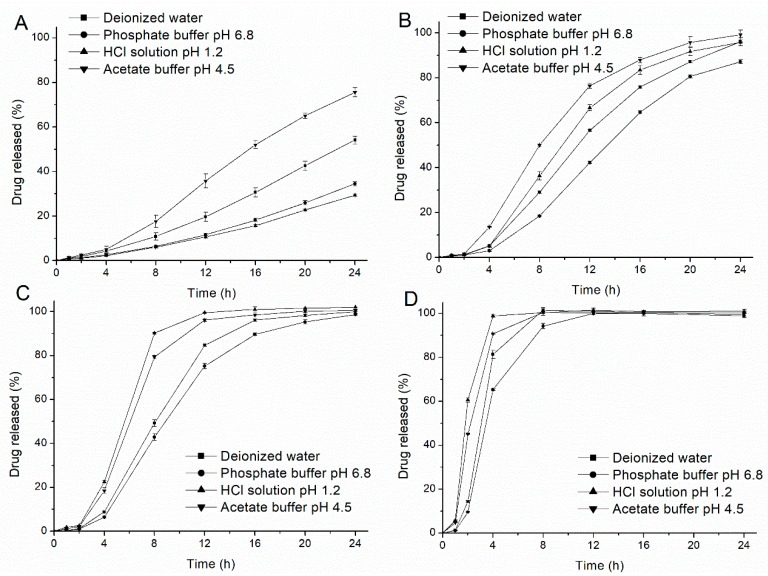
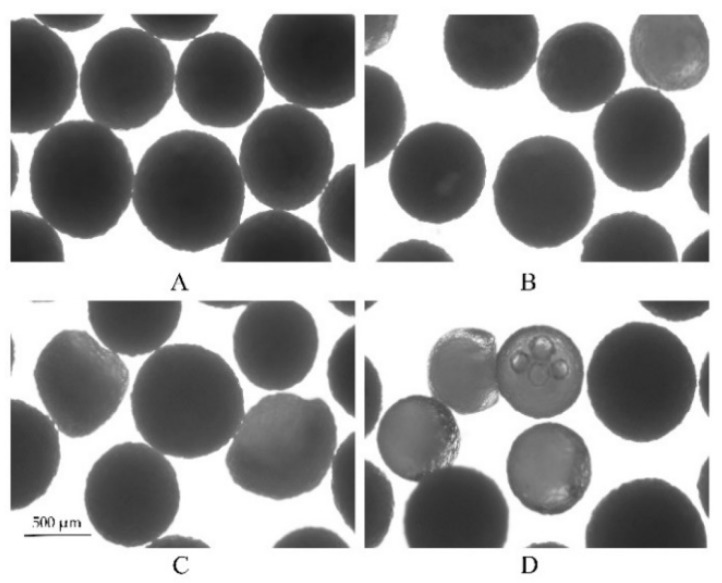
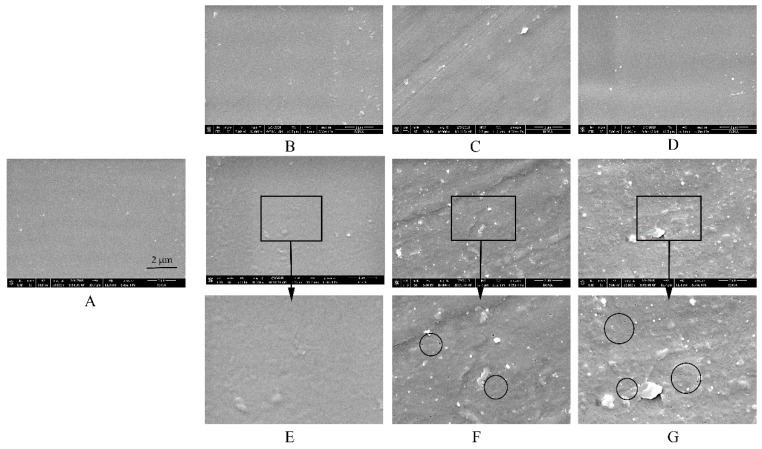
Phase-separated films of water-insoluble ethyl cellulose (EC) and water-soluble hydroxypropyl cellulose (HPC) can be utilized to tailor drug release from coated pellets. In the present study, the effects of HPC levels and the pH, type, ionic strength and osmolarity of the media on the release profiles of soluble metoprolol succinates from the EC/HPC-coated pellets were investigated, and the differences in drug-release kinetics in multiple media were further elucidated through the HPC leaching and swelling kinetics of the pellets, morphology (SEM) and water uptake of the free films and the interaction between the coating polymers and the media compositions. Interestingly, the drug release rate from the pellets in different media was not in agreement with the drug solubility which have a positive correlation with the drug dissolution rate based on Noyes⁻Whitney equation law. In particular, the drug release rate in acetate buffer at pH 4.5 was faster than that in other media despite the solubility of drug was relatively lower, regardless of the HPC levels. It may be attributed to the mutual effect between the EC and acetate buffer, which improved the permeability of the film. In contrast, the release of drug in HCl solution was dependent on the HPC levels. Increasing the levels of HPC increased the effects of hydrogen ions on the polymer of HPC, which resulted in a lower viscosity and strength of the gel, forming the larger size of pores in polymer films, thus increasing the drug diffused from the coating film. Further findings in phosphate buffer showed a reduction in the drug release compared to that in other media, which was only sensitive to the osmolarity rather than the HPC level and pH of the buffer. Additionally, a mathematical theory was used to better explain and understand the experimentally measured different drug release patterns. In summary, the study revealed that the effects of the media overcompensated that of the drug solubility to some extent for controlled-release of the coating polymers, and the drug release mechanism in multiple media depend on EC and HPC rather than on HPC alone, which may have a potential to facilitate the optimization of ideally film-coated formulations.
水不溶性乙基纤维素(EC)和水溶性羟丙基纤维素(HPC)的相分离膜可用于调整包衣微丸的药物释放。在本研究中,考察了HPC含量以及介质的pH值、类型、离子强度和渗透压对EC/HPC包衣微丸中可溶性琥珀酸美托洛尔释放曲线的影响,并通过微丸的HPC浸出和溶胀动力学、形态(扫描电子显微镜)、游离膜的吸水率以及包衣聚合物与介质组成之间的相互作用,进一步阐明了多种介质中药物释放动力学的差异。有趣的是,基于Noyes-Whitney方程定律,不同介质中微丸的药物释放速率与药物溶解度不一致,而药物溶解度与药物溶解速率呈正相关。特别是,尽管药物溶解度相对较低,但在pH 4.5的醋酸盐缓冲液中的药物释放速率比其他介质中的快,且与HPC含量无关。这可能归因于EC与醋酸盐缓冲液之间的相互作用,提高了膜的渗透性。相反,HCl溶液中药物的释放取决于HPC含量。增加HPC含量会增加氢离子对HPC聚合物的作用,导致凝胶的粘度和强度降低,在聚合物膜中形成更大尺寸的孔隙,从而增加药物从包衣膜中的扩散。在磷酸盐缓冲液中的进一步研究结果表明,与其他介质相比,药物释放减少,这仅对渗透压敏感,而对缓冲液的HPC含量和pH值不敏感。此外,还使用了一种数学理论来更好地解释和理解实验测量的不同药物释放模式。总之,该研究表明,介质的影响在一定程度上对包衣聚合物的控释作用超过了药物溶解度的影响,多种介质中的药物释放机制取决于EC和HPC,而不仅仅取决于HPC,这可能有助于优化理想的薄膜包衣制剂。