Center for Medical Genetics, School of life sciences, Central South University, 110 Xiangya Road, Changsha, Hunan, 410078, People's Republic of China.
Orphanet J Rare Dis. 2019 Feb 15;14(1):45. doi: 10.1186/s13023-019-1022-8.
Cornelia de Lange syndrome (CdLS) and Rubinstein-Taybi syndrome (RSTS) are both rare congenital multiple malformation disorders caused by genes associated with transcription. They share a number of similar features clinically. In addition, it is difficult to make a molecular diagnosis rapidly and detect the mosaic mutation when only sanger sequencing is taken. This study aims to report three novel mutations in three Chinese children identified by next generation sequencing.
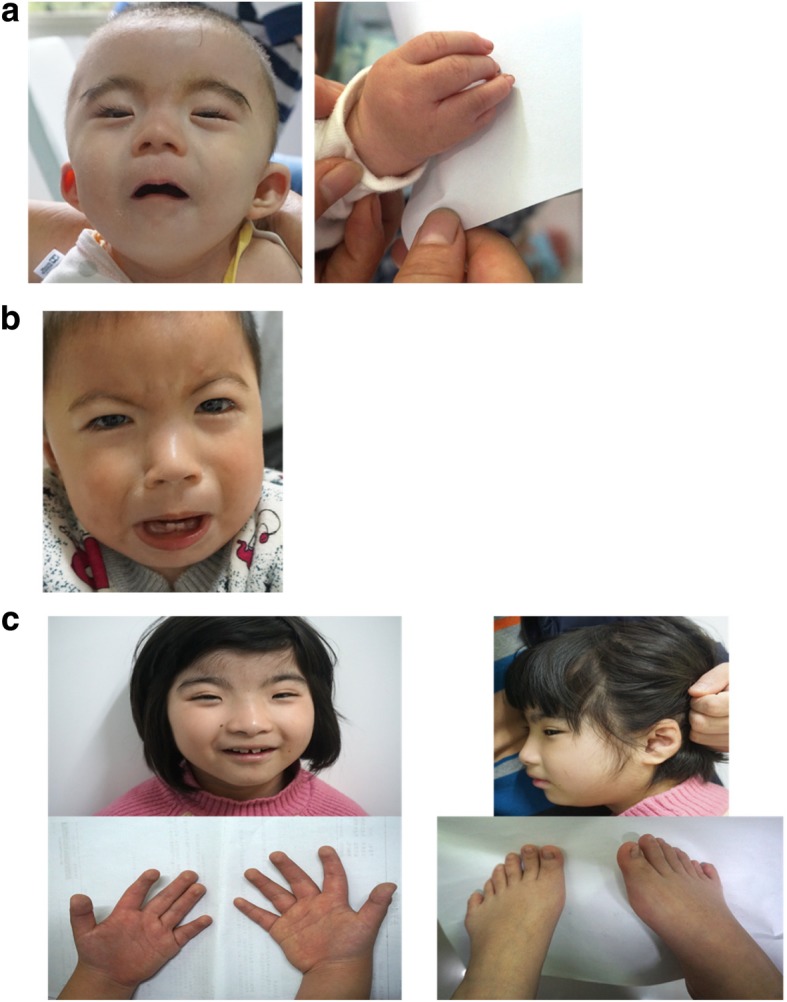
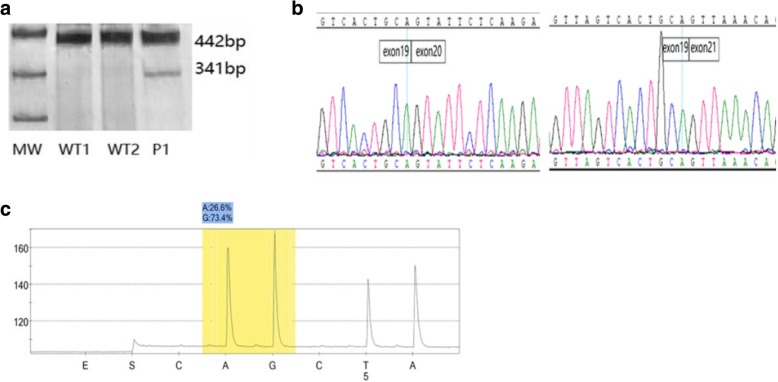
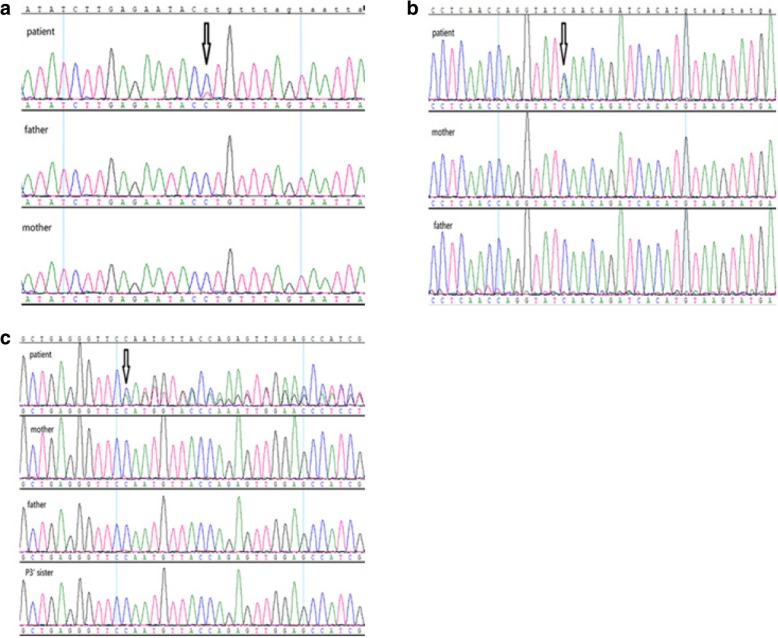
We describe patient 1 and patient 2 presenting with characteristics of CdLS with mutations in NIPBL and patient 3 with a frame shift mutation in CREBBP who can be diagnosed as RSTS clinically and also have similar symptoms with CdLS to some extent. The splicing site c.4321-1G > A transversion in NIPBL is a mosaic mutation and produces an abnormal transcript bearing the loss of exon 20. The nonsense mutation c.218C > A in NIPBL and the frame shift c.1715delC mutation in CREBBP generate stop codon and yield the premature termination of proteins.
In general, we detect three novel heterozygous mutations including a splicing mutation and a nonsense mutation in NIPBL and a frame shift in CREBBP. And several similar features observed in patients indicate the clinical complexity and clinically overlapping of CdLS and RSTS termed "transcriptomopathies", suggest the underlying molecular mechanism and emphasize the utilization of next generation sequencing technologies.
Cornelia de Lange 综合征(CdLS)和 Rubinstein-Taybi 综合征(RSTS)均为罕见的先天性多发畸形疾病,由与转录相关的基因引起。它们在临床上有许多相似的特征。此外,当仅进行桑格测序时,快速进行分子诊断并检测嵌合体突变较为困难。本研究旨在报道通过下一代测序在 3 名中国儿童中发现的 3 个新突变。
我们描述了患者 1 和患者 2,他们表现出 CdLS 的特征,存在 NIPBL 突变,患者 3 则存在 CREBBP 的移码突变,临床上可诊断为 RSTS,且在一定程度上与 CdLS 有相似的症状。NIPBL 中的剪接位点 c.4321-1G > A 颠换是嵌合体突变,产生携带外显子 20 缺失的异常转录本。NIPBL 中的无义突变 c.218C > A 和 CREBBP 中的框移 c.1715delC 突变产生终止密码子,导致蛋白质提前终止。
总体而言,我们检测到三个新的杂合突变,包括 NIPBL 中的剪接突变和无义突变以及 CREBBP 的框移。患者中观察到的几个相似特征表明 CdLS 和 RSTS 的临床复杂性和重叠性,称为“转录病”,提示其潜在的分子机制,并强调下一代测序技术的应用。