Randolph Caelan, Lahive Ciaran W, Sami Selim, Havenith Remco W A, Heeres Hero J, Deuss Peter J
Department of Chemical Engineering, ENTEG, University of Groningen, Nijenborgh 4, 9747 AG Groningen, The Netherlands.
Theoretical Chemistry, Zernike Institute for Advanced Materials and Stratingh Institute for Chemistry, University of Groningen, Nijenborgh 4, 9747 AG Groningen, The Netherlands.
Org Process Res Dev. 2018 Dec 21;22(12):1663-1671. doi: 10.1021/acs.oprd.8b00303. Epub 2018 Nov 9.
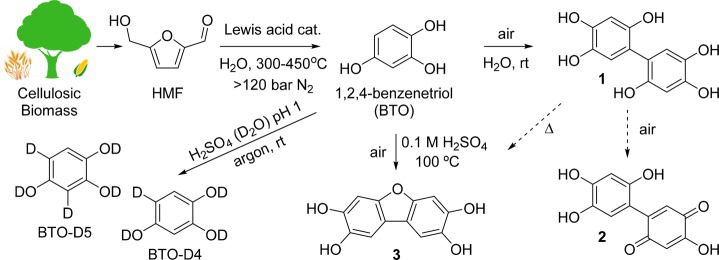
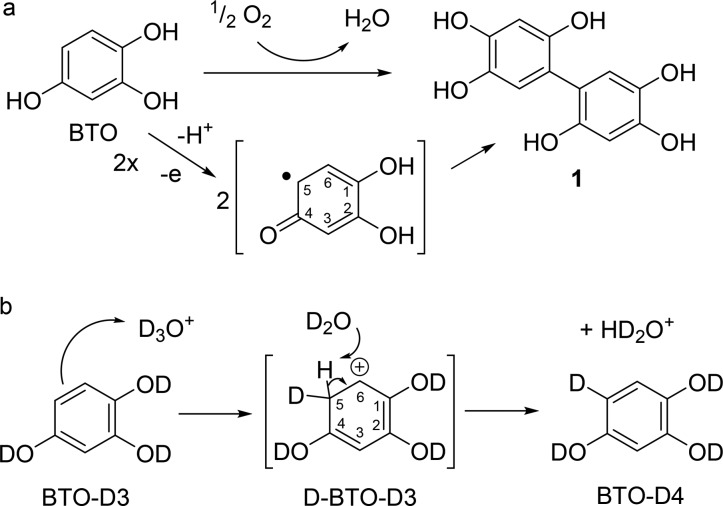
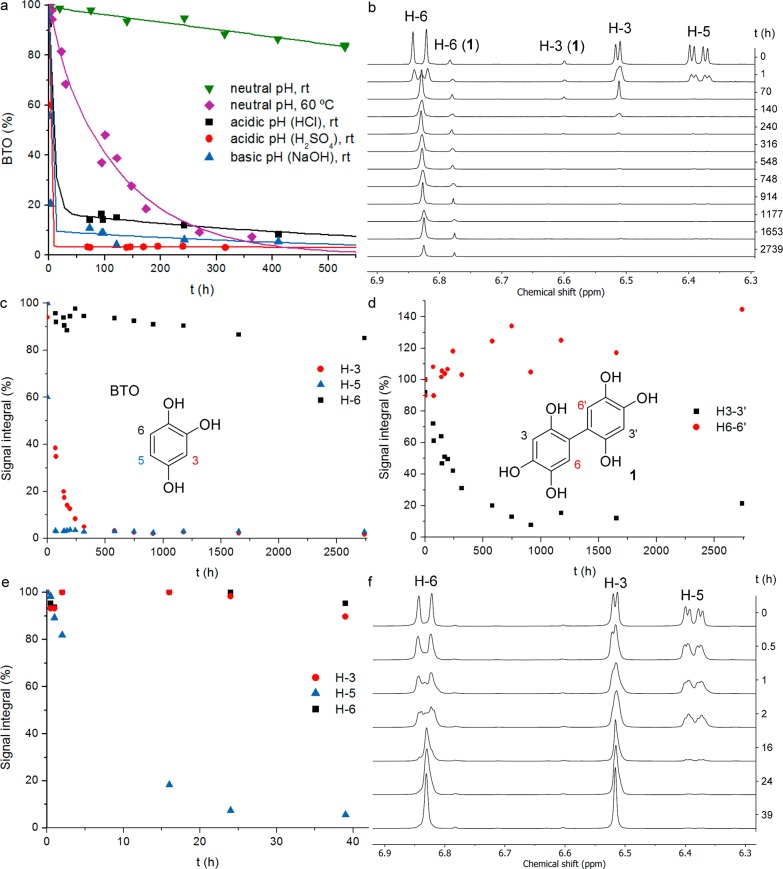
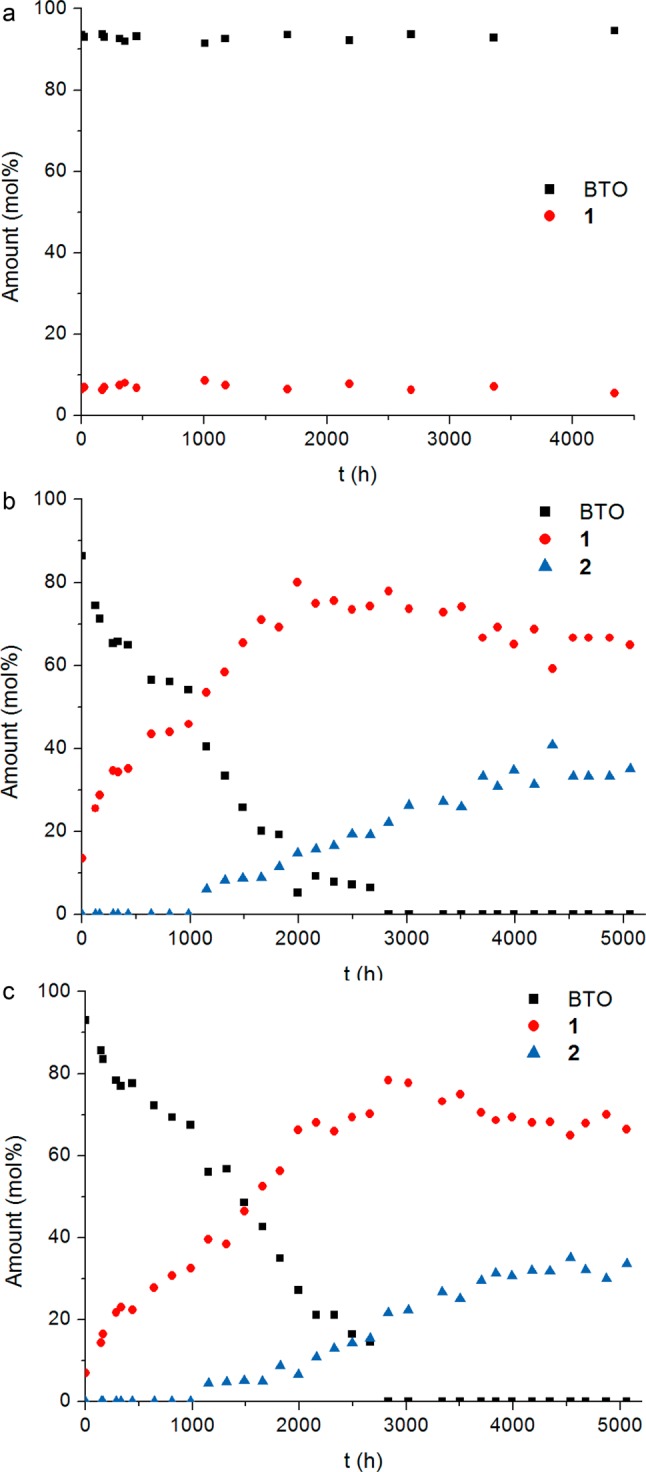
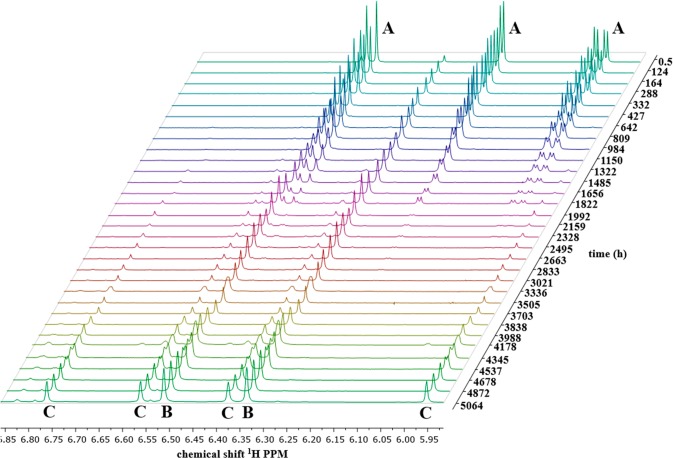
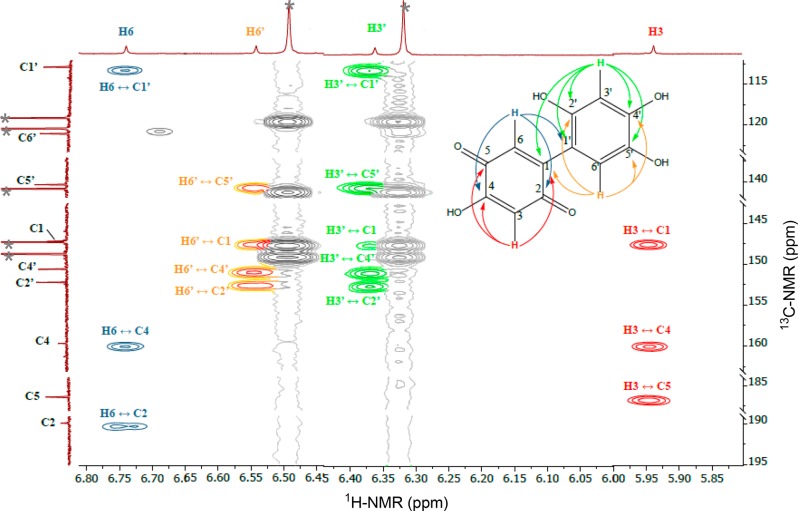
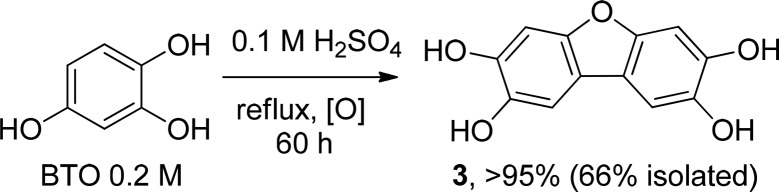
1,2,4-Benzenetriol (BTO), sourced from the carbohydrate-derived platform chemical 5-hydroxylmethylfurfural (HMF), is an interesting starting point for the synthesis of various biobased aromatic products. However, BTO readily undergoes dimerization and other reactions under mild conditions, making analysis and isolation challenging. To both control and utilize the reactivity of BTO to produce biobased building blocks, its reactivity needs to be better understood. Here it was found that specific BTO aromatic C-H bonds are reactive toward deuterium exchange with DO, which appears pronounced under acidic conditions at room temperature and can lead to the selective formation of BTO with an aromatic ring that contains one or two deuterium atoms, the first at the five and the second at the three position. By exposure to air, it was shown that BTO forms a 5,5'-linked BTO dimer [1,1'-biphenyl]-2,2',4,4',5,5'-hexaol () and subsequently a hydroxyquinone containing dimeric structure 2',4,4',5'-tetrahydroxy-[1,1'-biphenyl]-2,5-dione (). Additionally, condensed dimer dibenzo[,]furan-2,3,7,8-tetraol () can be relatively easily accessed. The controlled formation of these symmetric and asymmetric multifunctional dimers illustrates diverse possibilities for BTO to be converted to valuable biobased aromatic compounds. Deuterium exchange was attributed to electrophilic aromatic substitution because this reactivity was found to be independent of oxygen and acid mediated. On the contrary, the dimerization was dependent on the presence of oxygen and thus likely involves radical intermediates. Thus this report overall displays different accessible reaction pathways for BTO that can be exploited for the production of BTO-derived compounds.
1,2,4-苯三酚(BTO)源自碳水化合物衍生的平台化学品5-羟甲基糠醛(HMF),是合成各种生物基芳香族产品的一个有趣起点。然而,BTO在温和条件下容易发生二聚化和其他反应,这使得分析和分离具有挑战性。为了控制和利用BTO的反应活性以生产生物基结构单元,需要更好地了解其反应活性。在此发现,特定的BTO芳香族C-H键对与D₂O的氘交换具有反应活性,在室温酸性条件下这种反应活性很明显,并且可以导致选择性地形成含有一个或两个氘原子的芳香环的BTO,第一个氘原子在5位,第二个在3位。通过暴露于空气中,结果表明BTO形成了5,5'-连接的BTO二聚体[1,1'-联苯]-2,2',4,4',5,5'-六醇( ),随后形成了含有二聚体结构2',4,4',5'-四羟基-[1,1'-联苯]-2,5-二酮( )的羟基醌。此外,缩合二聚体二苯并[,]呋喃-2,3,7,8-四醇( )可以相对容易地得到。这些对称和不对称多功能二聚体的可控形成说明了BTO转化为有价值的生物基芳香族化合物的多种可能性。氘交换归因于亲电芳香取代,因为发现这种反应活性与氧和酸介导无关。相反,二聚化依赖于氧的存在,因此可能涉及自由基中间体。因此,本报告总体上展示了BTO不同的可利用反应途径,可用于生产BTO衍生的化合物。