Georgianos Panagiotis I, Vaios Vasilios, Leontaridou Eleni, Karayannopoulou Georgia, Koletsa Triantafyllia, Sioulis Athanasios, Balaskas Elias V, Zebekakis Pantelis E
Section of Nephrology and Hypertension, 1st Department of Medicine, AHEPA Hospital, Aristotle University of Thessaloniki, Thessaloniki, Greece.
Department of Pathology, Aristotle University of Thessaloniki, Thessaloniki, Greece.
Case Rep Nephrol. 2019 Jan 15;2019:3614980. doi: 10.1155/2019/3614980. eCollection 2019.
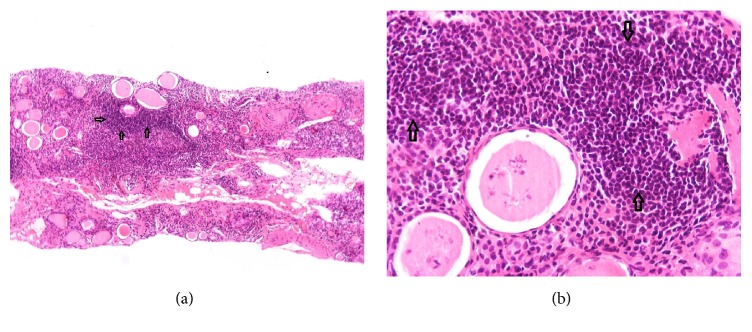
Immune-checkpoint-inhibitors (ICPIs) represent a novel class of immunotherapy against several malignancies. These agents are associated with several "immune-mediated" adverse effects, but the reported renal toxicity of ICPIs is less well defined. We present the case of a 60-year-old man with a history of non-small cell lung cancer, who developed acute kidney injury (AKI) approximately 3.5 months after initiation of immunotherapy with nivolumab. Urinalysis revealed sterile pyuria, without microscopic hematuria or proteinuria. Immunological examination was negative. A renal biopsy showed severe interstitial inflammatory infiltration of T-cells, monocytes, and eosinophils without interstitial granulomas and normal appearance of glomeruli, indicating acute interstitial nephritis (AIN) as the cause of AKI. After a short-term course of corticosteroids and permanent nivolumab discontinuation, partial recovery of renal function was noted. AIN is a rare adverse effect of ICPIs that mandates the close monitoring of renal function in patients under immunotherapy with these agents.
免疫检查点抑制剂(ICPI)是一类新型的针对多种恶性肿瘤的免疫疗法。这些药物会引发多种“免疫介导的”不良反应,但ICPI已报道的肾毒性尚不明确。我们报告了一例60岁有非小细胞肺癌病史的男性患者,在用纳武单抗进行免疫治疗约3.5个月后发生了急性肾损伤(AKI)。尿液分析显示无菌性脓尿,无镜下血尿或蛋白尿。免疫学检查为阴性。肾活检显示T细胞、单核细胞和嗜酸性粒细胞严重间质炎性浸润,无间质肉芽肿且肾小球外观正常,表明急性间质性肾炎(AIN)是AKI的病因。经过短期的皮质类固醇治疗并永久停用纳武单抗后,肾功能出现部分恢复。AIN是ICPI罕见的不良反应,在用这些药物进行免疫治疗的患者中需要密切监测肾功能。