Department of Microbiology, Biochemistry & Immunology, Morehouse School of Medicine, 720 Westview Drive, S.W, Atlanta, GA, 30310, USA.
Centers for Disease Control & Prevention (CDC), Atlanta, GA, 30333, USA.
BMC Genomics. 2019 Feb 18;20(1):143. doi: 10.1186/s12864-019-5495-6.
Genital C. trachomatis infection may cause pelvic inflammatory disease (PID) that can lead to tubal factor infertility (TFI). Understanding the pathogenesis of chlamydial complications including the pathophysiological processes within the female host genital tract is important in preventing adverse pathology. MicroRNAs regulate several pathophysiological processes of infectious and non-infectious etiologies. In this study, we tested the hypothesis that the miRNA profile of single and repeat genital chlamydial infections will be different and that these differences will be time dependent. Thus, we analyzed and compared differentially expressed mice genital tract miRNAs after single and repeat chlamydia infections using a C. muridarum mouse model. Mice were sacrificed and their genital tract tissues were collected at 1, 2, 4, and 8 weeks after a single and repeat chlamydia infections. Histopathology, and miRNA sequencing were performed.
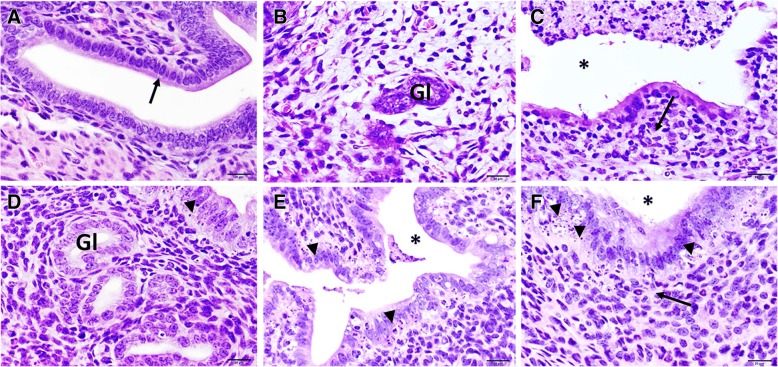
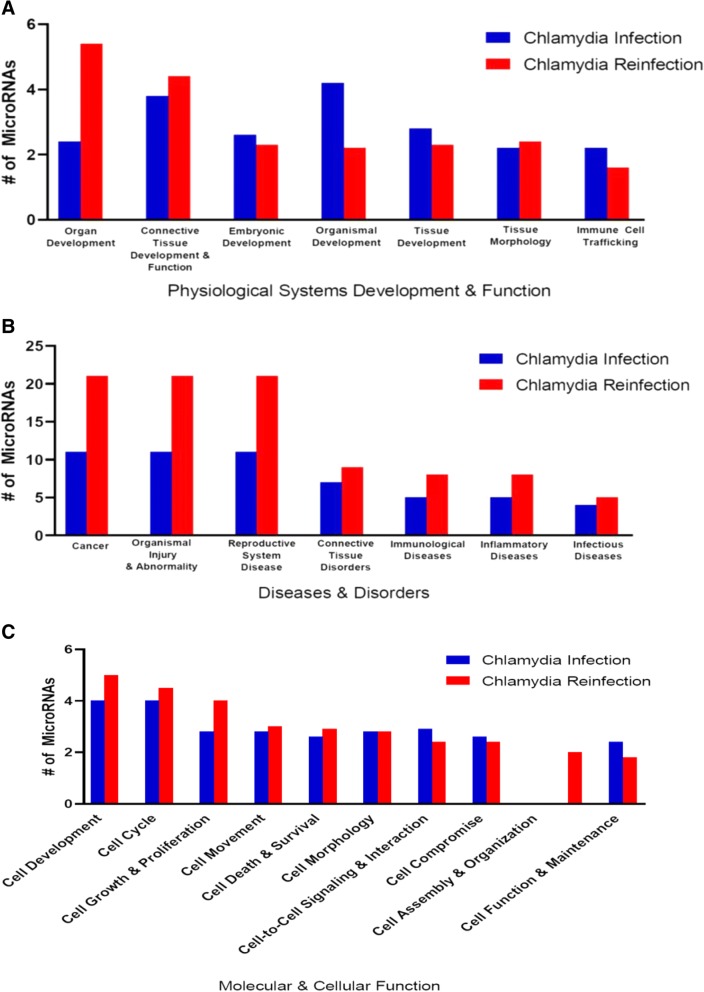
Histopathology presentation showed that the oviduct and uterus of reinfected mice were more inflamed, distended and dilated compared to mice infected once. The miRNAs expression profile was different in the reproductive tissues after a reinfection, with a greater number of miRNAs expressed after reinfection. Also, the number of miRNAs expressed each week after chlamydia infection and reinfection varied, with weeks eight and one having the highest number of differentially expressed miRNAs for chlamydia infection and reinfection respectively. Ten miRNAs; mmu-miR-378b, mmu-miR-204-5p, mmu-miR-151-5p, mmu-miR-142-3p, mmu-miR-128-3p, mmu-miR-335-3p, mmu-miR-195a-3p, mmu-miR-142-5p, mmu-miR-106a-5p and mmu-miR-92a-3p were common in both primary chlamydia infection and reinfection. Pathway analysis showed that, amongst other functions, the differentially regulated miRNAs control pathways involved in cellular and tissue development, disease conditions and toxicity.
This study provides insights into the changes in miRNA expression over time after chlamydia infection and reinfection, as well as the pathways they regulate to determine pathological outcomes. The miRNAs networks generated in our study shows that there are differences in the focus molecules involved in significant biological functions in chlamydia infection and reinfection, implying that chlamydial pathogenesis occurs differently for each type of infection and that this could be important when determining treatments regime and disease outcome. The study underscores the crucial role of host factors in chlamydia pathogenesis.
生殖道沙眼衣原体感染可能导致盆腔炎(PID),进而导致输卵管因素性不孕(TFI)。了解衣原体并发症的发病机制,包括女性生殖道内的病理生理过程,对于预防不良病理非常重要。微小 RNA 可调节感染和非感染病因的多个病理生理过程。在这项研究中,我们检验了以下假设:单次和重复生殖道衣原体感染的 miRNA 谱不同,并且这些差异具有时间依赖性。因此,我们使用 C. muridarum 小鼠模型分析和比较了单次和重复衣原体感染后小鼠生殖道组织中差异表达的 miRNA。在单次和重复衣原体感染后 1、2、4 和 8 周时,处死小鼠并收集其生殖道组织,进行组织病理学和 miRNA 测序。
组织病理学表现显示,与感染一次的小鼠相比,再次感染的小鼠的输卵管和子宫更发炎、膨胀和扩张。在再次感染后,生殖组织中的 miRNA 表达谱不同,再次感染后表达的 miRNA 数量更多。此外,在感染衣原体和再次感染后的每周,表达的 miRNA 数量也不同,分别在第 8 周和第 1 周时具有最多的差异表达 miRNA。10 个 miRNA(mmu-miR-378b、mmu-miR-204-5p、mmu-miR-151-5p、mmu-miR-142-3p、mmu-miR-128-3p、mmu-miR-335-3p、mmu-miR-195a-3p、mmu-miR-142-5p、mmu-miR-106a-5p 和 mmu-miR-92a-3p)在原发性衣原体感染和再次感染中均常见。通路分析表明,在其他功能中,差异调节的 miRNA 控制与细胞和组织发育、疾病状况和毒性相关的通路。
本研究深入了解了衣原体感染和再次感染后 miRNA 表达随时间的变化,以及它们调节的通路以确定病理结果。我们研究中生成的 miRNA 网络表明,在衣原体感染和再次感染中,涉及重要生物学功能的靶分子存在差异,这意味着每种类型的感染的衣原体发病机制不同,这对于确定治疗方案和疾病结局可能很重要。该研究强调了宿主因素在衣原体发病机制中的关键作用。