Departement of Evidence-base Medcine and Clinical center, The First People's Hospital of Huaihua of University of South China, Huaihua, 418000, People's Republic of China.
Department of Pharmacology, The First People's Hospital of Huaihua of University of South China, Huaihua, 418000, People's Republic of China.
Lipids Health Dis. 2019 Feb 18;18(1):54. doi: 10.1186/s12944-019-0994-7.
Baricitinib, an oral-administrated selective inhibitor of the JAK1 and JAK2, is recently approved for rheumatoid arthritis (RA) treatment. With the aim to provide some insights on the clinical safety, the current study mainly focused on the effect of baricitinib on low-density lipoprotein cholesterol (LDL-C) and high-density lipoprotein cholesterol (HDL-C) levels and cardiovascular risk.
The net change scores [least squares mean (LSM) and mean change] of LDL-C and HDL-C levels from baseline with the comparison of baricitinib versus placebo were pooled, respectively. Risk rations (RR) of major cardiovascular events (MACEs) and differences of cardiovascular risk scores at the end of treatment across groups were compared.
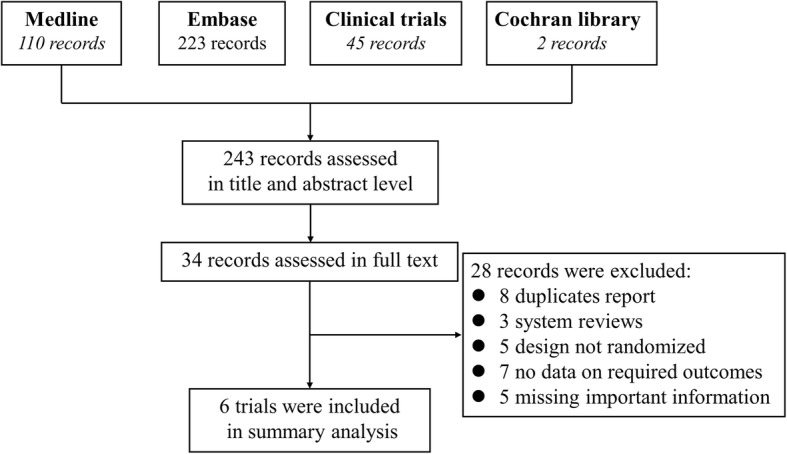
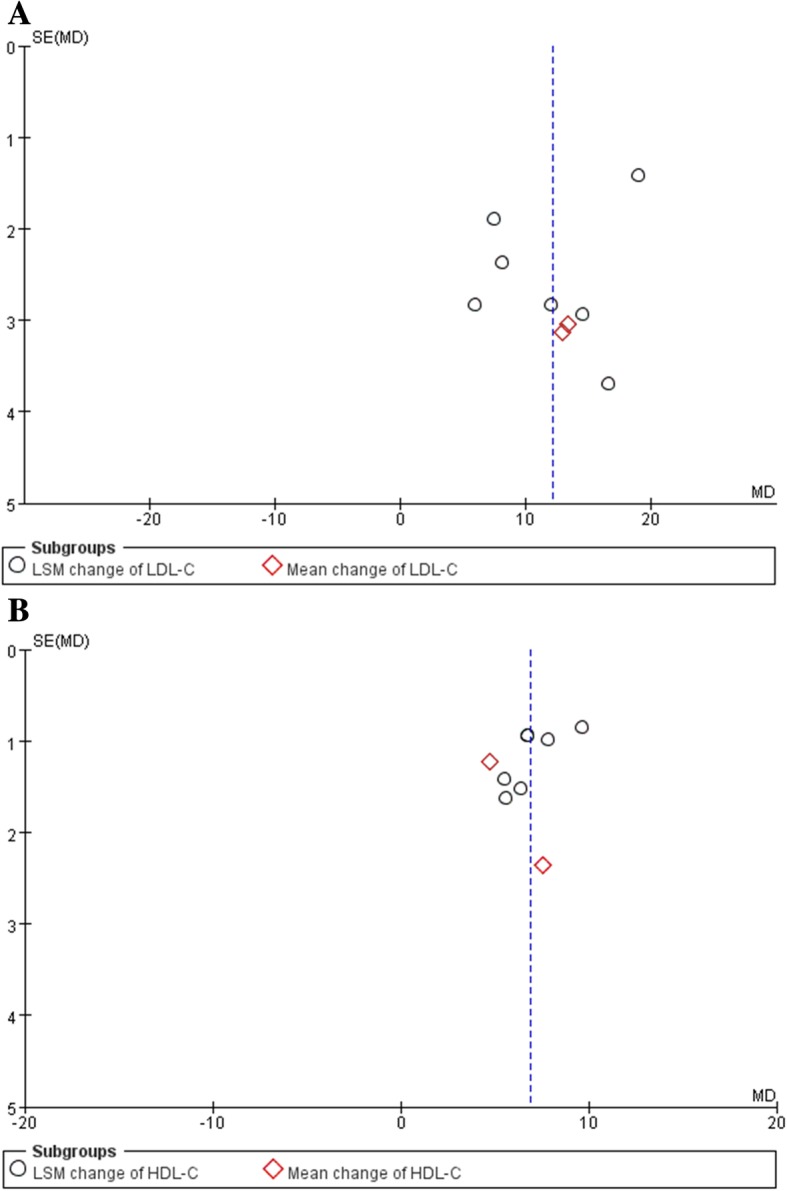
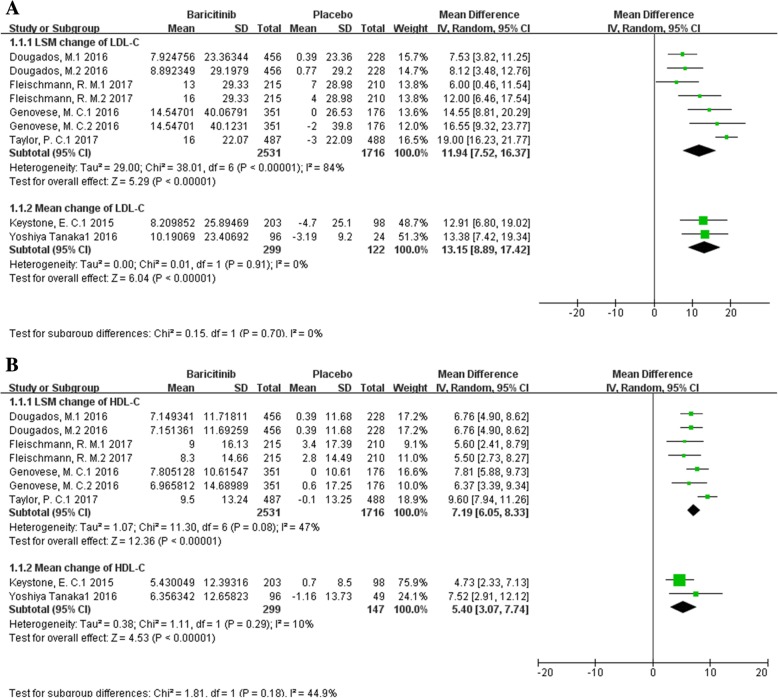
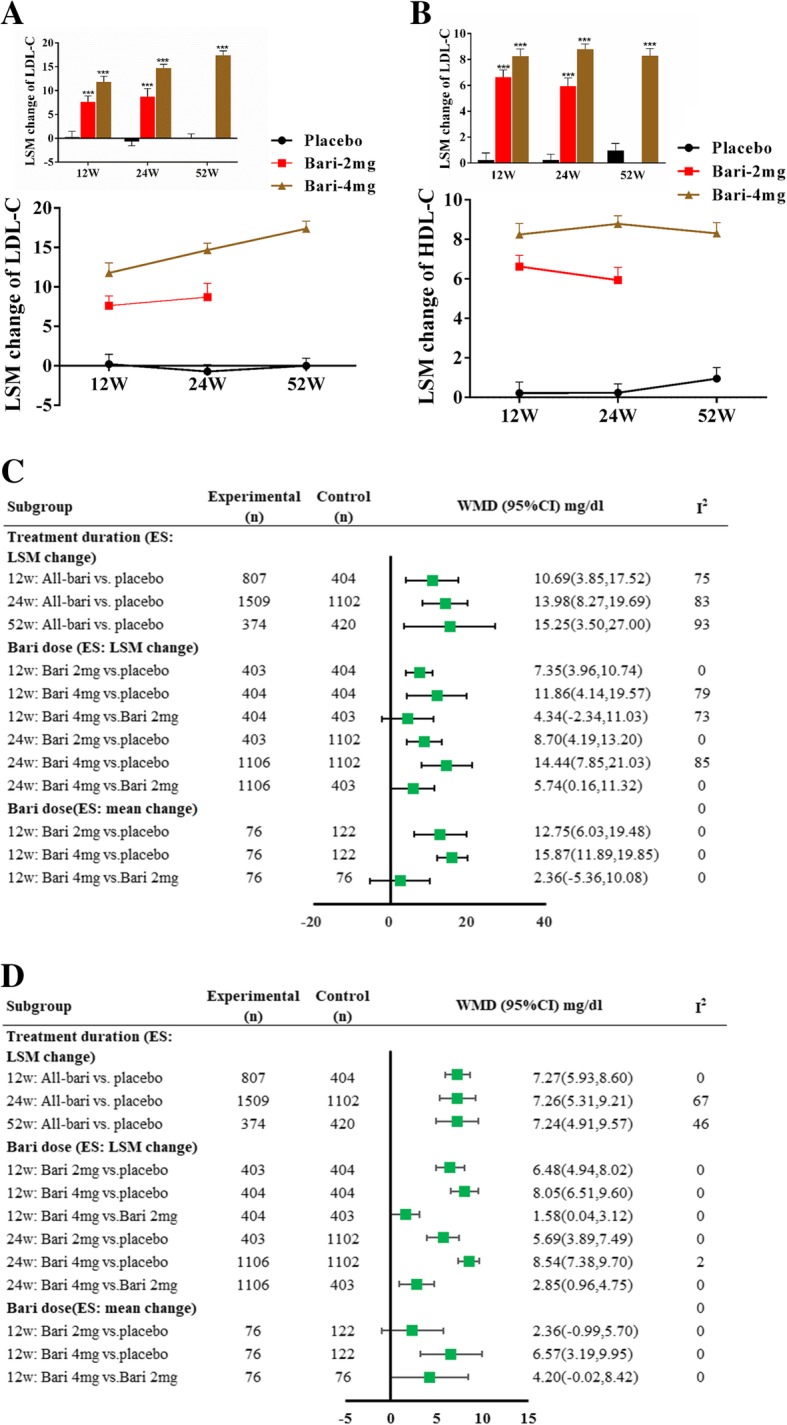
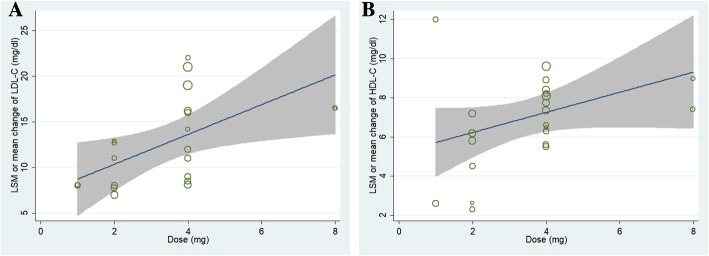
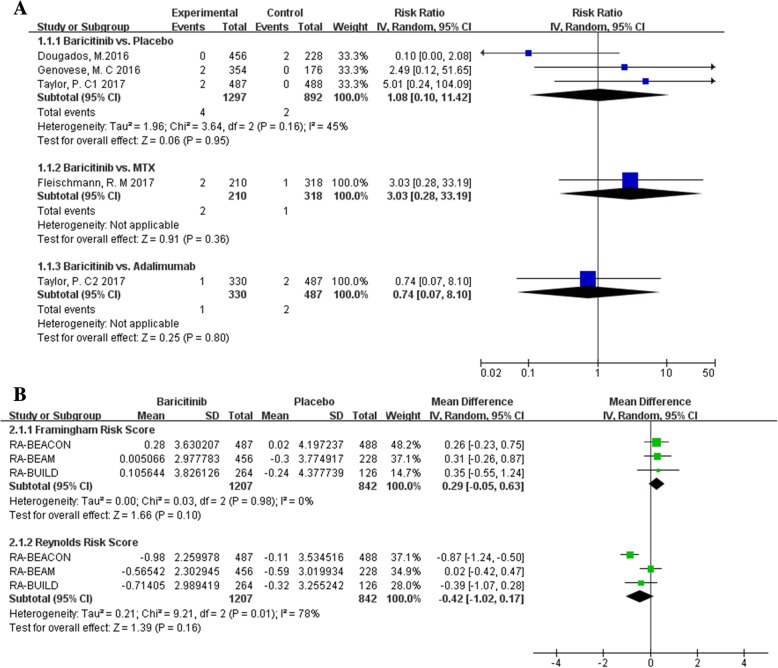
Six trials with randomized 3552 patients were finally included in summary analysis. Results showed that baricitinib significantly increased LDL-C levels, the net mean change was 13.15 mg/dl with 95% CI 8.8917.42 (I = 0) and the net LSM was 11.94 mg/dl with 95% CI 7.5216.37 (I = 84%). HDL-C also increased obviously with the net LSM change was 7.19 mg/dl (95% CI, 6.058.33, I = 47%) and net mean change was 5.40 mg/dl (95% CI, 3.077.74, I = 10%). Subgroup and meta-regression analysis demonstrated baricitinib induced LDL-C and HDL-C increases in a dose-response manner. However, both the pooled RRs of MACEs and differences of cardiovascular risk scores were not statistically significant across groups.
This study confirmed that baricitinib induced a stable dose-response increase in LDL-C and HDL-C levels. Since the causality association between altered lipids and cardiovascular risk was not identified yet, this issue cannot be completely dismissed. Future research is needed to fully dissect the implications of these lipid changes.
巴利昔替尼是一种口服选择性 JAK1 和 JAK2 抑制剂,最近被批准用于治疗类风湿关节炎 (RA)。本研究旨在探讨巴利昔替尼对低密度脂蛋白胆固醇 (LDL-C) 和高密度脂蛋白胆固醇 (HDL-C) 水平及心血管风险的影响,以期为其临床安全性提供参考。
采用最小二乘均数(LSM)和均数差值对来自基线的 LDL-C 和 HDL-C 水平的变化评分进行汇总分析,比较巴利昔替尼与安慰剂之间的差异。采用风险比(RR)比较各组主要心血管不良事件(MACEs)的发生率,并比较治疗结束时心血管风险评分的差异。
共纳入 6 项包含 3552 例患者的随机对照试验进行汇总分析。结果显示,巴利昔替尼可显著升高 LDL-C 水平,净平均变化为 13.15mg/dl(95%CI:8.8917.42,I=0),LSM 净变化为 11.94mg/dl(95%CI:7.5216.37,I=84%)。HDL-C 水平也明显升高,LSM 净变化为 7.19mg/dl(95%CI:6.058.33,I=47%),均数变化为 5.40mg/dl(95%CI:3.077.74,I=10%)。亚组和 Meta 回归分析表明,巴利昔替尼呈剂量依赖性升高 LDL-C 和 HDL-C 水平。然而,各组间 MACEs 的 RR 和心血管风险评分的差异均无统计学意义。
本研究证实,巴利昔替尼可稳定地升高 LDL-C 和 HDL-C 水平,呈剂量依赖性。由于改变血脂与心血管风险之间的因果关系尚未确定,因此不能完全排除这种风险。未来需要进一步研究以充分阐明这些血脂变化的意义。