IFREMER, Dyneco Pelagos, Plouzané, France.
CNRS, Sorbonne Université, Pontificia Universidad Catolica de Chile, Universidad Austral de Chile, UMI 3614, Evolutionary Biology and Ecology of Algae, Station Biologique de Roscoff, Roscoff Cedex, France.
Genome Biol Evol. 2019 Mar 1;11(3):731-747. doi: 10.1093/gbe/evz030.
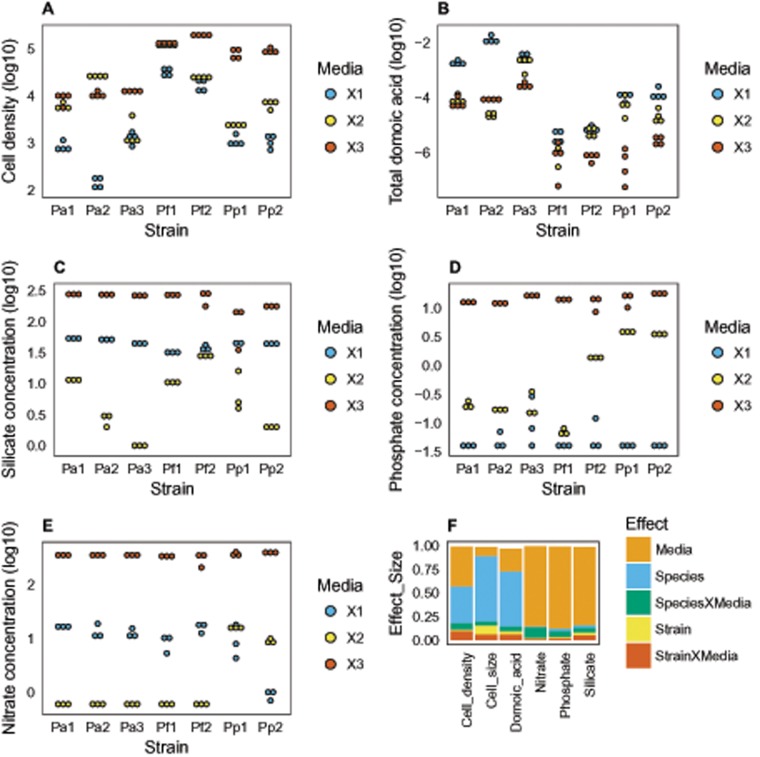
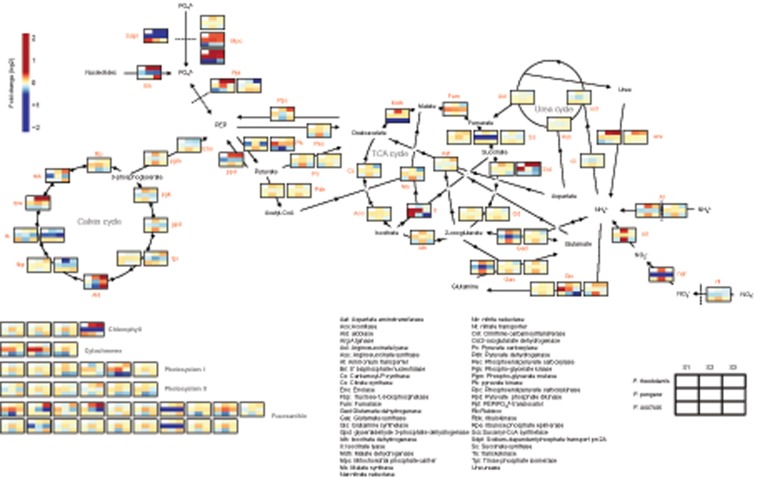
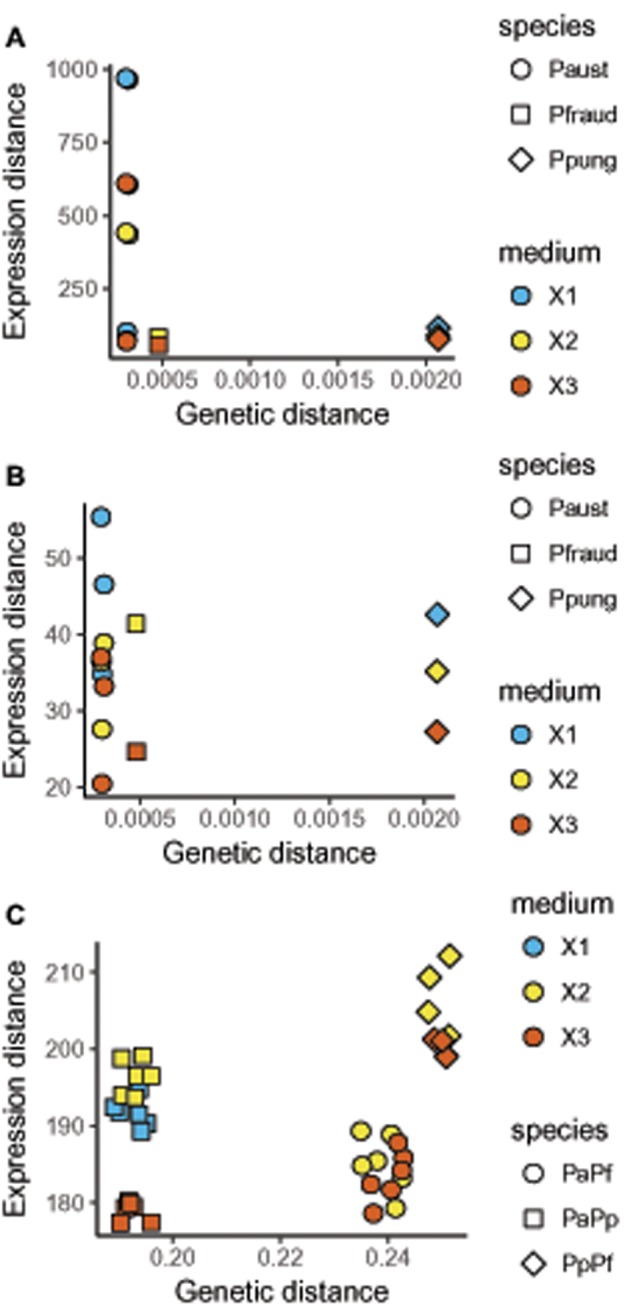
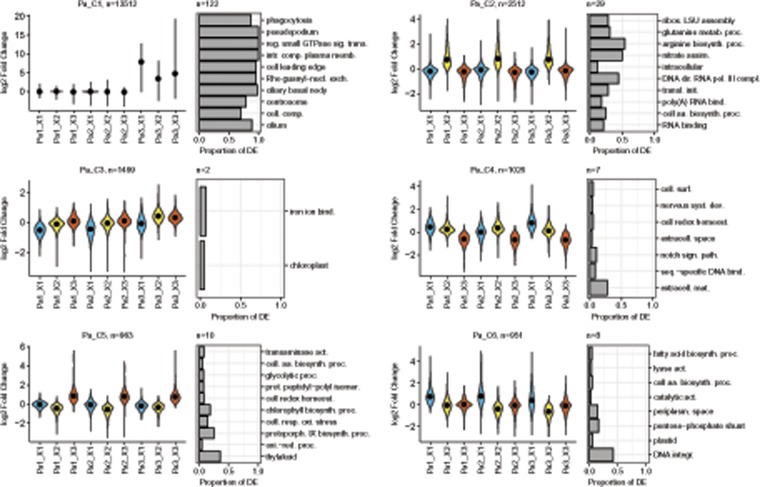
Untangling the functional basis of divergence between closely related species is a step toward understanding species dynamics within communities at both the evolutionary and ecological scales. We investigated cellular (i.e., growth, domoic acid production, and nutrient consumption) and molecular (transcriptomic analyses) responses to varying nutrient concentrations across several strains belonging to three species of the toxic diatom genus Pseudo-nitzschia. Three main results were obtained. First, strains from the same species displayed similar transcriptomic, but not necessarily cellular, responses to the experimental conditions. It showed the importance of considering intraspecific diversity to investigate functional divergence between species. Second, a major exception to the first finding was a strain recently isolated from the natural environment and displaying contrasting gene expression patterns related to cell motility and domoic acid production. This result illustrated the profound modifications that may occur when transferring a cell from the natural to the in vitro environment and asks for future studies to better understand the influence of culture duration and life cycle on expression patterns. Third, transcriptomic responses were more similar between the two species displaying similar ecology in situ, irrespective of the genetic distance. This was especially true for molecular responses related to TCA cycle, photosynthesis, and nitrogen metabolism. However, transcripts related to phosphate uptake were variable between species. It highlighted the importance of considering both overall genetic distance and ecological divergence to explain functional divergence between species.
阐明密切相关物种之间功能差异的基础是理解进化和生态尺度上群落内物种动态的重要步骤。我们调查了细胞(即生长、软骨藻酸产生和营养物质消耗)和分子(转录组分析)对几种属于有毒菱形藻属的三个物种的多个菌株在不同营养浓度下的响应。得到了三个主要结果。首先,来自同一物种的菌株对实验条件表现出相似的转录组,但不一定是细胞响应。这表明在研究物种之间的功能差异时,考虑种内多样性非常重要。其次,一个主要的例外是最近从自然环境中分离出来的一个菌株,其与细胞运动和软骨藻酸产生相关的基因表达模式截然不同。这一结果说明了当将细胞从自然环境转移到体外环境时可能发生的深刻变化,并要求未来的研究更好地了解培养时间和生命周期对表达模式的影响。第三,在原位具有相似生态的两个物种之间,转录组的响应更为相似,而与遗传距离无关。这对于与三羧酸循环、光合作用和氮代谢相关的分子反应尤其如此。然而,与磷酸盐吸收相关的转录本在物种之间是可变的。这强调了在解释物种之间的功能差异时,既要考虑整体遗传距离,又要考虑生态差异。