Department of Chemistry and Biomedical Sciences, Linnaeus University, Smålandsgatan-24, 392 34, Kalmar, Sweden.
Department of Biochemistry, University of Cambridge, 80 Tennis Court Road, Cambridge, CB2 1GA, UK.
Sci Rep. 2019 Feb 20;9(1):2325. doi: 10.1038/s41598-019-38747-9.
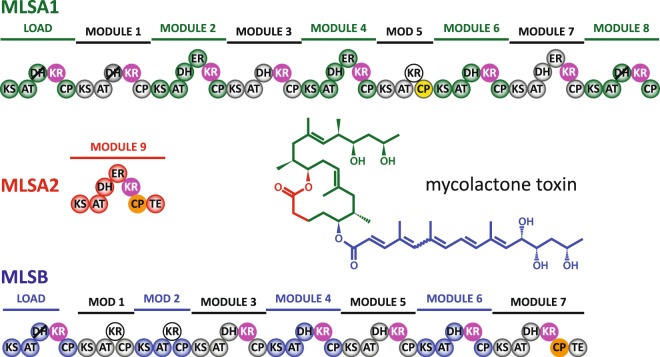
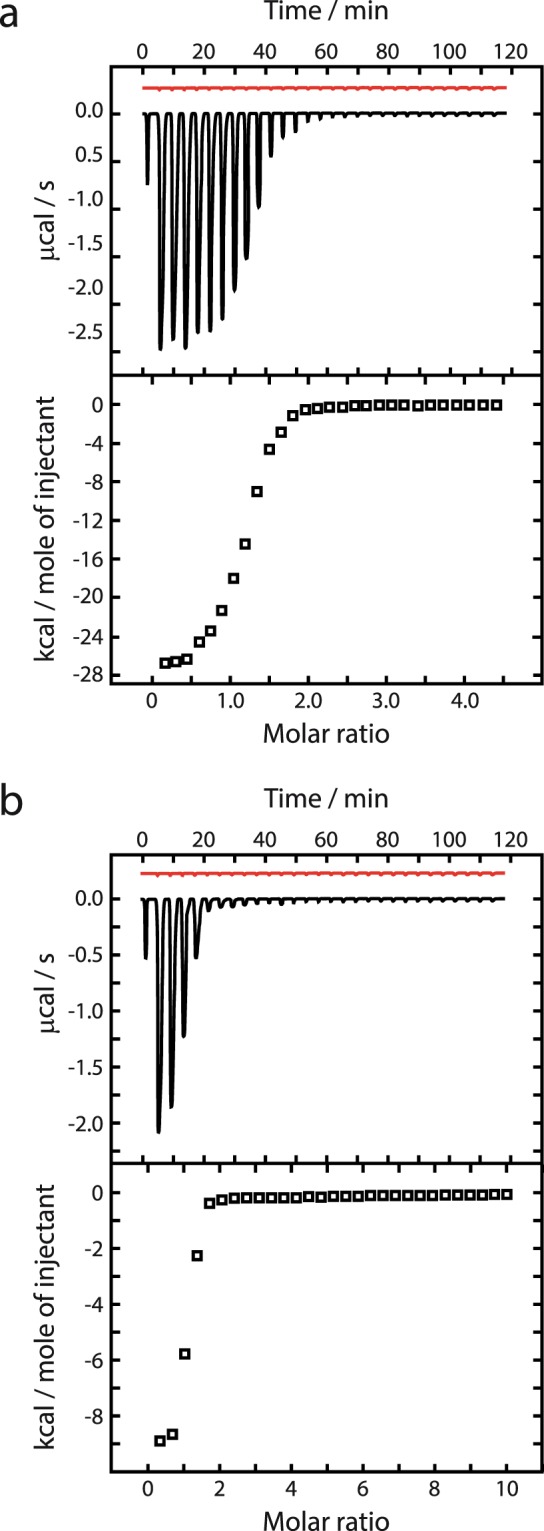
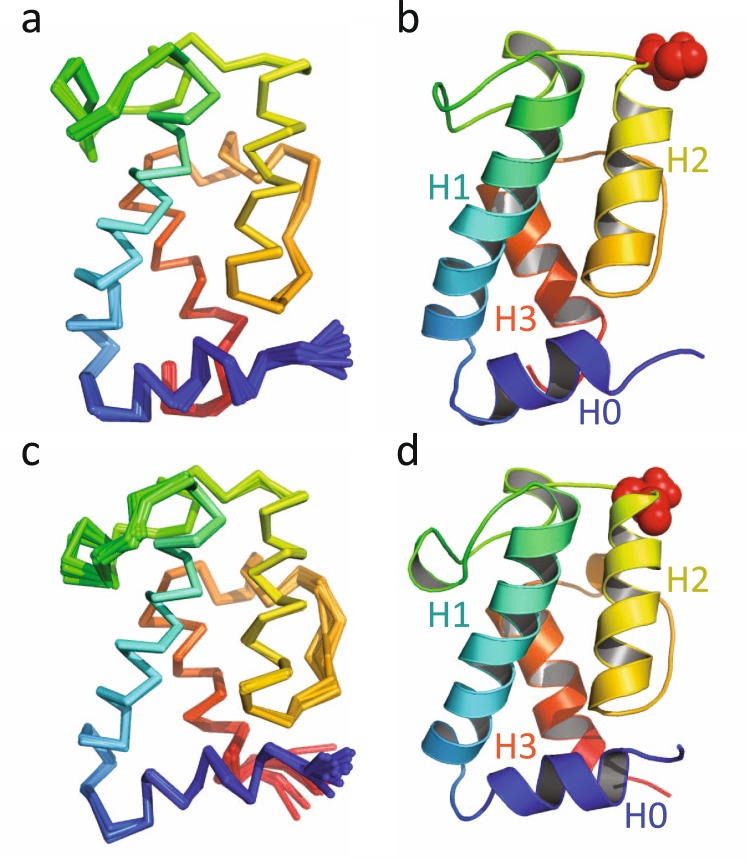
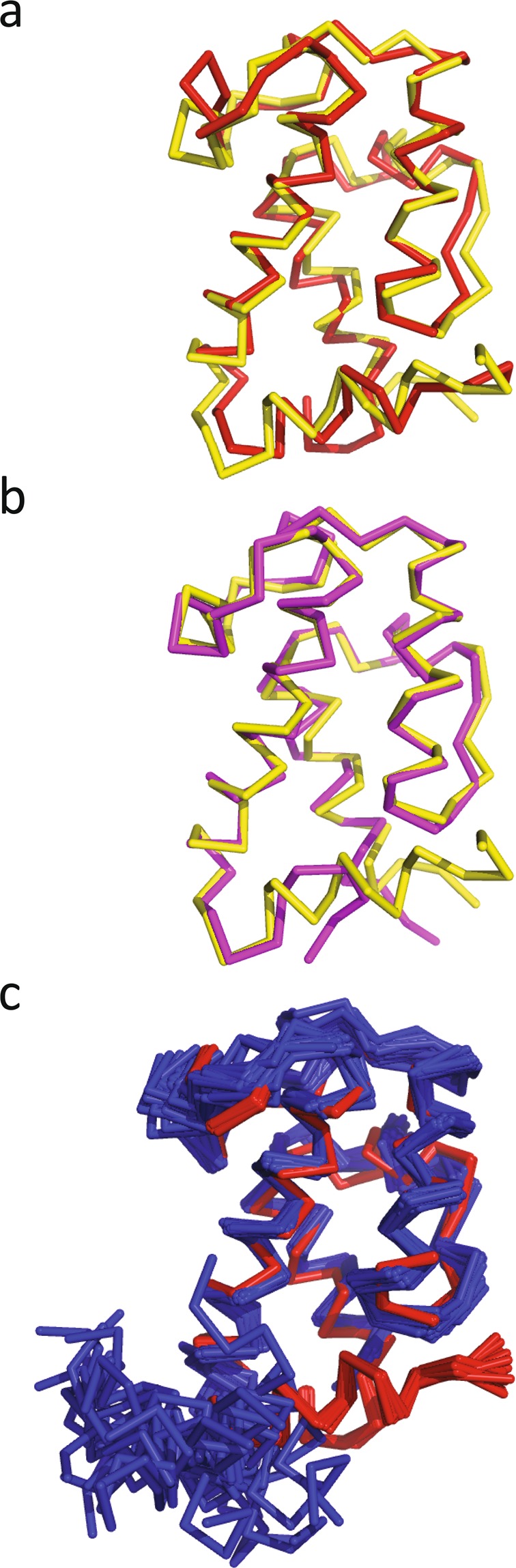
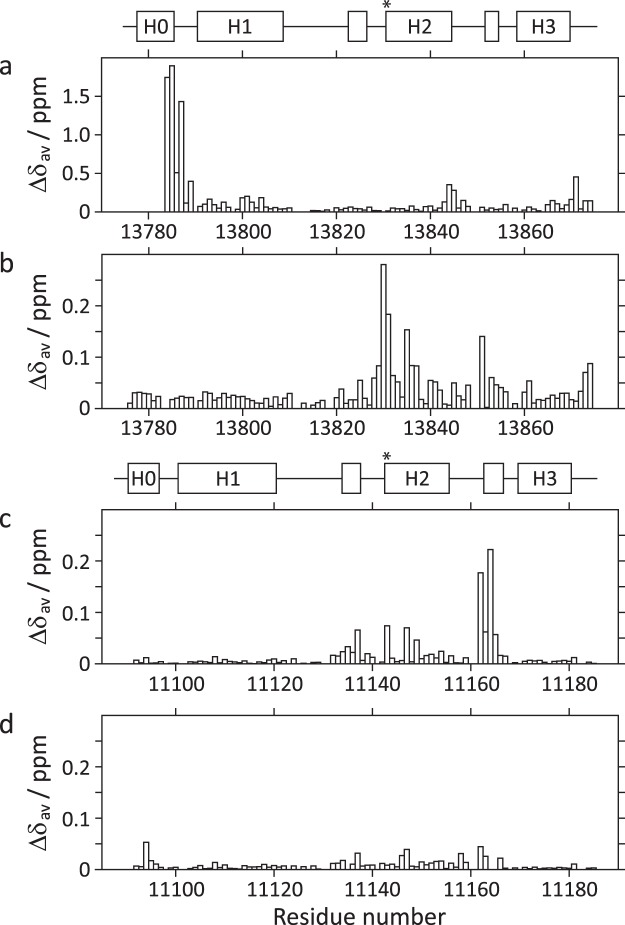
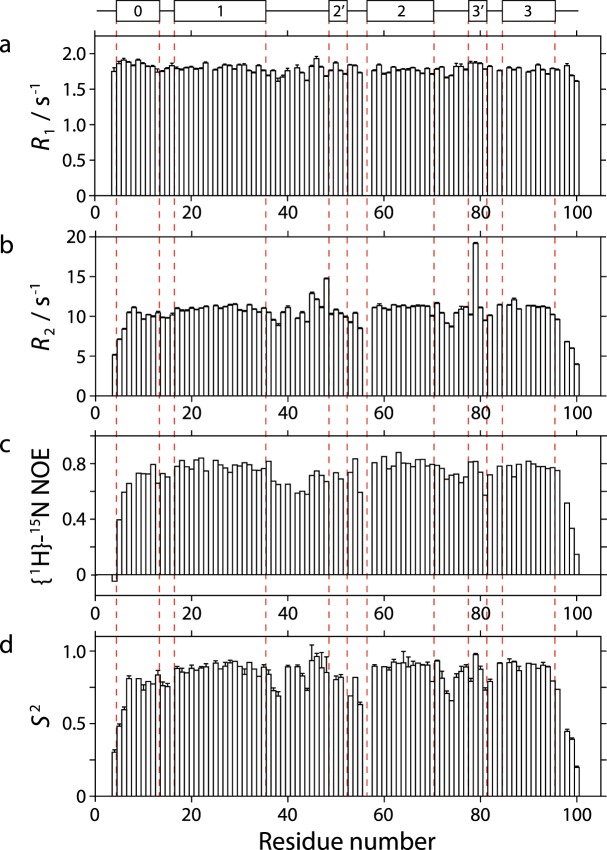
Acyl carrier protein (ACP) domains act as interaction hubs within modular polyketide synthase (PKS) systems, employing specific protein-protein interactions to present acyl substrates to a series of enzyme active sites. Many domains from the multimodular PKS that generates the toxin mycolactone display an unusually high degree of sequence similarity, implying that the few sites which vary may do so for functional reasons. When domain boundaries based on prior studies were used to prepare two isolated ACP segments from this system for studies of their interaction properties, one fragment adopted the expected tertiary structure, but the other failed to fold, despite sharing a sequence identity of 49%. Secondary structure prediction uncovered a previously undetected helical region (H0) that precedes the canonical helix-bundle ACP topology in both cases. This article reports the NMR solution structures of two N-terminally extended mycolactone mACP constructs, mH0ACPa and mH0ACPb, both of which possess an additional α-helix that behaves like a rigid component of the domain. The interactions of these species with a phosphopantetheinyl transferase and a ketoreductase domain are unaffected by the presence of H0, but a shorter construct that lacks the H0 region is shown to be substantially less thermostable than mH0ACPb. Bioinformatics analysis suggests that the extended H0-ACP motif is present in 98% of type I cis-acyltransferase PKS chain-extension modules. The polypeptide linker that connects an H0-ACP motif to the preceding domain must therefore be ~12 residues shorter than previously thought, imposing strict limits on ACP-mediated substrate delivery within and between PKS modules.
酰基载体蛋白 (ACP) 结构域在模块化聚酮合酶 (PKS) 系统中充当相互作用中心,通过特定的蛋白质-蛋白质相互作用将酰基底物呈现给一系列酶活性位点。生成毒素 mycolactone 的多模块 PKS 的许多结构域显示出异常高的序列相似性,这表明少数变化的位点可能是出于功能原因而变化。当使用先前研究确定的结构域边界来准备该系统的两个分离的 ACP 片段以研究其相互作用特性时,一个片段采用了预期的三级结构,但另一个片段未能折叠,尽管它们的序列同一性为 49%。二级结构预测揭示了一个以前未检测到的螺旋区域 (H0),在这两种情况下,它都位于典型的螺旋束 ACP 拓扑结构之前。本文报道了两个 N 端延伸的 mycolactone mACP 构建体 mH0ACPa 和 mH0ACPb 的 NMR 溶液结构,它们都具有一个额外的α-螺旋,其行为类似于结构域的刚性组件。这些物质与磷酸泛酰巯基乙胺转移酶和酮还原酶结构域的相互作用不受 H0 的影响,但缺乏 H0 区域的较短构建体显示出比 mH0ACPb 低得多的热稳定性。生物信息学分析表明,延伸的 H0-ACP 基序存在于 98%的 I 型顺式酰基转移酶 PKS 链延伸模块中。连接 H0-ACP 基序和前一个结构域的多肽接头因此必须比以前认为的短约 12 个残基,这对 ACP 介导的 PKS 模块内和模块间的底物传递施加了严格的限制。