Department of Surgery - Otorhinolaryngology Head and Neck Surgery, The Queen Elizabeth Hospital, and the University of Adelaide, Adelaide, South, Australia.
School of Biology, Faculty of Science and Engineering, Flinders University of South Australia, Adelaide, South, Australia.
Sci Rep. 2019 Feb 20;9(1):2378. doi: 10.1038/s41598-019-38902-2.
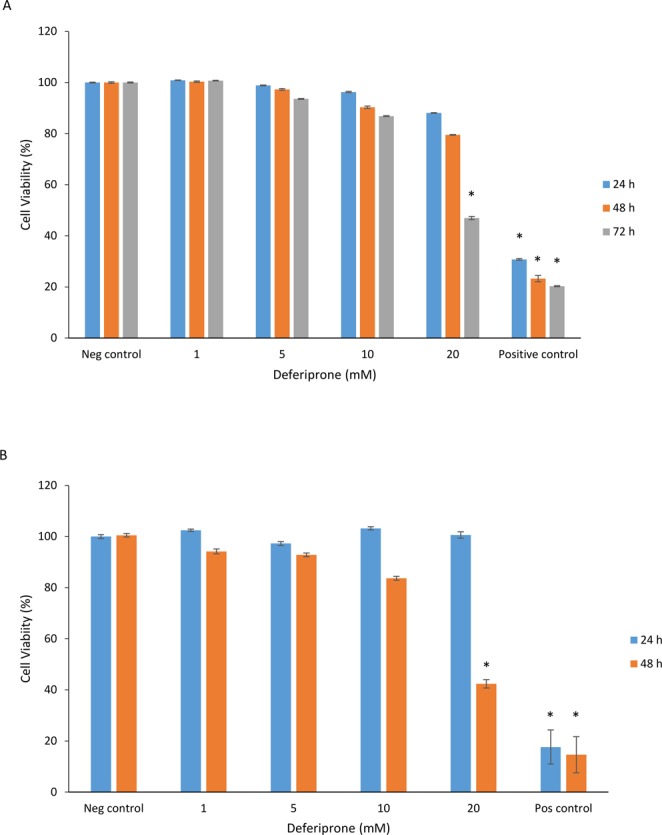
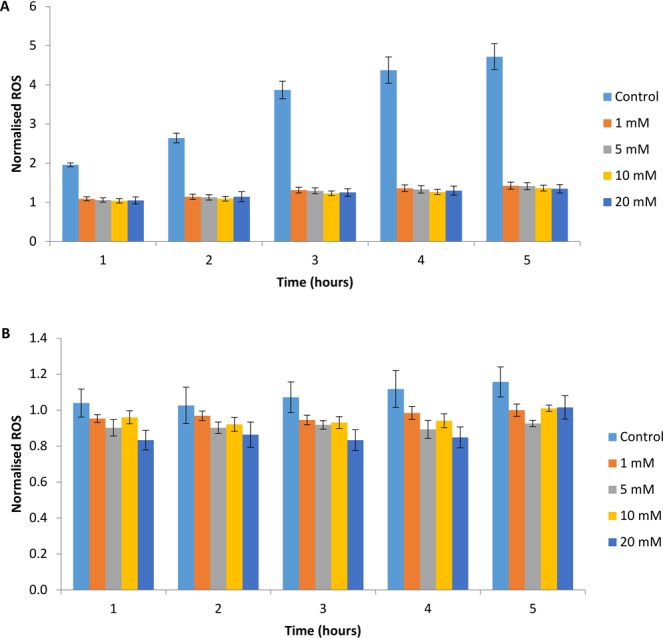
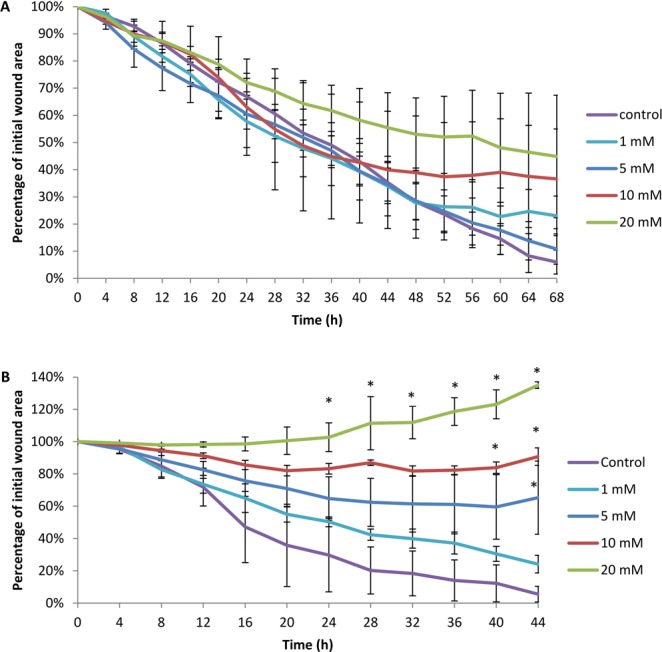
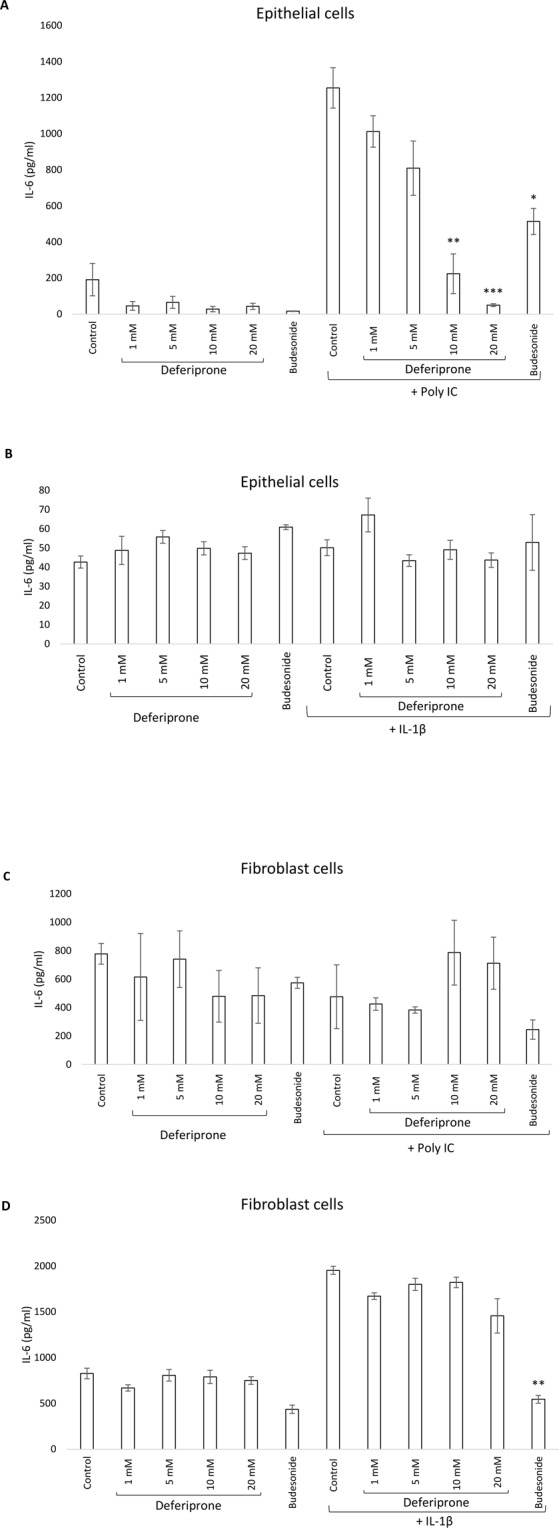
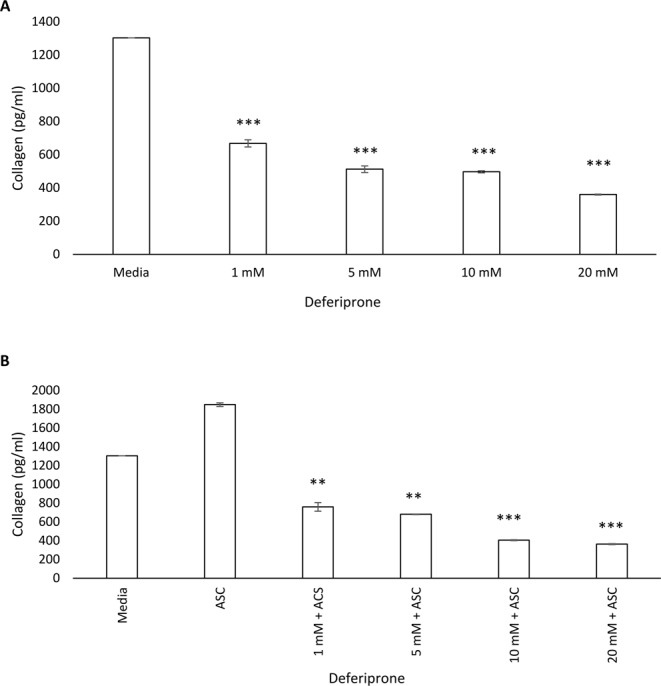
Normal wound healing is a highly regulated and coordinated process. However, tissue injury often results in inflammation with excessive scar tissue formation after 40-70% of operations. Here, we evaluated the effect of the iron chelator deferiprone on inflammation and the migration of primary nasal fibroblasts and primary human nasal epithelial cells (HNECs) in vitro. The cytotoxicity of deferiprone was examined by the lactate dehydrogenase assay on primary nasal fibroblasts and air-liquid interface (ALI) cultures of HNECs. Wound closure was observed in scratch assays by using time-lapse confocal scanning laser microscopy. Interleukin-6 (IL-6) and type I and III collagen protein levels were determined by ELISA. Intracellular Reactive Oxygen Species (ROS) activity was measured by utilizing the fluorescent probe H2DCFDA. Deferiprone at 10 mM concentration was non-toxic to primary fibroblasts and HNECs for up to 48 hours application. Deferiprone had significant dose-dependent inhibitory effects on the migration, secreted collagen production and ROS release by primary nasal fibroblasts. Deferiprone blocked Poly (I:C)-induced IL-6 production by HNECs but did not alter their migration in scratch assays. Deferiprone has the potential to limit scar tissue formation and should be considered in future clinical applications.
正常的伤口愈合是一个高度调控和协调的过程。然而,组织损伤通常会导致炎症,并在 40-70%的手术后形成过多的疤痕组织。在这里,我们评估了铁螯合剂去铁酮对体外原代鼻成纤维细胞和原代人鼻上皮细胞(HNEC)迁移的炎症和迁移的影响。通过乳酸脱氢酶测定法在原代鼻成纤维细胞和 HNEC 的气液界面(ALI)培养物中检测去铁酮的细胞毒性。通过使用延时共聚焦扫描激光显微镜观察划痕实验中的伤口闭合。通过 ELISA 测定白细胞介素 6(IL-6)和 I 型和 III 型胶原蛋白蛋白水平。通过利用荧光探针 H2DCFDA 测量细胞内活性氧(ROS)活性。在长达 48 小时的应用中,浓度为 10mM 的去铁酮对原代成纤维细胞和 HNEC 无毒性。去铁酮对原代鼻成纤维细胞的迁移、分泌胶原蛋白产生和 ROS 释放具有显著的剂量依赖性抑制作用。去铁酮可阻断 Poly(I:C)诱导的 HNEC 中 IL-6 的产生,但不会改变划痕实验中的迁移。去铁酮具有限制疤痕组织形成的潜力,应在未来的临床应用中考虑。