State Key Laboratory of Geological Processes and Mineral Resources, School of Earth Sciences, China University of Geosciences, Wuhan, 430074, China.
Anthropology Museum of Guangxi, Nanning, 530028, Guangxi, China.
Sci Rep. 2019 Feb 20;9(1):2347. doi: 10.1038/s41598-019-38818-x.
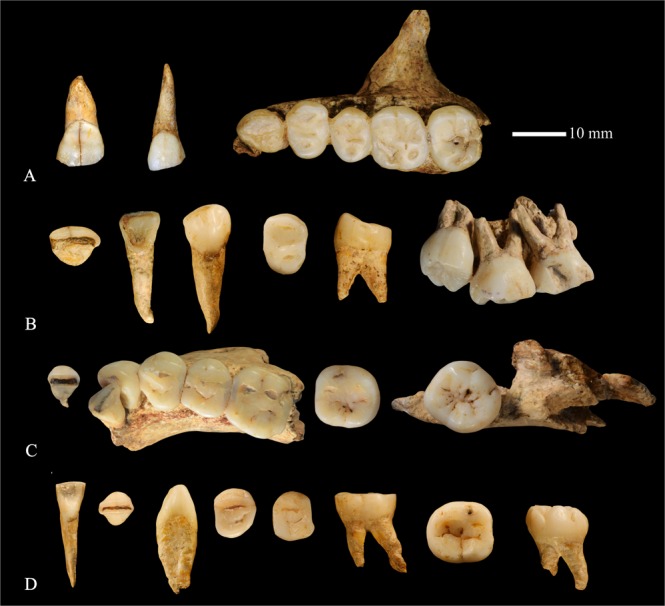
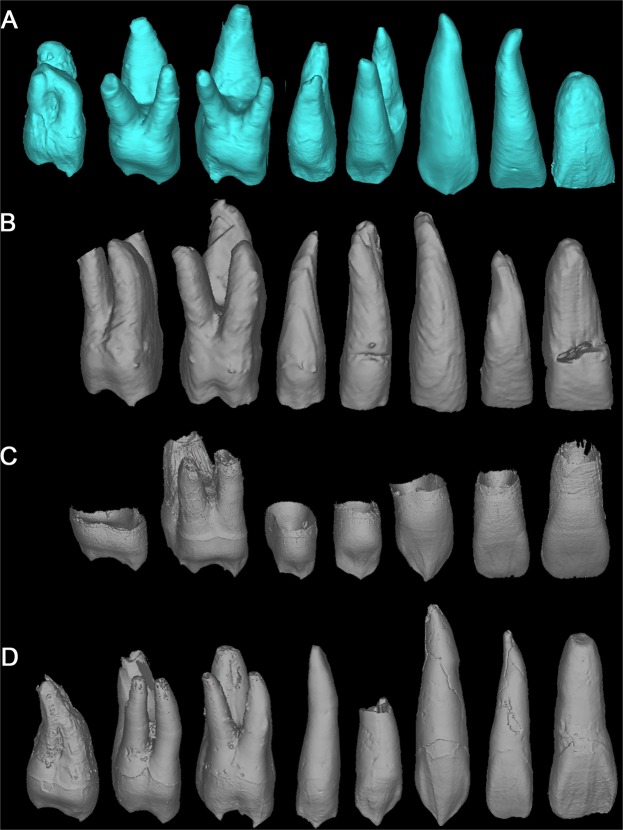
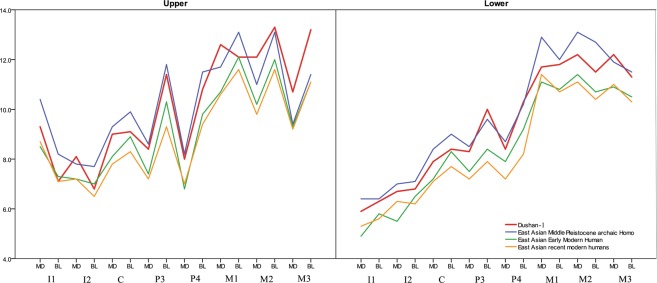
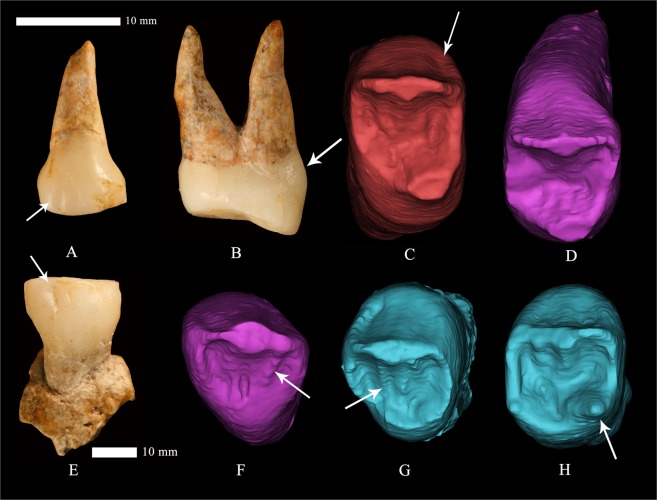
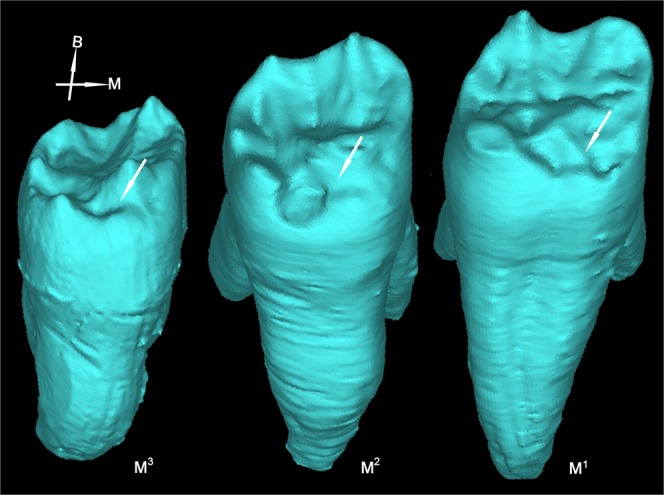
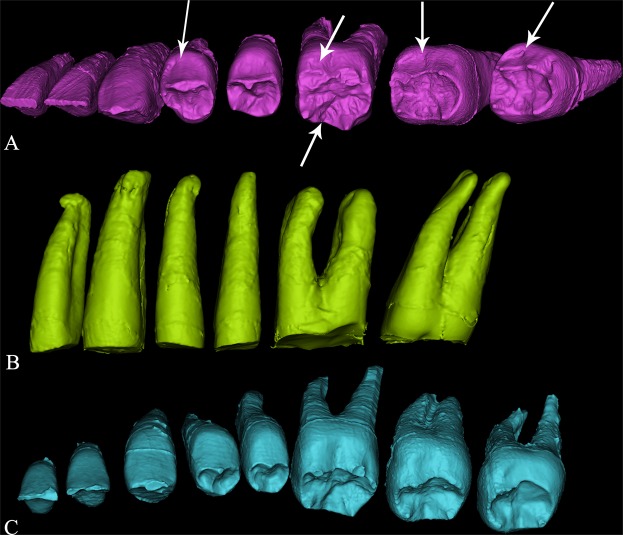
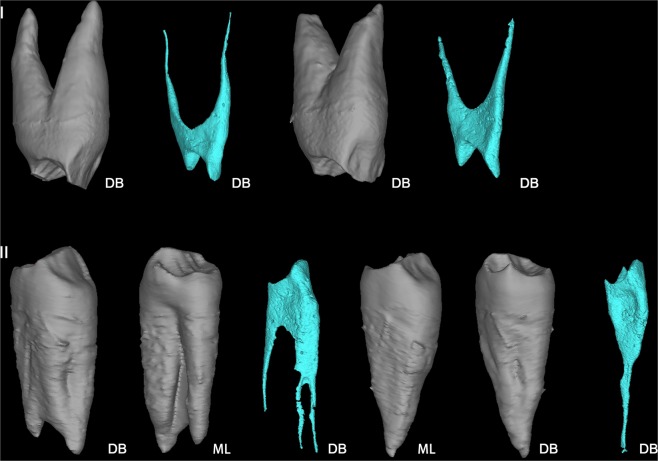
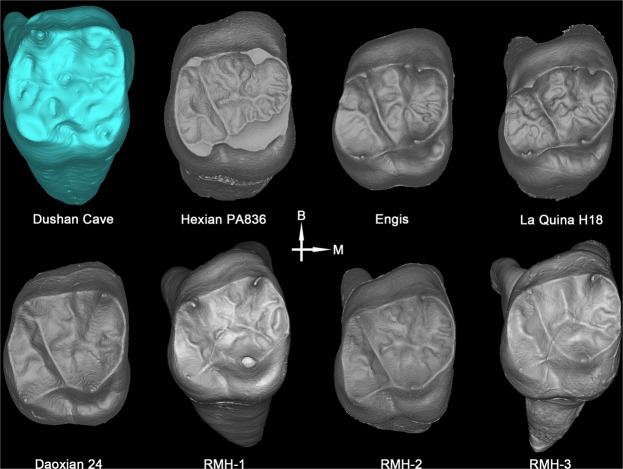
Recent studies reveal high degrees of morphological diversity in Late Pleistocene humans from East Asia. This variability was interpreted as complex demographic patterns with several migrations and possible survival of archaic groups. However, lack of well-described, reliably classified and accurately dated sites has seriously limited understanding of human evolution in terminal Pleistocene. Here we report a 15,000 years-old H. sapiens (Dushan 1) in South China with unusual mosaic features, such as large dental dimensions, cingulum-like structures at the dentine level in the posterior dentition and expression of a "crown buccal vertical groove complex", all of which are uncommon in modern humans and more typically found in Middle Pleistocene archaic humans. They could represent the late survival of one of the earliest modern humans to settle in an isolated region of southern China and, hence, the retention of primitive-like traits. They could also represent a particularity of this group and, hence, reflect a high degree of regional variation. Alternatively, these features may be the result of introgression from some late-surviving archaic population in the region. Our study demonstrates the extreme variability of terminal Pleistocene populations in China and the possibility of a complex demographic story in the region.
最近的研究揭示了东亚晚更新世人类具有高度的形态多样性。这种变异性被解释为复杂的人口模式,包括多次迁徙和古老群体的可能生存。然而,缺乏描述良好、可靠分类和准确年代的遗址,严重限制了对晚更新世人类进化的理解。在这里,我们报告了一个来自中国南方的 15000 年前的智人(独山 1 号),它具有不寻常的镶嵌特征,如大的牙齿尺寸、后牙牙本质水平上的类似齿带的结构和“冠颊垂直沟复合体”的表达,所有这些在现代人中都不常见,而在中更新世的古老人类中更为常见。它们可能代表了最早定居在中国南部一个孤立地区的现代人之一的晚期生存,因此保留了原始特征。它们也可能代表了该群体的特殊性,因此反映了高度的区域变异。或者,这些特征可能是该地区某些晚期幸存的古老群体的基因渗入的结果。我们的研究表明,中国晚更新世人口具有极端的可变性,该地区可能存在复杂的人口故事。