Institute for Neuroscience, University of Texas at Austin, Austin, Texas, 78712, USA.
Department of Biomedical Engineering, University of Texas at Austin, Austin, Texas, 78712, USA.
Sci Rep. 2019 Feb 20;9(1):2323. doi: 10.1038/s41598-019-39092-7.
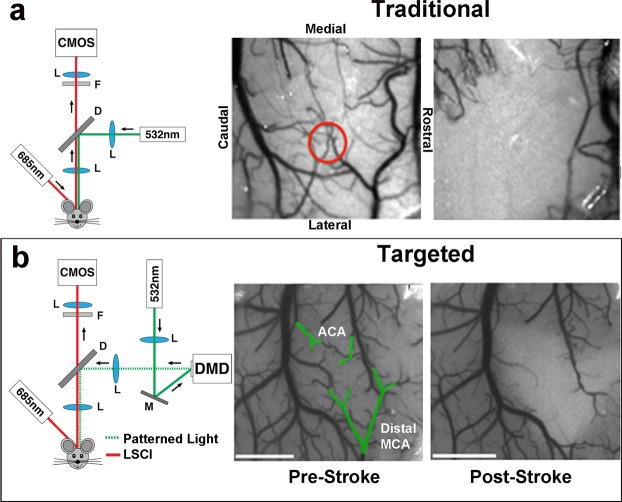
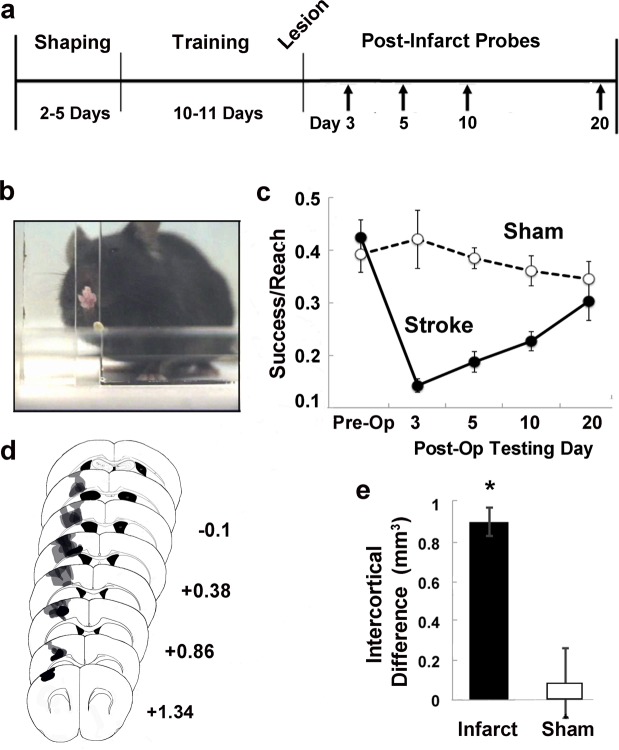
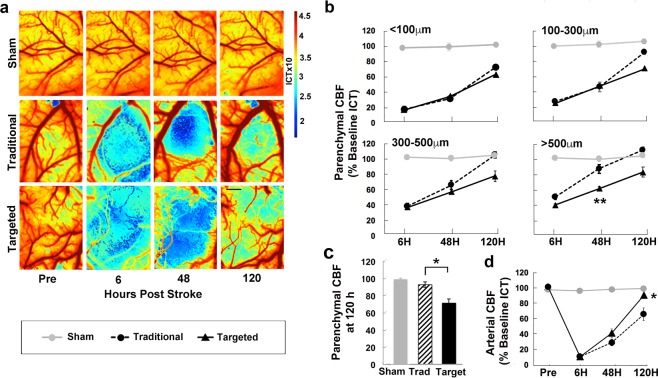
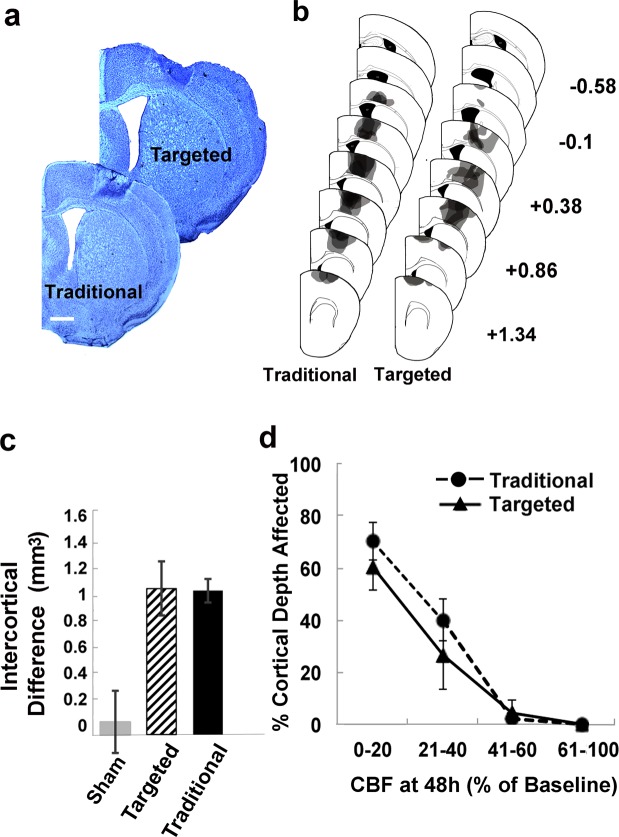
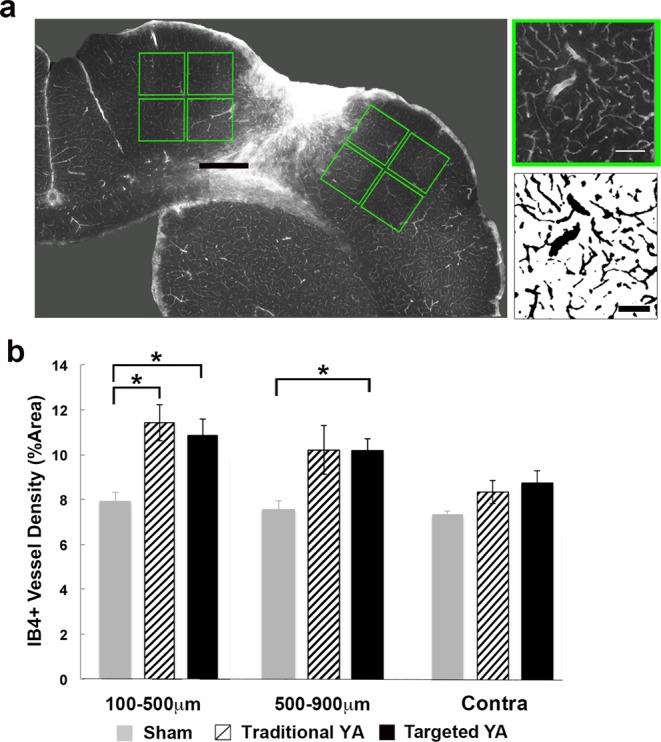
The photothrombotic stroke model generates localized and reproducible ischemic infarcts that are useful for studying recovery mechanisms, but its failure to produce a substantial ischemic penumbra weakens its resemblance to human stroke. We examined whether a modification of this approach, confining photodamage to arteries on the cortical surface (artery-targeted photothrombosis), could better reproduce aspects of the penumbra. Following artery-targeted or traditional photothrombosis to the motor cortex of mice, post-ischemic cerebral blood flow was measured using multi-exposure speckle imaging at 6, 48, and 120 h post-occlusion. Artery-targeted photothrombosis produced a more graded penumbra at 48 and 120 h. The density of isolectin B4 vessels in peri-infarct cortex was similarly increased after both types of infarcts compared to sham at 2 weeks. These results indicate that both models instigated post-ischemic vascular structural changes. Finally, we determined whether the strength of the traditional photothrombotic approach for modeling upper-extremity motor impairments extends to the artery-targeted approach. In adult mice that were proficient in a skilled reaching task, small motor-cortical infarcts impaired skilled-reaching performance for up to 10 days. These results support that artery-targeted photothrombosis widens the penumbra while maintaining the ability to create localized infarcts useful for modeling post-stroke impairments.
光血栓性中风模型可产生局部且可重现的缺血性梗塞,这对于研究恢复机制非常有用,但它未能产生实质性的缺血半影,这使其与人类中风的相似性减弱。我们研究了这种方法的一种改进,将光损伤局限在皮质表面的动脉上(动脉靶向光血栓形成),是否可以更好地再现半影的某些方面。在对小鼠的运动皮质进行动脉靶向或传统光血栓形成后,在闭塞后 6、48 和 120 小时使用多曝光斑点成像测量缺血后的脑血流。在 48 和 120 小时,动脉靶向光血栓形成产生了更分级的半影。与假手术相比,两种类型的梗塞在 2 周后,在梗塞周围皮质中,异硫氰酸荧光素 B4 血管的密度也相似增加。这些结果表明,两种模型都引发了缺血后血管结构的变化。最后,我们确定了传统的光血栓形成方法用于模拟上肢运动障碍的强度是否扩展到动脉靶向方法。在熟练进行伸展任务的成年小鼠中,小的运动皮质梗塞会损害熟练伸展任务的表现,最长可达 10 天。这些结果支持动脉靶向光血栓形成扩大了半影,同时保持了创建用于模拟中风后损伤的局部梗塞的能力。